Long-running Ballymun music education programme at risk, warns Ellis
Mike Finnerty 25 Nov 2026
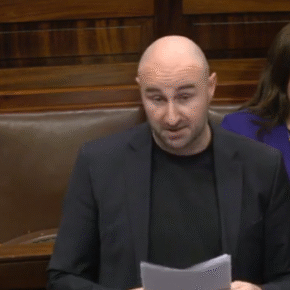
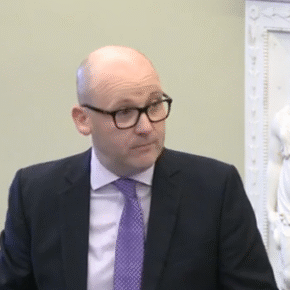
Sinn Féin TD Dessie Ellis has raised concerns about the future of a long-running community music education programme in Ballymun.
Speaking in the Dail, the Dublin North-West TD warned that declining regeneration funding could threaten its ability to continue supporting hundreds of young people.
The Ballymun Music Programme, which provides free instrumental and vocal tuition to children across seven primary and secondary schools, is facing uncertainty over its funding arrangements as a key source of financial support from Dublin City Council is gradually being reduced.
Ellis called on the government to establish a permanent funding mechanism for the programme, warning that the withdrawal of regeneration funding could have significant consequences for its future.
Established in 1996 as the Ballymun Wind Band Project, the initiative grew out of the Breaking the Cycle programme, which sought to address educational disadvantage by providing children with opportunities to access music education.
Originally based in St Joseph’s Senior National School, the project has developed over three decades into a community-wide initiative involving schools, families, professional musicians and higher education institutions.
It is now led by TU Dublin Conservatoire and operates across four primary schools and three secondary schools, with approximately 340 young people currently participating.
Speaking in the Dáil, Ellis said thousands of children had benefited from the programme since its establishment, describing its contribution to the lives of people in Ballymun and the surrounding area as immeasurable.
However, he warned that the programme’s reliance on the Ballymun social regeneration fund was becoming increasingly precarious.
“The regeneration funding is critical in maintaining this programme,” he said.
Ellis said funding from the regeneration fund had been reduced in recent years and would eventually cease, leaving the programme facing the prospect of a significant shortfall.
He called for the Department of Education, TU Dublin and Dublin City Council to engage directly with the programme’s organisers to establish a sustainable arrangement.
“Whether it is funded from the Minister of State’s Department, TU Dublin or Creative Ireland, they need to sit down with the people on the Ballymun music programme to sort out whether the funding will keep getting reduced, because this will have a knock-on effect on the whole programme,” he said.
Ellis said there was potential for the initiative to expand but warned that uncertainty over its existing funding was already a concern.
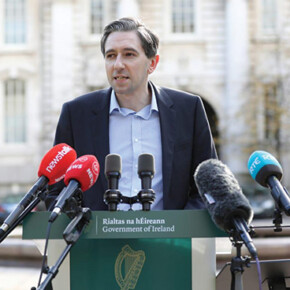
He urged Minister of State Neale Richmond, who was responding on behalf of Minister for Education Hildegarde Naughton, to bring the matter to the attention of the government.
Richmond acknowledged the programme’s contribution to generations of young people, describing it as a “highly respected” community music education initiative.
Minister Richmond said the programme’s core funding arrangements were primarily a matter for TU Dublin and Dublin City Council.
He said he had been advised that the two organisations currently contributed approximately 50% each of the programme’s core costs.
The Ballymun Music Programme also receives additional support through Creative Ireland.
Richmond stressed that higher education institutions such as TU Dublin were autonomous bodies with statutory responsibility for their own governance and operational affairs and as such, it wasn’t a government matter.
Decisions concerning the continuation, scale and funding of particular initiatives were therefore primarily matters for the institutions themselves, taking account of their strategic priorities and available resources.
Regardless, Minister Richmond said that the government recognised the value placed on the programme by local communities, schools, families and public representatives.
He said the Department of Education remained supportive of initiatives that broadened participation in education and enriched young people’s learning experiences.
Richmond also indicated that he would report the concerns raised by Ellis to Minister Naughton.
In a further response, he said the government would continue engaging with TU Dublin and other relevant authorities to ensure the university could make its financial contribution and play an active role in securing the programme’s future.
He also pointed to the potential for the Department responsible for local government to engage with Dublin City Council on its contribution.
“We will do what is necessary,” he said, adding that the immediate priority should be providing certainty to the young people participating in the programme.
Despite the funding concerns, the programme is preparing to mark its 30th anniversary with a special concert on November 30 at TU Dublin’s concert hall in Grangegorman.
Its development over the past three decades has included partnerships with the former Dublin Institute of Technology Conservatoire, schools across Ballymun and surrounding areas, and professional music educators.
The initiative initially concentrated on wind and brass instruments but subsequently expanded to include strings, choirs, singing, junior wind bands and ensemble performances.
Ellis highlighted the efforts of music educator Ron Cooney, who played an important role in developing the organisation’s musical direction.
A dedicated Ballymun music room opened in 2009, providing facilities for teaching and rehearsals, with the opening attended by then-President Mary McAleese and Archbishop Desmond Tutu.
The programme has also been involved in major cultural projects, including Ballymun Lullaby, which was developed in 2008 as an original composition for a youth orchestra and choir.
The project subsequently involved the RTÉ Concert Orchestra and became the subject of a documentary directed by Frank Berry, released in 2011.
Ellis told the Dáil that students who participated in the programme have gone on to perform at venues including the National Concert Hall, Trinity College Dublin and Dublin Castle.
The Sinn Féin TD said that the project has succeeded in its purpose: providing children with access to formal instrumental music education regardless of their family’s financial circumstances.
Ellis noted that the programme was founded on the principle that early access to music could help develop confidence, discipline and self-esteem, while bringing schools and the wider community together.
With its 30th anniversary approaching, Ellis said the priority now had to be ensuring that the initiative could continue beyond its current funding arrangements.
While Richmond acknowledged the concerns and pledged continued engagement with the relevant organisations, no commitment to permanent government funding was made during the Dáil exchange.
Related News