GPO set for biggest transformation in decades
Padraig Conlon 01 Jul 2026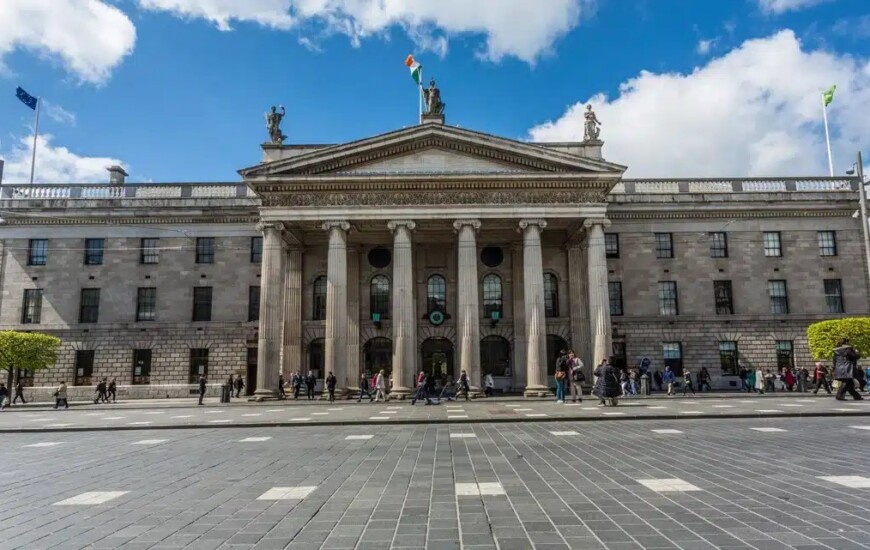
The GPO is set for its biggest transformation in decades after the Government this week approved the first steps in a major redevelopment that could see much of the historic landmark opened up for cultural, civic and community use.
Cabinet agreed on Tuesday (23rd) to transfer ownership of the GPO complex to the Office of Public Works (OPW), which will oversee the landmark redevelopment before launching a nationwide public consultation later this year.
While no final design has yet been agreed, ministers say the project will play a central role in plans to breathe new life into Dublin city centre.
The redevelopment is expected to retain the GPO’s role as one of the country’s busiest post offices while creating new cultural facilities, community spaces, improved public areas, Government offices and limited retail within the building’s existing footprint.
The decision represents the beginning of the project.
No detailed design has yet been approved and the Government says a nationwide public consultation will take place later this year before permanent proposals are brought back to Cabinet.
Ministers say the redevelopment offers a rare opportunity to restore the wider complex while ensuring it remains relevant for future generations.
Under the broad framework agreed by Government, the completed development is expected to include a public post office, significant cultural uses, enhanced public spaces, Government office accommodation replacing space previously occupied by An Post and retail units within the existing commercial footprint.
Exactly how those different uses will be balanced remains to be decided.
The Department of the Taoiseach will chair a steering group overseeing the consultation because of the site’s exceptional historic and cultural importance.
Officials say the process is intended to create a national conversation about the future of the GPO through public meetings and engagement with community organisations, heritage groups, businesses and members of the public before architects begin preparing detailed designs.
Alongside the consultation, the OPW plans to bring currently vacant sections of the protected structure back into temporary use rather than leaving them idle during what is expected to be a lengthy planning and design process.
Under the proposal, some accommodation will continue to be used as Government office space on an interim basis while other areas will be made available for community organisations, cultural groups and public events.
Dublin City Council will manage an open application process in the coming months, allowing community and civic organisations to seek access to the temporary spaces.
The Government believes this “meanwhile use” approach will ensure the building remains active and accessible instead of standing partially empty while long-term redevelopment plans are prepared. Announcing the decision, Taoiseach Micheál Martin described the redevelopment as a project of national importance.
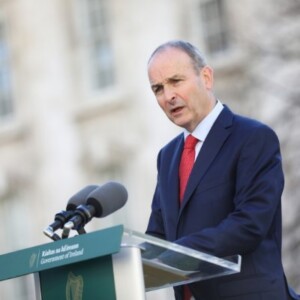
“The redevelopment of the GPO is of crucial importance to the nation,” he said.
“The complex’s history and heritage place it at the centre of Irish culture and bringing it back to glory is key to the rejuvenation of Dublin.”
He said an oversight board within the Department of the Taoiseach was already coordinating work across Government, the OPW and Dublin City Council to deliver the wider recommendations contained in the Dublin City Taskforce report.
Tánaiste Simon Harris said transferring responsibility for the complex to the OPW marked an important milestone.
“The redevelopment of the GPO Complex is a priority for Government,” he said.
“This site has enormous potential, and I am particularly looking forward to hearing the views of people all over the country as to how it should be developed.”
While there has been broad political support for restoring the landmark building, opposition parties have cautioned against allowing commercial considerations to overshadow its historic significance.
Sinn Féin’s Dublin spokesperson Mark Ward TD said the Government must ensure the redevelopment protects the GPO’s place at the heart of Ireland’s revolutionary history.
“The GPO is an historic building in the centre of our capital city,” he said.
“It is the site where our Republic was declared. It was the central location of the Easter Rising.”
Deputy Ward said reports that parts of the building could become retail or office accommodation had generated considerable public concern, although he acknowledged it appeared the Government had softened its approach.
He argued that the consultation should extend beyond the GPO itself to include nearby Moore Street, where the leaders of the Rising held their final war council before surrendering.
“We have seen the neglect that Fianna Fáil and Fine Gael have shown towards Moore Street,” he said.
“What should be an historic and cultural quarter has been left in limbo.”
He said the consultation must be genuinely open and accessible and warned that Government would have to listen carefully to public opinion.
“The GPO and Moore Street should be preserved and developed into a 1916 cultural quarter,” he said.
“Our republican history is important; it cannot be paved over.”
Fine Gael Dublin spokesperson James Geoghegan also called for the redevelopment to match the significance of the building.
“The GPO is the country’s most important building,” he said.
“We must deliver a GPO that is unforgettable for every child that visits during their school years.”
Deputy Geoghegan said the project presented a once-in-a-generation opportunity to create one of Europe’s leading educational and cultural attractions, arguing that every schoolchild should have the opportunity to learn first-hand about the events that shaped modern Ireland.
“It should be much more than a tourist attraction,” he said.
“It should be a place of learning, citizenship and national memory.”
Fianna Fáil Senator Mary Fitzpatrick welcomed the Government’s decision, saying the redevelopment would allow people to experience far more of the building than simply its postal services.
“The GPO belongs to all of us,” she said.
“Most of us walk by it on O’Connell Street and see it as a historic building or a post office, but the GPO is much more.
“It is where our republic found its voice.”
OPW chairman John Conlon described leading the project as “an incredible opportunity” to shape the next chapter in the history of the landmark building.
The Government expects that consultation to begin later this year before architects prepare detailed proposals for Cabinet approval.
For now, ministers insist no decisions have been taken on the final design, arguing that the future of one of Ireland’s most recognisable public buildings should ultimately be shaped not only by architects and politicians, but by the wider public whose history it represents.
Related News