Beyond the football in Kosovo’s capital
Jack Gleeson 12 Aug 2026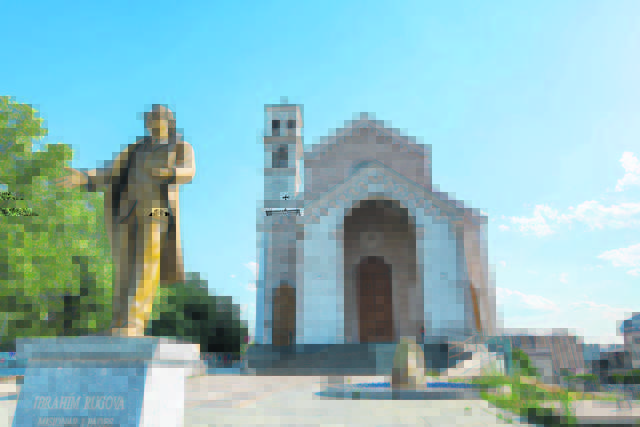
Let’s face it, Kosovo’s capital isn’t on anybody’s bucket list of travel destinations.
In fact many would be hard pressed to locate Pristina on a map without the help of Google, but a weeks ago Bohemian FC supporters suddenly became very interested in finding the best way of getting there.
Without direct flights from Dublin, a couple of hundred Bohs fans made their way to the city that was under Ottoman rule for nearly 500 years – and home to pop star Dua Lipa for four – using varying combinations of trains, planes, and in my case, automobile, as I drove from Bulgaria.
We were there to watch the Gypsies take on FC Ballkani for a finely balanced second-leg Conference League tie.
The Northsiders held a narrow 2-1 lead from the first leg in Dublin and fell behind 3-1 on the night before a late goal from Pat Hickey forced extra time. Despite Bohs dominating the final half hour, the match went to penalties with Jordan Flores slotting home the decider, much to the delight of the travel-weary away support.
Due to UEFA regulations, the match had been moved from Ballkani’s tiny stadium in the town of Suva Reka, to the Fadil Vokrri Stadium where Ireland take on Kosovo in a Nations League clash next month.
The stadium holds about 13,000 and up to 900 Irish fans are expected to follow in the footsteps of the Bohs fans to Pristina on Thursday, September 24, and aside from the football they can look forward to exploring a surprisingly engaging city where everything worth seeing is within walking distance.
Pristina’s café culture is impossible to ignore. Coffee shops are everywhere, but finding space or speedy service is a tricky task. It took us three attempts to find a place where we could grab a quick breakfast on a busy Friday mid-morning.
Kosovo’s young nationhood is impossible to miss. The striking national flag with its gold silhouette map of the country and six white stars representing the main ethnic communities is everywhere.
Not far from the national stadium a huge, free?standing monument made from giant capital letters spelling out the English word NEWBORN, is a living symbol of a country still finding its feet.
It was unveiled on February 17, 2008, when Kosovo declared independence and it is repainted every year with a new theme to represent the country’s development.
A short walk away lies the Cathedral of Saint Mother Teresa, a figure whose legacy has attracted criticism in recent years, but who’s still revered in the country where her ethnic Albanian parents were from. The neo-Romanesque cathedral was consecrated in 2017 and has two Italian-style bell towers, one of which is accessible to visitors and has a viewing platform that looks across the city.
From that vantage point you can see the Pjetër Bogdani National Library, a Brutalist confection of concrete domes and wire mesh on the University of Pristina campus that’s worth dropping into. The campus is right beside Mother Teresa Boulevard, the main pedestrian street that’s lined with cafés packed from morning to late evening.
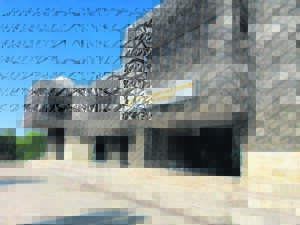
The Pjetër Bogdani National Library
A night stroll down the Boulevard reveals another side of the city, with young families, Pristina’s teenagers and tourists all soaking up the lively atmosphere and enjoying coffees, browsing stalls, and enjoying burek filled with meat, cheese, spinach, or potatoes, grilled meats, or flija, the layered pastry dish that’s a local speciality.
Kosovo is majority Muslim so there’s not as much focus on alcohol as we’re used to, but beer is easily found in local bars and a large local Peja will only set you back €2.
Many of the Bohemian fans found a home-from-home in the Beer Garden pub, a five-minute walk from the national stadium that has a sweet craft beer on tap as well as a selection of local lagers.
For a taste of everyday life, the Green Market, about 15 minutes northwest of the city centre, is a must. Stalls spill over with peppers, tomatoes, cheese, and spices, and the air is thick with the smell of grilled meats from nearby eateries. It’s the kind of place where you can wander, watch, and lose yourself for a while.
History buffs will want to explore the old town, where the Imperial Mosque and the Clock Tower speak to centuries of Ottoman rule. Cobblestoned streets lead to the Ethnographic Museum, a traditional house filled with costumes, carpets, and everyday objects that tell the story of Kosovan life before the wars and the independence.
For those with time on their hands, and indeed taking in Pristina’s main sights doesn’t take long, the Graçanica Monastery, half an hour outside the city, or the Bear Sanctuary that’s 22 km away and home to rescued brown bears, might be worth visiting.
Pristina may never rival Paris or Rome on the tourist trail, but for a weekend of football, history, strong coffee, and cheap beer, Kosovo’s capital provides a satisfying experience.
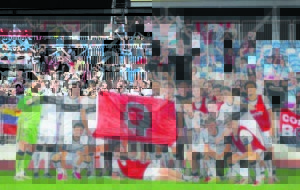
Bohs celebrate their win in Pristina with their travelling support
Related News