Residents call for rethink of 18,500-home Dunsink plan
Padraig Conlon 12 Aug 2026
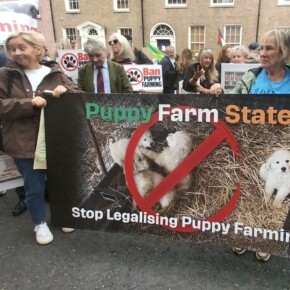
Finglas residents have called for major changes to plans for an 18,500-home urban quarter at Dunsink, claiming their community could bear the brunt of its traffic, construction and environmental effects without having been given a meaningful voice in the planning process.
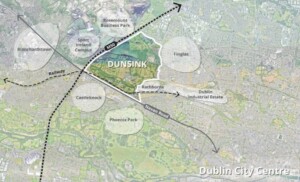
The proposed Dunsink City Quarter would eventually accommodate an estimated 46,000 people, making it larger than Swords and significantly more populous than Finglas itself.
Although the 425-hectare development lies within the administrative area of Fingal County Council, residents and public representatives say many of its most immediate consequences will be felt across the boundary in Finglas South, which comes under Dublin City Council.
Their concerns centre on the proposed phasing of the development, pressure on the Ratoath Road and surrounding routes, building heights of 15 storeys or more, the future of Scribblestown Lane and Dunsinea Lane, and development around the former Dunsink landfill.

Residents have stressed that they are not opposed to the construction of new homes but want the scale and sequencing of the project reconsidered before the plan is adopted.
“Finglas supports new homes, but we are saying build responsibly,” local resident Niamh Lambert said.
“Finglas should not be expected to absorb the traffic, construction, environmental impacts and high-density development for an entirely new town without the infrastructure, environmental protections and genuine engagement that any community deserves.
“The authority promoting this plan is Fingal County Council, yet the communities expected to experience many of the impacts are in Finglas, within the Dublin City Council boundary.
“Residents feel they have been asked to carry the impacts of a major new town without having had a meaningful voice in shaping it.
“We want a plan that is fair, sustainable and respects the people who already call Finglas home.”
The statutory public consultation on the Draft Dunsink Urban Area Plan ran from June 19 until July 31 and ultimately attracted 454 observations.
However, residents have criticised the way the process was conducted. Fingal County Council held a public information event at Blanchardstown Library on July 13, but no equivalent council event took place in Finglas.
Residents say many people in the area only became aware of the scale of the proposals through neighbours and community organisations rather than through direct communication from the council.
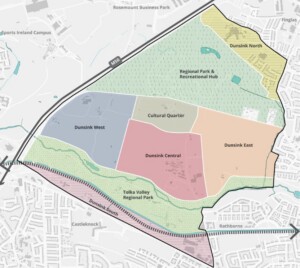
The draft plan divides the Dunsink lands into eight development areas. These include three residential neighbourhoods, Dunsink East, Dunsink Central and Dunsink West, as well as a cultural quarter centred on Dunsink Observatory and a regional park and recreational hub on the former landfill.
The homes would be delivered in three phases. The initial phase would provide approximately 2,500 homes, followed by a further 8,000 in the second phase and another 8,000 in the final phase.
The development is expected to include social and affordable housing, cost-rental homes and properties for private sale.
Dublin North-West TD Paul McAuliffe said the scale of the project meant its relationship with neighbouring communities had to be carefully considered.
“The Dunsink site is over 60 per cent the size of the Phoenix Park, Dublin’s largest urban park,” he said.
“The plan’s target of 18,500 homes and approximately 46,000 residents would make Dunsink larger than Swords, Fingal’s own largest town, and significantly larger than Finglas itself.”
Mr McAuliffe said there remained concern about the proposed phasing of development and whether the initial stages would be concentrated towards Finglas.
He warned that this could result in the earliest development relying heavily on existing roads, schools and other services instead of providing new infrastructure from the outset.
“Residents are very concerned that the Finglas side will see immediate development while the remainder of the site will remain unchanged for many years,” he said.
Transport is among the most contentious elements of the draft plan.
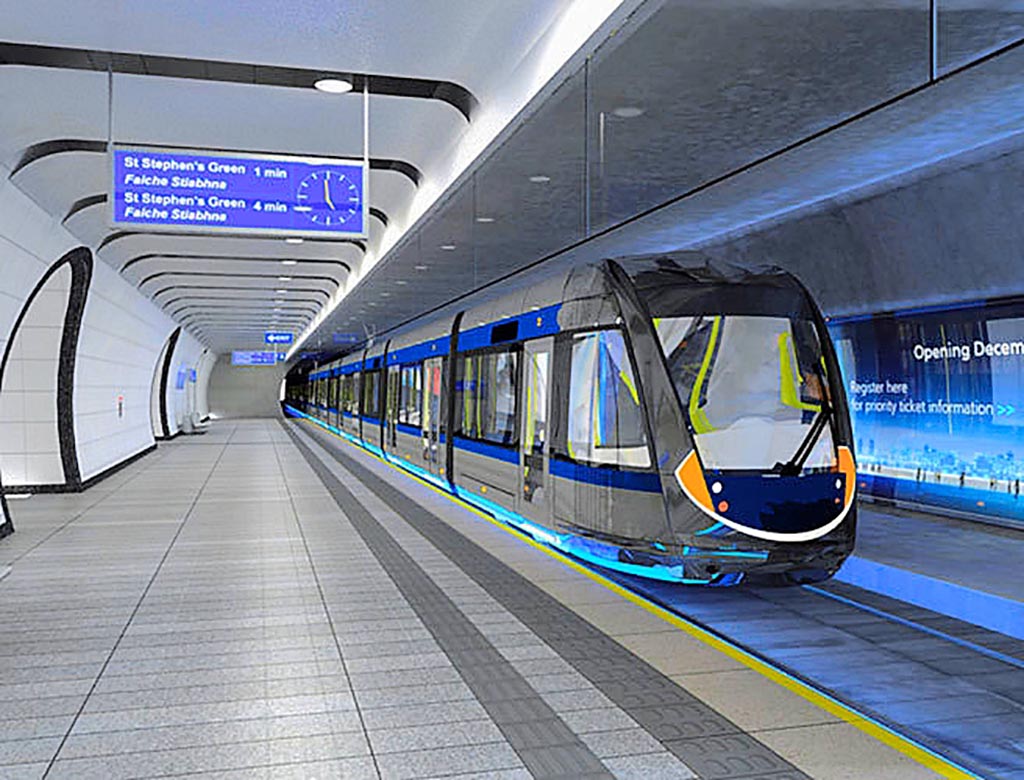
It proposes enhanced connections with Ashtown and Navan Road Parkway train stations, additional bus services and a future extension of the Luas Green Line towards Tyrrelstown.
A network of walking and cycling routes would connect the new neighbourhoods with the Royal Canal, Hamilton Way, Tolka Valley Greenway and the proposed regional park.
Residents and local representatives have questioned when that infrastructure would be delivered and whether the first homes could be occupied long before the larger public transport projects were completed.
Sinn Féin TD Dessie Ellis said roads around Finglas and Dunsink were already under severe pressure.
“The existing roads around Finglas, particularly the Ratoath Road, and those other roads around the proposed Dunsink Quarter are already heavily congested and are at capacity,” he said.
“The Navan Road is heavily congested during peak periods. Junction 6 of the M50 is always busy and will be expected to see increased demand as a result of this project.”
Residents are seeking guarantees that transport, schools, healthcare services and community facilities will be provided before or alongside substantial housing construction.
Two of the most sensitive locations are Scribblestown Lane and Dunsinea Lane, rural routes close to the River Tolka corridor which retain hedgerows, mature vegetation and much of their historic character.
Residents fear increased traffic, road widening and associated infrastructure could permanently alter the lanes and damage important wildlife corridors. They have also expressed concern about the potential effect of transport works on Tolka Valley Park.
Dublin City councillor Anthony Connaghan said reliance on the two lanes as principal access routes should be reconsidered.
“Scribblestown Lane, in particular, runs alongside a sensitive section of the River Tolka corridor and retains much of its rural character,” he said.
“Significant traffic increases, road widening and associated infrastructure could have a detrimental impact on biodiversity, landscape character and local amenity.”
Residents have called for Scribblestown Lane, Dunsinea Lane and Tolka Valley Park to be protected as part of any revised plan.
They are also seeking greater disclosure of environmental monitoring connected with the former Dunsink landfill, which the draft plan proposes to incorporate into a regional park and recreational hub.
They want independently verified assurances about ground conditions, water quality and landfill gas before construction proceeds on surrounding lands.
The proposed height and density of development close to existing housing has also caused concern.
The draft plan allows for buildings of different heights across the site, including a small number of landmark or “gateway” buildings of 15 storeys or more.
Paul McAuliffe said some of the proposed buildings would be significantly taller than the traditional two-storey homes in neighbouring estates and called for the “stepping up” principle to be applied generously.
Residents want the tallest buildings placed well away from existing homes, with building heights increasing gradually towards the centre of the new development.
Dublin City councillor Keith Connolly said the project also raised serious questions about cooperation between Fingal County Council and Dublin City Council.
“As a Dublin City councillor representing Finglas, I find the apparent lack of coordination between Fingal County Council and Dublin City Council concerning this proposal quite startling,” he said.
“While the Dunsink lands lie within Fingal County Council’s administrative area, many of the impacts of this development will be experienced by communities within Dublin City Council, particularly Finglas South.”
Traffic, public transport demand, school capacity, active travel routes and community infrastructure would all extend beyond the local authority boundary, he added.
Fingal County Council has described Dunsink City Quarter as an opportunity to deliver housing on an unprecedented scale while creating a connected and environmentally sustainable community.
Speaking when the draft plan was launched in June, Fingal County Council chief executive AnnMarie Farrelly described the project as a “once-in-a-generation opportunity” to deliver much-needed homes.
“This new City Quarter in Dunsink will play a key role in that, and we are committed to delivering it,” she said.
Mayor of Fingal Cllr Tony Murphy said the plan would provide high-quality housing alongside sustainable transport, community facilities and natural amenities.
“This ambitious plan will deliver a climate-resilient, well-connected urban quarter, designed around the principles of compact living, sustainable transport and rich natural heritage,” he said.
Residents say they are now calling on the council to use the submissions received during the consultation to reconsider the scale, height and phasing of the project and to provide a greater role for the Finglas community before the plan is finalised.
Related News