Fine Gael investment plan “deeply wrong” says Pidgeon
Mike Finnerty 12 Aug 2026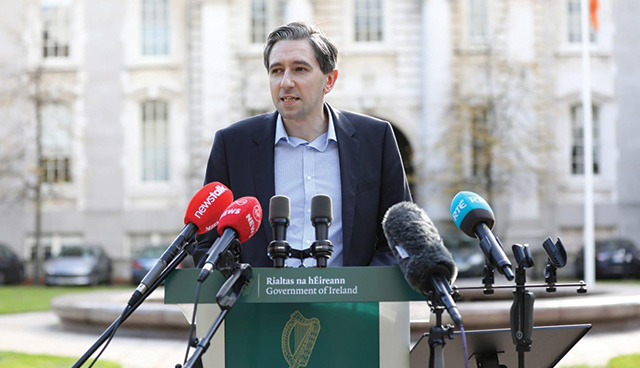
The Green Party have said that the Tánaiste’s proposed investment account could tax investors who lose money.
With Budget kite-flying season in full effect, Simon Harris is testing the waters for his brainchild, an investment account for the “squeezed middle.”
This week, the Minister for Finance said that savers are being “screwed over,” and after very little for middle-income earners in the last two Budgets, he wanted to retain support among Fine Gael’s key voter cohort.
Harris has cited a similar model, which is currently in operation in Sweden, as his preferred model.
Under the Swedish model, taxes are charged as a total value of a person’s savings, which means that tax bills are mandatory even when investments make very little or in some cases, lose money.
Green councillor Michael Pidgeon, who serves as the party’s spokesperson on finance, said that the Tánaiste’s model is not the right path forward.
Instead of copying Sweden, the Greens are arguing that Ireland should copy another Nordic country; Norway.
Pointing out the flaws in the proposed system which the Tánaiste is borrowing from, Pidgeon said “the Swedish system carries real risks for Ireland’s savers and investors. A system that bills people who are losing money is deeply wrong. The state should only be calling in the taxman when big gains are being taken.”
Pidgeon was speaking as the Greens launched their own alternative; they are calling for an investment model where there is no taxes on losses or ordinary gains, and taxes are only introduced when real profits are withdrawn.
Pidgeon remarked that the Tánaisate “hasn’t thought it through.”
“The Swedish system carries real risks for Ireland’s savers and investors. A system that bills people who are losing money is deeply wrong,” the South-West Inner City councillor said.
“This is why the Greens are instead proposing a Norwegian-style investment account, which is simple to use and much fairer for consumers.”
The Green proposal offers an alternative to Fine Gael’s proposals; under their proposed rules, investment accounts would not offer tax relief to “harmful” industries such as fossil fuel extraction, tobacco or weapons.
The party is also suggesting that the default investments offered to consumers would support the construction of cost-rental housing and green energy projects.
Pidgeon stated that there is roughly €175 billion “sitting in Irish banks earning next to nothing.”
That figure represents a difference of opinion between government and opposition parties: the Fine Gael view is to put that money back into the hands of normal consumers and into investment portfolios, whereas the Greens want that money spent on “building homes and wind turbines.”
Pidgeon noted, “Ireland’s own investment fund divested from fossil fuels in 2018. It has just banned the import of goods from illegal settlements. It would be very strange to now hand people a tax break to invest in the very same things.”
Research from the Green Party shows that nine in every ten euros which sits in overnight accounts are “next to nothing,” well behind inflation, and that households are losing money in real terms simply by saving.

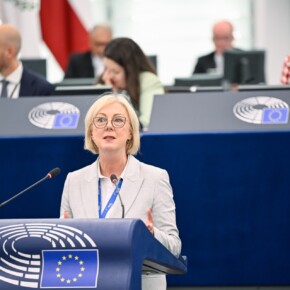
Green Party councillor and finance spokesperson Michael Pidgeon
The party said that their investment model is much “fairer” than the one that Fine Gael is proposing.
They claim that their model is a “simple, fair way for ordinary households to save and invest ethically, with a route for that money into homes and clean energy.”
The Greens’ document said that “most people would normally spread their savings across a fund (a basket of many investments), which reduces risk. In Ireland that rarely makes sense, because of how funds are taxed.”
At present, the rate on investment stands at 38% for people with an investment account, compared to 33% who buy shares directly.
Every eight years, a tax bill is sent out, regardless if someone sold someone on their account or not, and in the event that money is lost, the money cannot be offset.
Pidgeon said that when all of those variables are put together, it creates a system “that works for those who can afford tax advice and investment managers, and punishes everyone else for using the safest, most diversified option available to them.”
Pidgeon questioned the logic of following Sweden’s model to the letter, noting that in 2018 and 2022, Swedish citizens were taxed on investment regardless if someone made a profit or a loss.
“If a bubble bursts or a global recession hits, Irish households would be taxed while they lose money,” he warned.
Under the Green proposals, nothing is taxed inside the account, with no tax returns, and the Capital Gains Tax rate is set at 33%.
In addition, companies operating in illegally occupied territories, by reference to the United Nations database of business enterprises involved in settlements in the occupied Palestinian territory, would not be allowed to be invested in under the Greens’ proposals.
Discussing his plans earlier this year, the Tánaiste told the Dáil “it is clear that the traditional financial culture in Ireland is to favour savings over investment, and this is the case for many in the EU, however, Ireland has much lower uptake than any other member states for assets held in investment funds.”
“The need for people to build their savings and investments has proven greater in recent times with the changing nature of work – in that there is more self-employment, people have more jobs throughout their life, and they have a longer than average life expectancy.”
The Tánaiste said, “with increased inflation, we see the value of money held in savings accounts diminish and this highlights the value of diversifying these savings.”
With the government parties looking to keep their middle-class base sweet with this year’s Budget measures, disability advocates said that the government should be more focused on helping people with disabilities get through the winter.
Joan Carty of the Irish Wheelchair Association said that last year’s Budget left people with disabilities €1,400 worse off.
“Many have suffered as a result, having to decide between heating and eating. We can’t let that happen again. We are demanding that the government deliver on its promise to pay a Cost of Disability Payment this year, and we are demanding an initial payment of €55 per week.”
“It’s time for the government to deliver. We need the disabled community to come out on September 19th and send a clear message that the government must deliver now”.
Affordable Ireland Campaign will be hosting a pre-Budget protest on September 19 to put pressure on the government to tackle the cost-of-living crisis.
Related News