Sonas Calls on Coimisiún na Meán to Act on Online Misogyny Linked to Violence Against Women
Dublin People 29 May 2026
Ireland’s largest domestic violence service provider, Sonas Domestic Violence Charity, is calling on Coimisiún na Meán to take stronger action against misogynistic influencer content online, warning that harmful attitudes toward women popularised in the “manosphere” are increasingly reflected in frontline domestic violence services.
The charity has written to the regulator, requesting a meeting to discuss these concerns as well as possible solutions.
The charity is calling on Coimisiún na Meán to require social media platforms operating in Ireland to restrict, de-amplify and age-gate misogynistic influencer content that promotes violence, coercive control or hatred of women, naming content associated with figures such as Andrew Tate as a particular concern. Clients of the charity emphasised that their children are on “age-appropriate” platforms, such as Instagram Teen accounts, and still come across this content.
Sonas is urging the regulator to examine whether existing online safety powers can be strengthened to require platforms to reduce algorithmic amplification, introduce stronger age-gating and limit children’s exposure to misogynistic influencer content that promotes coercive control, violence toward, or hatred of women.
According to Sonas, frontline staff are increasingly seeing examples of children and young people repeating misogynistic language and displaying hostility, disrespect, violent or controlling behaviours toward women in ways that appear consistent with narratives promoted by some online influencer ecosystems.
In one case, a child supported by Sonas repeatedly called his mother a “dish pig” and threw objects at her when he disliked his dinner. Another child (a teenage boy), whose mother recounted the physical abuse her husband subjected her to, told her she “deserved it because [she’s] a b***h”. The charity says incidents such as this highlight concerns around the normalisation of degrading attitudes toward women among some children and young men.
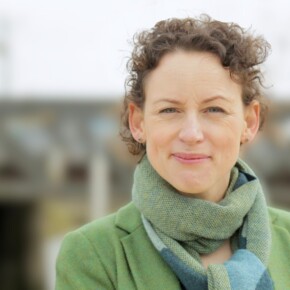
“Domestic abuse does not emerge in a vacuum,” said Fiona O’Malley, CEO of Sonas Domestic Violence Charity, “Frontline services are increasingly seeing language, attitudes and behaviours toward women that mirror themes commonly promoted online by misogynistic influencers. We should all be deeply concerned when children are exposed to content that presents women as inferior, manipulative or deserving of harm, humiliation and control.”
O’Malley said Sonas is not calling for blanket censorship or restrictions on legitimate conversations around masculinity, relationships or gender.
“This is not about policing debate or banning difficult conversations,” she said, “It is about recognising that content which glamorises coercive control, dehumanises women or promotes hostility toward them can contribute to harmful attitudes, particularly among children and young people.”
Sonas says Ireland’s online safety framework already provides a basis for stronger protections, including obligations on platforms to reduce children’s exposure to harmful content and implement age assurance and content moderation measures.
The charity believes these protections should explicitly extend to misogynistic influencer content that promotes coercive control, degrading treatment of women or gender-based hatred.
“We have spent decades responding to violence against women after the harm occurs,” said O’Malley, “We also need to look seriously at prevention. No child should grow up believing it is acceptable to harm, intimidate, humiliate or degrade women. If we want to reduce violence against women, we must challenge the messages teaching boys that disrespect is masculinity.”
Related News