Watt’s New: Taskforce has new boss
Mike Finnerty 29 Apr 2026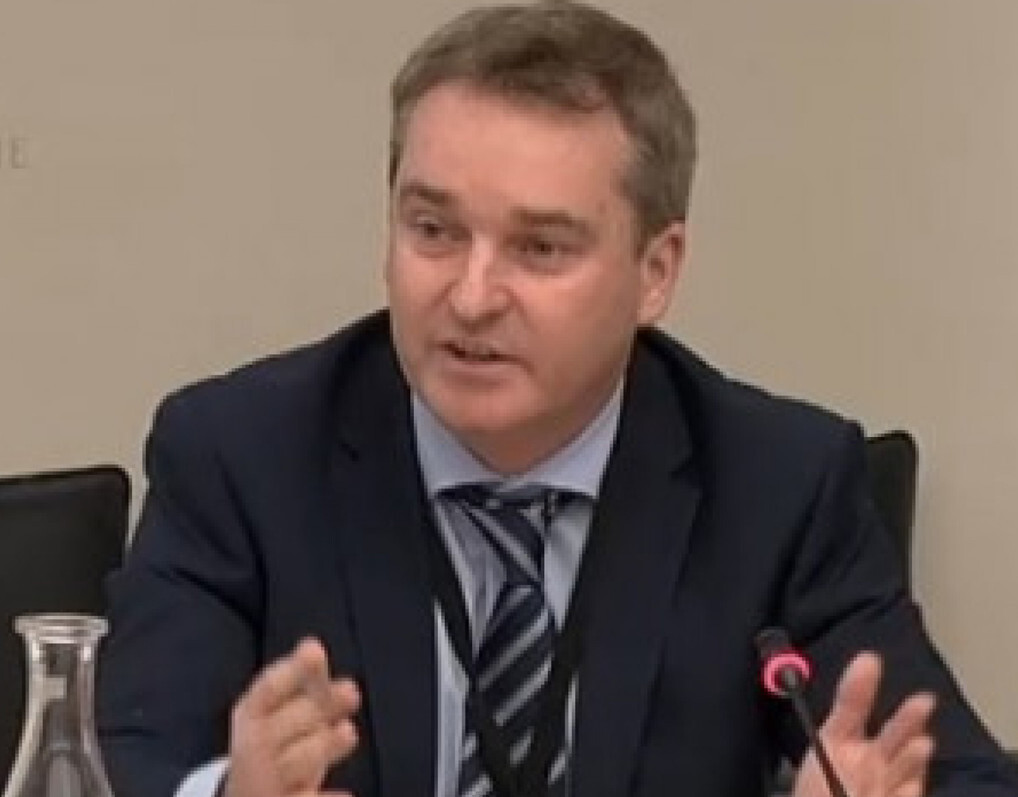
Local politicians have weighed in on the appointment of Robert Watt as Dublin City Taskforce boss.
The taskforce, set up by Fine Gael prior to the 2024 local elections, aims to revitalise Dublin city centre, with the taskforce recommending that €114 million be set aside by Dublin City Council to rejuvenate the area.
Watt, a high-profile civil servant with stints at the Department of Public Expenditure and the Department of Health, has now been tasked with implementing the Taskforce’s recommendations.
The Taskforce recommended that Dubliners be able to vote for their own directly-elected mayor, redevelop the GPO as a major public building, turn derelict sites into high-density residential areas, increase the number of Gardaí on the streets and improve waste management in the city centre.
The Taskforce was commissioned by Simon Harris shortly after becoming Taoiseach in 2024, which was spurred by a feeling within Fine Gael that, despite the party being in power since 2011, Dublin city centre had fallen into a state of disrepair under their watch.
Local politicians have welcomed the idea of restoring the city centre, but have questioned how the government is going about it.
Sinn Féin councillor and by-election candidate Janice Boylan has, in particular, expressed a healthy dose of scepticism at Watt being handed a €280,000 salary.
The North Inner City councillor said, “the people of Dublin Central did not need a report to tell them that decades of Fine Gael and Fianna Fáil underinvestment allowed our city centre to become run down and unsafe.”
She dismissed the plan as a “big, headline-grabbing announcement followed by snail-pace delivery.”
Boylans said that Watt’s appointment is “another big headline – but what my constituents want to see are big results.”
“People are also baulking at the reported salary of €280,000 – another bumper pay packet for one of the boys when 1.4 million workers in this state, many of them here in Dublin Central, have a yearly salary of less than €45,000,” she remarked.
Boylan said there is a “cruel irony” of Watt being paid such a salary in the context of the cost-of-living crisis.
She said that “Fianna Fáil and Fine Gael have made life so unaffordable for ordinary people in this city – refusing to deliver meaningful cost-of-living supports, failing to deliver affordable housing or affordable childcare, and hiking up rents for Dublin City Council tenants.”
The Sinn Féin councillor also expressed concern that sites involved with the 1916 Rising could be destroyed in order to facilitate the works.
“Instead of using our streets’ history to drive economic and social regeneration, they are choosing to pave over it,” she said.
“That’s just not good enough, and the people of Dublin Central will not accept second best.”
Local Labour TD Marie Sherlock was more cautious in her appraisal of Watt’s appointment.
Sherlock noted that the task force’s recommendations were published 18 months ago, prior to the 2024 general election, and very little, if any, of the recommendations have been carried out.
The appointment of Watt, she hopes, will help implement the plans instead of being designed to grab headlines.
The Labour TD said there is now “very considerable expectation and high hopes of Mr. Watt in his role; I want to wish him well in this task.”
She said that funding and “political will” are the difference between the project faltering and succeeding.
Former An Post CEO David McRedmond, in his role as Taskforce chair, said that €1 billion was needed to fully implement the Taskforce recommendations.
In February, Dublin City Council requested that €114 million be allocated to the project; Sherlock noted there is still ambiguity about whether the government actually granted the request.
The Taskforce’s 2024 report said that at least €100-€150 million would be required per annum to implement its recommendations, but there are no indications if the government allocated any funding to the project in 2025 or indeed if they listened to Dublin City Council’s recent request.
Sherlock said it was “critical” that funding is now implemented, and that the Taskforce recommendations aren’t left to gather dust.
She said that the role of local government is “absolutely crucial,” and that local reps must be a major part of the process.
“It must not be an usurping of the role of local government or councillors but rather complements their role and functions to govern for the people of Dublin.”
“The government must state, without any ambiguity, that it will provide the full capital and yearly funding required to deliver on the Taskforce; otherwise, the new authority and Dublin City Council will not succeed in regenerating the most neglected parts of our city,” she said.
While Fine Gael controls the all-powerful Minister for Finance brief, the findings and recommendations of the Dublin City Taskforce fall under the purview of the Department of Public Expenditure, which is controlled by Fianna Fáil.
Fianna Fáil TD James Geoghegan serves as the party’s Dublin spokesperson, and he said last June it is “essential” that the Taskforce’s vision “is now matched by money.”
Lord Mayor of Dublin and by-election candidate, Ray McAdam, said that the redevelopment of the GPO is a “priority.”
“The redevelopment of the GPO presents an opportunity to not only honour our history but also to create a busier, safer and more vibrant O’Connell Street as the major thoroughfare in our capital’s city centre,” McAdam said.
The North Inner City councillor said, “there is potential here for the government to increase the use of the GPO complex to generate greater activity in the area, while the overall redevelopment can make O’Connell Street a vibrant centre of history, enterprise and culture. It should be the heartbeat of our revitalised capital city.”
McAdam said, “we also need to look at the potential for an educational and creative use for the building. The GPO should be a living civic space that also supports learning, creativity, design and innovation in the heart of the capital.”
He stated, “by opening the space up for educational facilities, it will generate regular daily footfall, bring fresh energy into the city centre, support surrounding businesses, and contribute to a stronger cultural and civic identity for the street.”
€200 to €500 million in funding has been earmarked by the government for the upgrade of the GPO.
“The potential to breathe new life into an important landmark right at the centre of the capital is a massive opportunity. We need to see a redevelopment of the building, both to preserve our heritage and so it continues to serve future generations in Dublin,” McAdam said.
Related News