A century after it was compiled, the 1926 Census has finally been opened to the public, offering people across Dublin and beyond an extraordinary chance to step back into the lives of their families, neighbours and communities.
The landmark release was marked at a state event in Dublin Castle on Saturday, hosted by Taoiseach Micheál Martin and Patrick O’Donovan Minister for Culture, Communications and Sport Patrick O’Donovan, before the full archive went live at midnight on www.nationalarchives.ie
Carried out just four years after the foundation of the Irish Free State, are fully searchable and freely accessible to the public.
The release follows the expiration of the 100 year confidentiality rule under the Statistics Act 1993.
The scale of the project behind the scenes has been immense.
Supported by a Government investment of €5 million, the work took almost three years to complete and involved the conservation, digitisation and transcription of more than 750,000 records.
The result is one of the most significant historical resources ever made available in the State.
Speaking at the launch, the Taoiseach described the census as a defining moment in Ireland’s early years as an independent nation.
“I’m honoured to mark the official release of Census 1926 by the National Archives, the first census undertaken by the independent Irish Free State.
“When we think back to 1926, ten years after the Easter Rising and following a decade of conflict and upheaval, from the War of Independence to the Civil War, Census 1926 shows the ambition of the new state to carry out a census of the 2.9 million people living in Ireland as part of its programme of nation building and to do so so soon after independence was a bold and visionary decision. As such, Census 1926 marks a historic moment in the development of modern Ireland.
“For people across Ireland, the release of the 1926 Census offers something deeply personal.
“It allows us to step back in time and encounter our own families, neighbours and communities as they were almost a century ago.
“It brings history out of the abstract and into the everyday.”
That sense of personal connection is expected to drive huge public interest, particularly in a city like Dublin where generations of families remain rooted in the same communities.
Minister O’Donovan highlighted both the national and global significance of the release, noting the importance of the records for the Irish diaspora.
“This is a significant day for the country and our diaspora as we see for the first time in a century the records of how we lived in 1926.
“I want to congratulate the team at the National Archives for their trojan work in getting us to today, not only through carefully cataloguing and preserving the records for generations to come, but also in putting together such a comprehensive programme of activities to allow people to engage with this important part of our history.
“Indeed, there are over 1,000 people alive today who were recorded in the 1926 Census.
“These individuals offer a unique, living perspective on the past century of Irish life.
“The National Archives launched a Centenarian Ambassadors Programme last year which captures the first hand personal testimony of those who see their own original family records made public today. It is wonderful to see some of them here this afternoon.”
The idea that living individuals can trace themselves back to entries in the census adds a powerful human dimension to what might otherwise be seen as a historical dataset. The Centenarian Ambassadors initiative gathered nearly 100 participants, with 48 selected to share their experiences, living not only across Ireland but also in North America, the UK and Australia.
For Orlaith McBride, the release goes beyond statistics and official records.
“As we open these census records to the public, we honour those who came before us their resilience, their ambition, and their contribution to the Ireland we know today.
“But perhaps most importantly, today reminds us that the history of Ireland is not only found in great events or political milestones, it is found in the lived experiences of its people.
“Every entry in this census represents an individual life, a family unit, a shared human story that together forms the fabric of our nation.”
That perspective is central to a major new exhibition, The Story of Us, which has opened at Dublin Castle to coincide with the release.
The exhibition uses documents, images, audio visual material and census returns to paint a vivid picture of life in Ireland in 1926, exploring everything from work and religion to sport, language and daily routines.
Running until August 2027, the exhibition will later travel internationally to London and Boston before touring Ireland in partnership with local authorities, as well as appearing at the National Ploughing Championships.
The wider public programme surrounding the census also includes a newly published book, The Story Of Us, Independent Ireland and the 1926 Census, featuring contributions from historians and members of the National Archives team.
A major conference exploring the census as both a historical and contemporary resource is scheduled for June, while a theatre production, The Good Luck Club, and a two part RTÉ documentary series will further bring the era to life for modern audiences.
Jennifer Banim said the release underlines the enduring importance of census data in shaping the country.
“The Census is a record of our past, a measure of the present and a plan for the future.
“Today’s release of the 1926 Census records shows the value of gathering and preserving this data.
“I would like to acknowledge the excellent work of the National Archives, and all those in the CSO, who have contributed to this historic release.
“We in the CSO are proud to continue the long tradition of census taking in Ireland with Census 2027 providing an online option for the first time, marking another milestone in the history of the state.”
For readers across Dublin, the release is likely to spark a wave of curiosity and discovery.
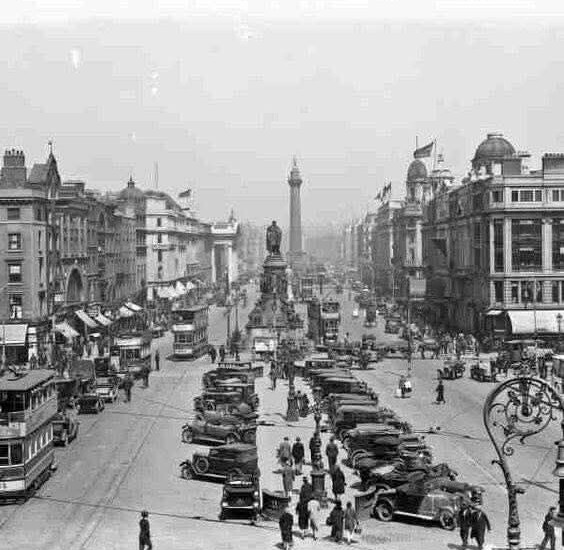
Streets, families and workplaces from a century ago are now just a search away, offering a rare chance to see how the city lived, worked and evolved in the early years of independence.
In a fast moving modern city, the 1926 Census serves as a powerful reminder that history is not distant or abstract.
It is personal, local and often closer than we think, waiting to be rediscovered in the names and stories of those who came before us.