Cycling through the heart of Czechia’s wine country
Padraig Conlon 09 Jul 2026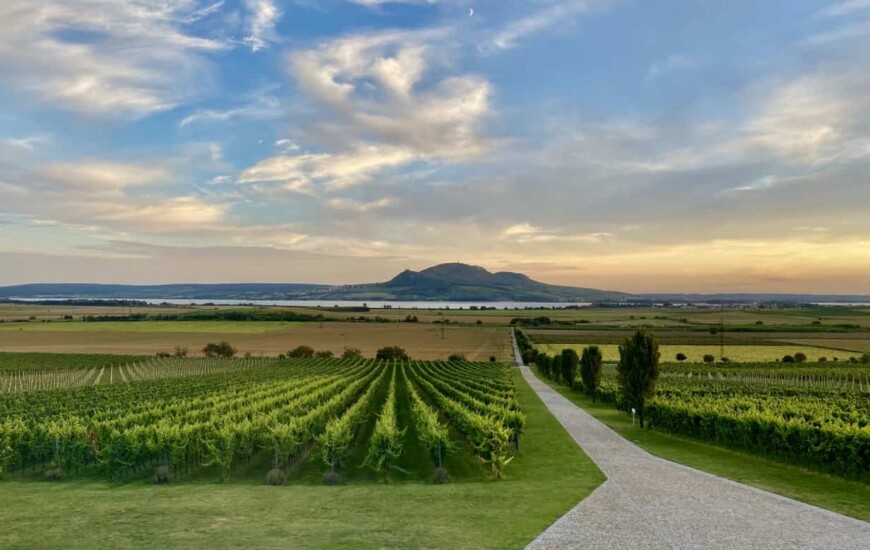
The first thing you notice is the silence.
Cycling through South Moravia on a warm June morning, the only sounds are the soft whirr of tyres on smooth tarmac, birdsong drifting from the trees and the occasional church bell echoing across the vineyards.
The roads are quiet, the hills forgiving and every few kilometres another vineyard, wine cellar, or château appears on the horizon.
It is a landscape that seems designed to be explored slowly.
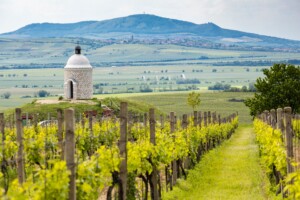
For three days I discovered this beautiful corner of south Czechia by bicycle, weaving through vineyards, sampling award-winning wines and learning how one of Europe’s oldest wine regions has quietly reinvented itself after decades of communist rule.
Our journey began with a flight to Vienna before an hour and a half drive across the Austrian border to Mikulov, an elegant town nestled beneath the limestone cliffs of the Pálava Hills.
The vineyards begin almost as soon as you leave the motorway.
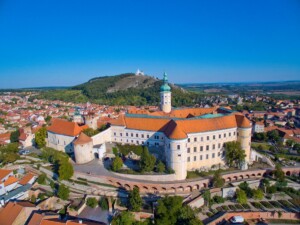
Neat rows of vines ripple across gentle slopes, church spires punctuate the skyline and, perched above it all, Mikulov’s magnificent castle (pictured above) watches over the town from the top of a limestone cliff.
With its pastel-coloured buildings, cobbled streets and café-lined squares, the town feels like somewhere that has escaped the attention of mass tourism.
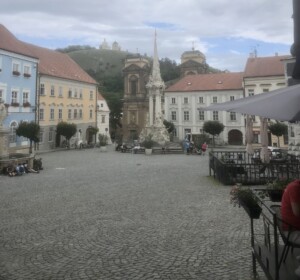
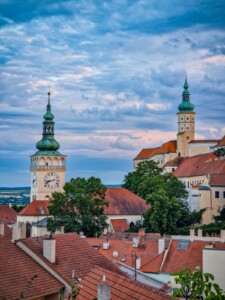
Although technically outside the UNESCO-listed Lednice-Valtice Cultural Landscape, Mikulov has become the natural starting point for exploring South Moravia, Czechia’s premier wine region and home to around 95 per cent of the country’s wine production.
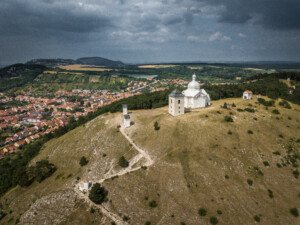
Before dinner we climbed the short trail to Svatý Kopecek, or Holy Hill (pictured above), one of the Czech Republic’s oldest pilgrimage sites.
The ascent is gentle, but the reward is spectacular.
Below us stretched an endless patchwork of vineyards, villages and rolling countryside disappearing towards the Austrian border, glowing in the soft light of early evening.
It was the perfect introduction to a region where the landscape and the wine are inseparable.
Our base for the next two nights was the excellent Hotel Tanzberg, a stylish hotel in the heart of Mikulov, before we headed to our first wine tasting with the Dunajovské kopce winegrowers’ association.
There, Dominika Holešínská explained how a group of local producers came together in 2010 to champion wines grown around the neighbouring villages of Brezí and Dolní Dunajovice beneath the Pálava Hills.
Listening to her speak, it quickly became obvious that wine here is far more than an agricultural product. It is history, identity and family tradition poured into a glass.
That story becomes even more remarkable when you understand what nearly happened to South Moravian wine.
Following the communist takeover in 1948, vineyards were nationalised and absorbed into huge state-run cooperatives.
Quantity mattered more than quality.
Historic vineyard boundaries disappeared, traditional grape varieties were replaced with higher-yielding alternatives and wine became an industrial product rather than an expression of place.
Many family wineries vanished.
Yet, despite everything, the government allowed households to keep tiny private plots for personal use.
On these modest parcels of land, families quietly preserved generations of knowledge, continuing to grow vines and make wine long after commercial independence had disappeared.
When communism fell in 1989, those traditions became the foundation for an extraordinary revival.
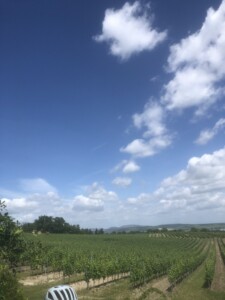
Today South Moravian wines regularly collect international awards and the region has earned comparisons with Tuscany, although locals would probably argue that such comparisons miss the point.
South Moravia possesses a character entirely its own.
Our first evening ended at Marcel Ihnacák Restaurant, where beautifully prepared local produce was paired with crisp white wines that reflected the freshness of the surrounding vineyards.
The following morning we swapped walking shoes for bicycles.
If there is a perfect way to experience the Lednice-Valtice Cultural Landscape, this is surely it.
Covering around 55 square miles, the UNESCO World Heritage Site is less a single attraction than an enormous living landscape, where forests, lakes, vineyards, castles and ornamental monuments have been carefully composed over centuries by the Liechtenstein family.
The cycling itself is wonderfully accessible.
Dedicated paths wind through avenues of mature trees and open countryside, linking villages and historic landmarks without the traffic or steep climbs that often accompany European cycling holidays.
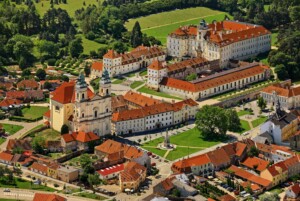
Our first stop was Lednice Château (pictured above) a spectacular Neo-Gothic masterpiece whose elaborate towers and carved stonework appear almost theatrical against the surrounding gardens.
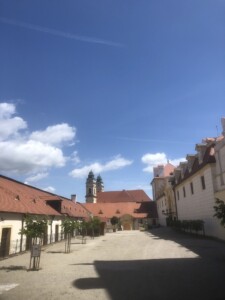
Originally dating from the 13th century before later transformations, the château remained in the hands of the Liechtenstein family until it was seized by the state after the Second World War.
Much of its lavish interior survives remarkably intact.
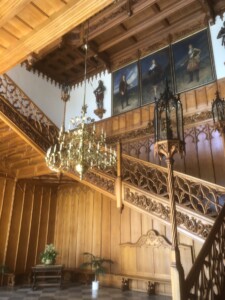
Ornate wood carvings cover entire rooms, an enormous marble bath speaks of aristocratic luxury and an extraordinary 116-arm brass chandelier still hangs where it always has.
Outside, the gardens are equally impressive.
Formal French parterres burst with colour while sweeping English-style parkland stretches towards one of the estate’s most unexpected landmarks – a 60-metre-high Minaret designed to resemble an Islamic tower, standing improbably among the trees of southern Moravia.
The route towards Valtice continued through some of the region’s finest scenery.
Vineyards rolled gently across the hills, interrupted by quiet villages where flower boxes spilled from cottage windows and cyclists outnumbered cars.
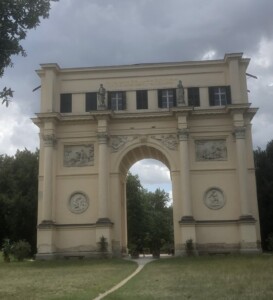
Along the way we passed the Temple of Diana (pictured above), an elegant hunting lodge inspired by the Arc de Triomphe, one of several architectural follies scattered throughout the landscape.
It is the sort of place that encourages frequent stops, not because the cycling is difficult but because there is always something else worth seeing.
That afternoon we visited Vican Winery and met Tereza Vicanová who represents a younger generation of South Moravian winemakers.
Between tastings she also introduced us to the winery’s own cheese-making operation, demonstrating how deeply food and wine remain connected throughout the region.
Among South Moravia’s specialities are its distinctive ice wines and straw wines.
Ice wine is produced by harvesting grapes only after temperatures fall below minus seven degrees Celsius, allowing frozen fruit to produce intensely concentrated juice when pressed.
Straw wine achieves similar richness by drying ripe grapes on straw before fermentation, creating luxurious dessert wines that showcase remarkable patience and craftsmanship.
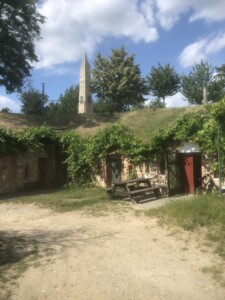
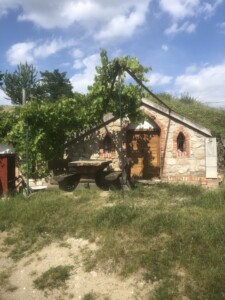
On our final day, we explored the Velké Pavlovice wine sub-region, passing through, Boretice famous for its charming lanes lined with traditional wine cellars (pictured above), before climbing gently towards the Slunecná viewpoint.
From the top, the panorama stretched across an ocean of vines broken only by distant church towers and small villages.
It was impossible not to stop, breathe deeply and simply admire the landscape.
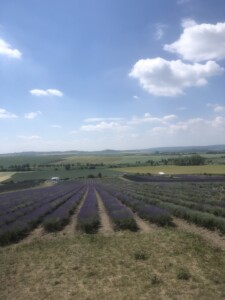
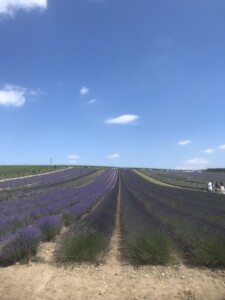
Later we reached Lavandia (pictured above) where rows of fragrant lavender created an unexpectedly Provençal scene in the heart of Czechia.
Our final night’s accommodation was the excellent Hotel Lotrinský before we finished the trip with an unforgettable evening at Knoll Winery.
As bottles appeared one after another, conversation flowed between hosts and visitors. Stories were shared, glasses refilled and laughter echoed through the cellar. It never felt like a formal tasting. Instead, it felt like being welcomed into someone’s home.
That warmth may be South Moravia’s greatest strength.
The castles are magnificent. The cycling is excellent. The scenery is effortlessly beautiful and the wines deserve every award they have received.
Yet what stays with me most are the people whose families quietly protected these traditions through decades of upheaval and who now share them with genuine pride rather than performance.
South Moravia is sometimes described as the Tuscany of Czechia, but after three days exploring its vineyards and villages, the comparison feels unnecessary.
This region doesn’t need to borrow another destination’s reputation.
It has earned one of its own.
If you want a cycling holiday that combines remarkable history, world-class wine, exceptional hospitality and landscapes best appreciated at an unhurried pace, South Moravia deserves a place high on your list.
Pádraig Conlon travelled to South Moravia as a guest of CzechTourism.
Related News