Local children still waiting for special school places
Padraig Conlon 15 Jul 2026
Some local families are facing another anxious summer as growing numbers of children with additional needs remain without an appropriate school place for September, campaigners have warned.
Local group Equality in Education Dublin North and West say the number of families coming forward seeking help is increasing and they fear this year’s school place crisis could be worse than ever.

The warning comes after Minister for Education Hildegarde Naughton (pictured above) told the Dáil in April that 2,680 children nationwide were without a school place for September 2026.
Campaigners say neither the Department of Education nor the National Council for Special Education (NCSE) has provided an updated figure since.
The group, which has been supporting families for the past three summers, says parents are once again facing uncertainty despite repeated promises that more special education places would be provided.
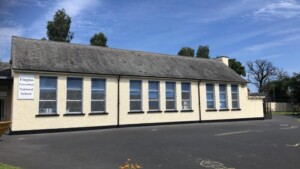
Campaigners welcomed the recent delivery of modular classrooms to Finglas Parochial School, describing it as an important step forward after months of delays.
However, they warned that building work has yet to be completed and said families need certainty that children will be able to begin school in September.
The group also said children due to attend the school should be allowed to begin from Junior Infants, arguing that pupils previously taught on reduced timetables in a school hall did not receive the same educational experience as other children starting school.
Among those waiting for progress is Rebekah Clarke, whose son Arlo was offered a school place at Finglas Parochial for September 2025 before the project was delayed.
“My son was offered a school place for September 2025.
“After fighting so hard to secure a place in the first place, we were then told there was a delay and that the classroom would hopefully be ready by March 2026,” she said.
“March came around and we were informed there would be further delays, and that the classroom might not be ready until as late as 2027.
“This was a huge setback and disappointment for our family but we raised our voices in national media, worked with local reps and now we are seeing some progress at last but this never should have happened.”
Rebekah Clarke urged other parents not to assume that a sanctioned school place guarantees their child will have a classroom.
“Any parent offered a school place for a child with additional needs, where there is no actual classroom, should listen to this story,” she said.
“Even though places are sanctioned, they are not guaranteed. In actual fact, the fight only began in our case after the classes were sanctioned.
“We had to fight for those classes to be delivered.
“An announcement should not be made unless the physical classroom is ready and waiting, or certain in the near future.”
The campaign group says other special education projects across Dublin North West must now be progressed urgently as more families continue to come forward.
One of those families is Jade Slator, whose five-year-old son Roman remains without a school place.
“Roman is five years old and is currently in his third year of exemption, which ends on 26 June 2026. He has no school placement and no July Provision,” she said.
“He is number one on the list for St Brigid’s Infant School, Gaelscoil Uí Earcáin and now St Canice’s as well, but there is still no relief in sight.”
Ms Slator said the family has received little support while trying to secure an appropriate placement.
“We have had no real help from the SENO. We are currently liaising with Healy Law in relation to our situation,” she said.
“It’s not just a school place we’re waiting on, we are still waiting for the final report from Roman’s Assessment of Need.
“Roman is ready for school. He deserves a place. We should not have to fight like this just to get him what he is entitled to.”
Equality in Education Dublin North and West says it will spend the coming weeks establishing the full scale of the problem across the region and warned that parents are prepared to return to public protests if sufficient progress is not made before the new school year.
Rachel Lowry, a parent, special needs assistant and co-founder of the group, said the Government needed to adopt a long-term strategy for special education.
“What we need in the longer term is a plan-led approach to special education provision, so that every child has an appropriate place in their own locality,” she said.
“Children should not be forced to travel across the city, sit at home, in a community centre on reduced hours or be left in limbo because the Department has failed to plan.”

Co-founder and local councillor Conor Reddy (pictured above) said previous campaigns had shown that public pressure was often the only way to secure action.
“Unfortunately, as we have seen every year so far, people power is the only thing this Government listens to,” he said.
“People power put this issue on the agenda when parents first started protesting. People power got results for parents who were agonising through refusal after refusal last year.
“An escalation of our efforts is needed this year to move the Government from reactivity to proactive planning and delivery.
“It is deeply shameful that the Government push parents to these lengths.”
The campaign group said it will also work with parents across the country in the coming weeks to press for a national plan to ensure every child with additional needs can access an appropriate school place in their local community.
On Wednesday (8th) Labour Education spokesperson Eoghan Kenny TD criticised the Government’s decision to bring forward the deadline for applications for special classes for the 2027 school year to 1 September, warning that it will pile unnecessary pressure on families already struggling to secure appropriate school places for their children.
“Bringing forward the deadline for applications for special classes to 1 September is yet another example of the Department of Education making decisions without any regard for the realities facing families,” he said.
“Parents will now have just weeks after the summer holidays to secure assessments and essential documentation.
“Families already navigating an overly complex system are being forced into an unnecessary race against the clock.
“Those who cannot gather the required paperwork in time risk their child missing out on an appropriate school place.
“This decision is not about putting children first. It reflects a Department that is more focused on managing budgets than meeting needs.
“Parents of children with additional needs already spend far too much time fighting the State for basic supports.
“Instead of making that journey easier, Government continues to create new barriers.
“Families deserve certainty and a system that works with them, not against them.
“Labour has long called for a single centralised school place application system.
“Parents should not have to navigate multiple application processes and inconsistent admissions.
“A single national system would provide certainty for families, allow the Department to identify demand properly, and ensure new special classes and school places are planned where they are needed.
“This latest decision is another symptom of a Department that is failing to plan ahead. Rather than introducing deadlines that make life harder for parents, Government should be building an education system that guarantees every child the school place and support they are entitled to.
“Children with additional needs deserve better, and Labour will continue to fight for an education system that puts their needs ahead of bureaucracy.”
Related News