Carlton site deal clears major MetroLink hurdle
Padraig Conlon 15 Jul 2026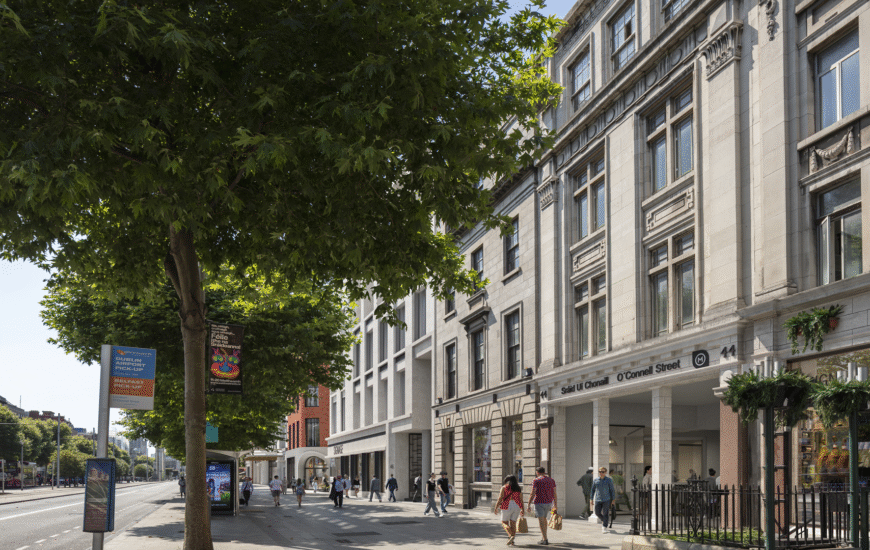
Metrolink moved a major step closer last week after the State secured one of the most strategically important sites in Dublin city centre, paving the way for construction on O’Connell Street.
Transport Infrastructure Ireland (TII) confirmed on Wednesday (8th) it has acquired the former Carlton Cinema site, a 5.5 acre property extending almost 200 metres along Dublin’s principal thoroughfare that had previously formed part of a €500 million redevelopment proposal by UK property group Hammerson.
The acquisition brings one of the capital’s largest long vacant city centre sites into public ownership and removes a significant hurdle ahead of the construction of MetroLink, while also creating an opportunity to accelerate the long promised regeneration of O’Connell Street and the north inner city.
The purchase was widely welcomed by Government, transport agencies and Dublin City Council, all of whom described it as a major milestone for both the MetroLink project and the future redevelopment of Dublin city centre.
However, the announcement also prompted renewed political debate over the project’s rising costs and how the landmark site should ultimately be developed.

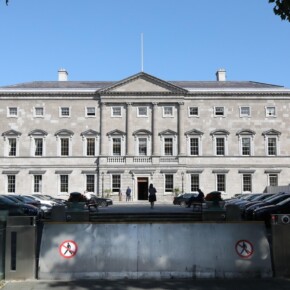
Transport Minister Darragh O’Brien (pictured above) described the acquisition as “another crucial step” towards the delivery of MetroLink, saying purchasing the site by agreement would reduce the risk of delays and additional costs associated with the compulsory purchase process.
“Purchasing this key strategic site by agreement ensures that the risk of delays and increased costs arising from the Compulsory Purchase Order process are significantly reduced,” he said.
Advance works on MetroLink are expected to begin in early 2027, with the proposed railway linking Swords and Dublin Airport with the city centre before continuing south to Charlemont.
An underground station at O’Connell Street will provide connections with Luas and Dublin Bus services and is expected to become one of the busiest stops on the network, which is forecast to carry approximately 53 million passenger journeys in its opening year.
The proposed railway will connect Swords, Dublin Airport and the city centre before continuing south to Charlemont.
An underground station at O’Connell Street will become one of the busiest points on the network, linking directly with Luas services and Dublin Bus routes.
Transport planners estimate the system will carry approximately 53 million passenger journeys during its first full year of operation.
The O’Connell Street station alone is expected to support up to 1,000 jobs during construction.
Between 100 and 200 workers will be employed during advance works, rising to between 250 and 450 during the main construction phase, before a further 250 to 350 workers become involved through long-term delivery contracts.
Across the wider MetroLink programme, the project is forecast to support approximately 8,000 direct construction jobs annually, alongside a further 2,750 indirect jobs throughout the supply chain.
Beyond transport, the acquisition is being presented as the catalyst for a broader regeneration of one of Dublin’s most prominent but long neglected streets.
TII chief executive Lorcan O’Connor said the purchase demonstrated that MetroLink extended well beyond the delivery of a rail line.
“The acquisition of this important site will allow us to redevelop this important area for the benefit of the Irish people, while also bringing benefits that will make the construction of MetroLink easier,” he said.
“With the area now in State ownership, we can work closely with the Dublin Task Force and other government agencies to enable the development and implementation of a master plan so that our main street can be something that we can all be proud of.”
National Transport Authority chief executive Anne Shaw described the deal as “an important turning point” for Dublin, saying it illustrated how major transport infrastructure could drive wider urban renewal.
MetroLink Interim Programme Director Michael Flynn said the project represented an opportunity to reshape the city centre for future generations.
“Securing the site is about much more than delivering MetroLink,” he said.
“It is an opportunity to reshape the heart of Dublin and ensure the city centre thrives for generations to come.”
Dublin City Council also welcomed the acquisition, describing it as an important step in implementing the recommendations of the Taoiseach’s Dublin City Centre Taskforce, whose report identified a series of major interventions aimed at revitalising the capital.
Lord Mayor of Dublin Daryl Barron said the purchase would help breathe new life into vacant parts of the city while respecting its heritage.
“As the newly elected Lord Mayor of Dublin, I am dedicated to collaborating with partners in revitalising our empty spaces and breathing new life into our neighbourhoods, all whilst celebrating our local heritage,” he said.
Robert Watt, head of Dublin City Council’s Project Management Unit, said the development represented far more than a transport project.
“TII’s investment is about much more than a single project,” he said.
“It forms part of a wider movement that is transforming our city, bringing new life to underused and vacant sites, and creating vibrant places where people can live, work and enjoy.”
He said the redevelopment offered an opportunity to diversify the economic profile of O’Connell Street while increasing the supply of high quality housing in the city centre.
Political reaction to the announcement, however, reflected differing priorities over how the landmark site should now be developed.
During Leaders’ Questions in the Dáil on Wednesday, Sinn Féin leader Mary Lou McDonald challenged Taoiseach Micheál Martin over the cost of MetroLink, arguing that the public deserved greater clarity about the project’s final price.
She said more than €354 million had already been spent before construction had begun and highlighted reports that more than €80 million had been paid to acquire the former Carlton site.
“People are entitled to know where this ends,” she said.
“We have already seen the National Children’s Hospital become synonymous with spiralling costs and repeated overruns.
“The Government must ensure MetroLink does not follow the same disastrous path.”
While welcoming the State’s purchase of the Carlton site, McDonald argued it should become the starting point for a wider regeneration programme encompassing Moore Street, Moore Lane and Henry Place.
She said redevelopment should protect the historic significance of the 1916 battlefield while delivering genuinely affordable housing alongside cultural and heritage projects.
“Dubliners deserve regeneration, homes and heritage protection, not another blank cheque for a project whose costs continue to spiral,” she said.
Fianna Fáil Senator Mary Fitzpatrick also welcomed the acquisition but called on Government to ensure affordable and cost rental homes are built above the future MetroLink station.
She described the purchase as a once in a generation opportunity to transform one of the capital’s most important sites.
“For too long, this site has sat idle at the heart of our capital,” she said.
“We now have a unique opportunity to combine world class public transport with the delivery of affordable homes in the city centre.”
Fitzpatrick said Dublin should follow the example of other European cities by integrating housing with major transport infrastructure, increasing the residential population of the city centre while supporting local businesses and helping address the housing crisis.
She said she intends to raise the proposal directly with the Taoiseach and the Minister for Housing.
The acquisition marks the latest milestone in a project that has been planned for more than two decades and has repeatedly faced delays arising from planning, legal challenges and rising construction costs.
While significant questions remain over MetroLink’s final budget and delivery timetable, supporters argue the purchase of one of Dublin’s most important city centre sites removes a major obstacle to progress and creates an opportunity to address several longstanding challenges at once, including transport capacity, housing supply and the long awaited regeneration of O’Connell Street.
Related News