Your say in Europe starts here
Padraig Conlon 27 Oct 2026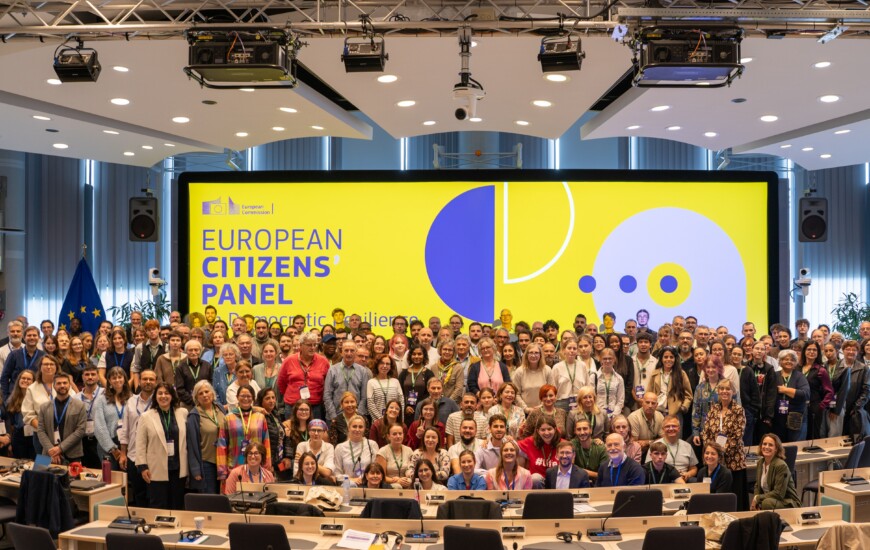
Dubliners can help shape Europe’s response to the challenges facing democracy — and taking part is easier than you might think.
Voting gives us a say in who represents us and the decisions they make. But what about the months and years between elections?
How can people bring their everyday experiences to the attention of those shaping European policy?
For Dubliners who want to contribute, the European Commission’s Citizens’ Engagement Platform offers a place to start.
Its Democratic Resilience Debate invites people across the EU to share ideas about strengthening democracy, making participation more accessible and ensuring that different voices are heard.
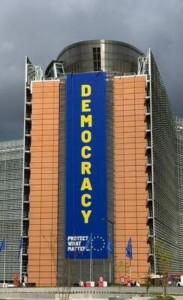
This “Democracy, protect what matters” banner was installed on the front of the Berlaymont building in Brussels
You can put forward your own suggestions, read contributions from other people, comment on proposals and support ideas you agree with.
Contributions can be made in any of the EU’s 24 official languages, including Irish.
The questions behind the debate are relevant to everyday life.
What would make it easier to get involved in decisions affecting your community?
What helps people feel that public bodies listen?
How can younger people and others who are often under-represented have a meaningful say?
These are issues on which experience matters.
Someone involved in a residents’ group, a student contributing to a school discussion or a volunteer helping neighbours may bring a different perspective to the same challenge.
The online debate runs alongside the European Citizens’ Panel on Democratic Resilience, which brings together 150 randomly selected citizens from all 27 EU Member States, including Ireland.
Participants reflect a range of ages, educational backgrounds and experiences.
One-third are under 29, helping ensure that younger generations contribute to discussions about Europe’s democratic future.
The panel first met in Brussels in September and held its second session online from October 16–18.
Participants will return to Brussels from November 20–22 to finalise recommendations for the European Commission.
Their task is to consider how people and communities can help democracy withstand pressures such as disinformation, polarisation and declining public trust.
Contributions to the online debate help inform this wider process.
You do not have to be selected for the panel to offer an idea or describe a barrier that prevents people from getting involved.
There is also a role for community organisations, schools and other groups.
They can use the platform to promote events connected to the debate and share the conclusions afterwards, bringing local discussions to a wider European audience.
The process includes follow-up. The panel’s recommendations will be submitted to the Commission, which will consider how they can inform its work.
Feedback will explain the policy actions informed by citizens’ contributions and recommendations.
For Dublin communities, this is an opportunity to connect local experience with a European discussion. An idea developed through a neighbourhood meeting or a conversation among volunteers can become part of a debate reaching beyond Ireland.
Democratic participation begins with people having something to say — and a way to say it. This platform provides another route for those voices to reach decision-makers.
To share your ideas and join the Democratic Resilience Debate, visit the European Citizens’ Engagement Platform
Related News