Unveiling hidden harm in student relationships: TU Dublin led research reveals alarming trends
Padraig Conlon 13 Oct 2026
New research into student relationship culture has found that behaviours associated with pressure, control and surveillance can become normalised in student relationships, often appearing through the language of care, concern, affection or insecurity.
The Feel Seen report, funded through the Higher Education Authority (HEA) EDI Ending Sexual Violence and Harassment National Awareness Campaign Fund, examined how students understand, experience and respond to relationship behaviours across higher education in Ireland.
This ongoing campaign has been further funded by CUAN, the National agency for Domestic, Sexual and Gender-Based Violence. CORE Research carried out the survey and online community platform on behalf of the partner HEIs.
The research was conducted in two phases: an anonymous quantitative survey of 330 students across 12 Irish higher education institutions between February and March 2026, followed by a qualitative online research community involving 25 students in April 2026.
The research forms part of an ongoing awareness campaign led by TU Dublin in partnership with other HEIs, with further phases focused on developing these findings into a rolling social media campaign over the coming months. This week is the launch of this campaign.
The findings reveal a key paradox. Students demonstrated a strong understanding of what healthy relationships should look like, with 95% saying feeling emotionally safe was essential or very important, while 96% said being able to say “no” without guilt, pressure or fear and being respected when they disagree were equally important.
Yet these same principles were often reported as missing or difficult to find in everyday relationships. 55% of students said being able to say no without pressure or guilt was often missing or hardest to find, while 42% said the same about being respected when disagreeing.
37% identified independence as something often missing or difficult to find.
The findings suggest that the challenge for change is not simply a lack of awareness about healthy relationships. Instead, this is a translation challenge.
The research shows that this is because harm rarely arrives looking like harm.
Instead, it often arrives looking more like care, concern, affection, humour or insecurity, with students sometimes recognising that something feels uncomfortable or controlling before having the language or confidence to identify it as harmful.
“The constant texting/checking in and the isolation. We tell ourselves they are just ‘really into us’ or ‘protective’ because of past trauma.
“We normalize it as a sign of how much they care, rather than a lack of respect for our autonomy.” – One female student surveyed
The research also found that recognition does not automatically lead to intervention.
When unwanted comments, touching or staring happen in group settings both online or in person, 43% of students said the most common response is to stay quiet or ignore it, while 27% said students tend to laugh it off or treat it as banter. Just 9% identified direct public challenge as the most common response.
Crucially, the report also explored how digital behaviours associated with monitoring and control were often seen as ordinary parts of relationships, with 71% of students saying expecting an immediate reply from a partner was normal, 64% consider sharing live location with a partner normal, and 58% consider checking who a partner follows, likes or interacts with online to be normal.
The research also explored students’ experiences and perceptions of pornography. Students highlighted the influence of pornography on expectations around sex, with 82% saying it influences ideas of what sex should look like, and 63% saying it influences expectations around riskier sexual activities.
The findings have implications for higher education institutions, student unions and organisations working in student wellbeing, equality and prevention, highlighting the need to help students recognise everyday forms of harm earlier, develop language to describe their experiences and feel more confident addressing harmful behaviours.
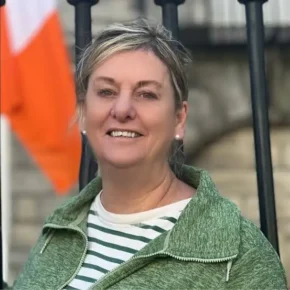
Catherine Bolger (she/her), Lead Project Partner on the HEA National Awareness Campaign on Ending Sexual Violence and Harassment and Sexual Violence Prevention and Response Manager TU Dublin had this to say:
“Recognising the power of students’ voices in driving change and challenging harmful behaviours has shaped this campaign. We are deeply grateful to everyone who has given so generously of their time and insights to our research by sharing their experiences of relationships, personal interactions and the challenges of navigating consent and healthy relationship patterns and behaviours they have experienced and witnessed both in person and in their online worlds.”
The research forms part of an ongoing awareness campaign led by TU Dublin in partnership with other HEIs, with the next phase focused on developing these findings into a national awareness campaign.
The research shows that the desire for healthier relationships is already there. The challenge is creating the conditions for students to recognise, respond and act on what they see.
Online supports are available from:
- HEI Student Support Services and Student Union Offices
- Speakout.ie
- Dublin Rape Crisis Centre
- SATU.ie
- alwayshere.ie
- toointoyou.ie
- Womensaid.ie
- mensaid.ie
- The Samaritans 24 hour free telephone line on 116 123
- Pieta House: 1800 247 247
- Gardai/Fire/Ambulance : 112/999
Full Statement From Catherine Bolger, TU Dublin (she/her):
“Recognising the power of students’ voices in driving change and challenging harmful behaviours has shaped this campaign.
“We are deeply grateful to everyone who has given so generously of their time and insights to our research by sharing their experiences of relationships, personal interactions and the challenges of navigating consent and healthy relationship patterns and behaviours they have experienced and witnessed both in person and in their online worlds.
“Creating a safe space to identify and challenge our own beliefs and behaviour patterns in relationships is one of the aims of the campaign, encouraging insight that facilitates change.
“Through awareness, education and open conversation, the campaign aims to help students recognise and challenge harmful behaviours, feel more confident seeking support, and build relationships grounded in respect, safety, consent and care.
“As Sexual Violence Prevention and Response Managers we acknowledge how difficult it can be to speak about experiences of sexual or gender-based violence, harassment or harmful behaviour, and the fears that can come with seeking help.
“For many this can result in dread such as “Will I be believed”, “Is it serious enough” “What will happen”, questions we see expressed through our anonymous reporting tool Speakout every day.
“We want every student to know that they will be listened to, believed and supported without judgement.
“Support each other by checking in, standing up and speaking out against negative behaviours, to help create an environment where harmful behaviour is no longer the norm and people feel safe and supported to come forward and receive help.”
Related News