Can Dublin finally fix its city centre?
Padraig Conlon 26 Aug 2026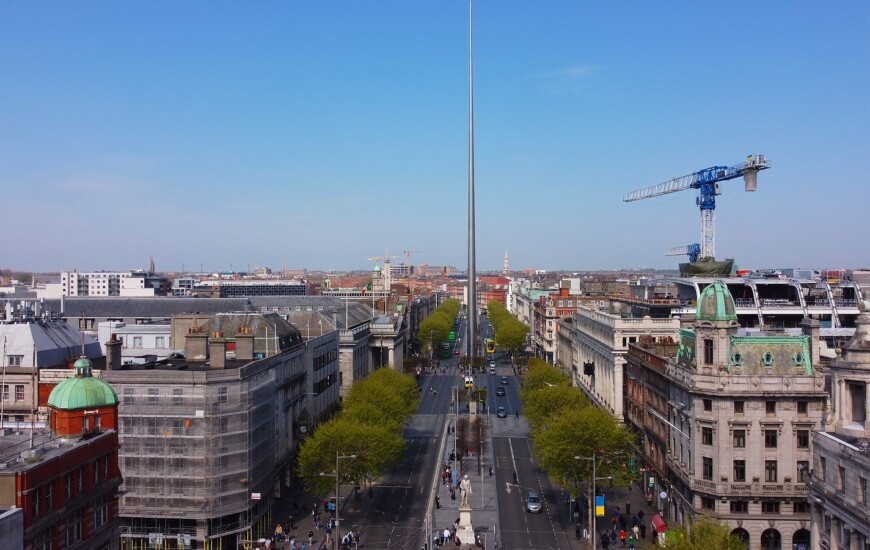
A new body charged with driving the regeneration of Dublin city centre is due to be established next month, marking a crucial new stage in an ambitious ten year plan to transform the heart of the capital.
The Special Purpose Vehicle, or SPV, will operate under Dublin City Council and is intended to provide the strategic direction, execution and oversight needed to turn the recommendations of the Dublin City Taskforce into reality.
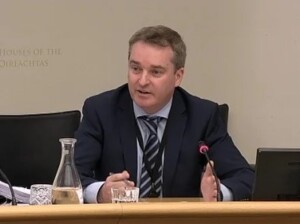
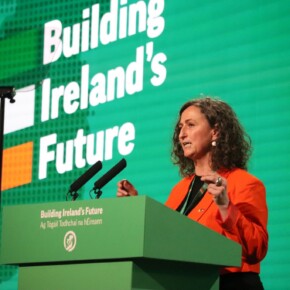
Former Department of Health Secretary General Robert Watt (pictured above) has been appointed CEO designate of the new body and is already heading an interim Project Management Unit established to get work moving before the SPV is formally constituted.
Next month, however, the emphasis will increasingly shift from plans and structures to delivery.
And Dublin has been here before.
For decades the capital has produced strategies for rejuvenating its main streets, tackling dereliction, increasing the city centre population and unlocking major development sites.
Some have succeeded. Others have progressed painfully slowly or failed to deliver the transformation originally envisaged.
The creation of a dedicated regeneration body is an acknowledgement that Dublin’s problem has not necessarily been a shortage of ideas.
The problem has been getting them done.
The latest attempt began when the Government established the Dublin City Taskforce in May 2024 and asked it to examine what was needed to make the city centre a more attractive, safer and more desirable place to live, work, visit and do business.
Its report, published five months later, proposed ten major interventions covering areas including O’Connell Street, housing, dereliction, policing, services for vulnerable people, waste, transport and the night time economy.
Government subsequently established an interdepartmental group to examine those recommendations and in June 2025 approved a ten year Roadmap for Delivery.
The roadmap is significant because it attempts to answer a question that has frustrated previous efforts to improve Dublin: who is actually responsible for making everything happen?
The answer has rarely been straightforward.
Dublin City Council controls many of the services people encounter every day, but responsibility for the city is shared with Government departments and agencies dealing with policing, health, housing, public transport and major infrastructure.
A problem visible on a single city centre street can involve several of them simultaneously.
The Government’s response has therefore been to create a new delivery structure, with an Oversight Board bringing together relevant departments and agencies and the new SPV intended to drive implementation.
Its initial focus will include the development of an Integrated Area Strategy setting out how projects across the core city centre should be sequenced over the coming decade.
There will be plenty to sequence.
Perhaps nowhere demonstrates both the opportunity and the difficulty better than O’Connell Street.
For years Dublin’s principal thoroughfare has been surrounded by arguments over vacancy, dereliction, antisocial behaviour and stalled redevelopment.
Yet some significant pieces are now beginning to move.
Transport Infrastructure Ireland acquired approximately two acres of the former Hammerson site on O’Connell Street in July to facilitate the construction of MetroLink. The acquisition also creates an opportunity for wider redevelopment above and around the proposed station.
The State therefore has an opportunity to combine one of the biggest transport projects in its history with housing and regeneration on one of Dublin’s most important streets.
The future of the GPO forms another part of the picture, with its redevelopment included in the Government’s regeneration roadmap.
Taken together, the GPO, MetroLink and the redevelopment potential around O’Connell Street represent an opportunity to reshape an area that has been the subject of regeneration proposals for years.
But the new body’s challenge extends far beyond flagship projects.
Vacancy and dereliction remain among the most visible problems in Dublin.
They are particularly difficult to reconcile with a city where finding somewhere affordable to live remains a major problem.
An empty upper floor or abandoned building in central Dublin is therefore no longer simply an eyesore. It represents potentially valuable space sitting unused during a housing shortage.
Existing mechanisms have not eliminated the problem.
Dublin City Council can inspect properties, place sites on its Derelict Sites Register, impose levies and ultimately pursue compulsory acquisition in appropriate cases.
Yet dereliction persists.
That is precisely the type of problem against which the new regeneration structure should eventually be judged.
The question is not whether another list of vacant properties can be produced. It is whether the State can actually get significantly more of them occupied again.
Housing also goes to the heart of a larger question about what Dublin city centre is for.
For much of the working week, enormous numbers of people travel into the centre and leave again in the evening.
Increasing the number of permanent residents is a central part of creating a city that remains active beyond office and retail hours.
More residents mean greater demand for shops, cafés, services and amenities. They also mean more people naturally using streets throughout the evening rather than parts of the city emptying after the working day.
Regeneration, in other words, cannot simply mean nicer paving and cleaner streets.
It has to mean making central Dublin function better as a place to live.
There are also major projects already under way or planned independently of the new organisation.
MetroLink will transform transport through the city if delivered. Other major public realm, cultural and housing projects have their own funding, timelines and responsible agencies.
That creates both an opportunity and a risk. The opportunity is that Dublin has several potentially transformative projects progressing at roughly the same time.
The risk is that without coordination they remain a collection of individual projects rather than becoming a coherent transformation of the city.
That is where the new regeneration body has the potential to matter.
Its success should not be measured by the number of meetings it holds, strategies it publishes or announcements it makes.
It should be possible to measure it on the streets. How many vacant buildings have returned to use?
How many homes have been created? How many derelict properties have been dealt with?
Are the major projects progressing? Is O’Connell Street improving?
Are more people choosing to live in the city centre?
And can somebody walking through Dublin see and feel that things are changing?
Those are much harder tests than publishing another vision for the capital.
There is also a danger inherent in the ten year timescale.
Large urban regeneration projects inevitably take time, particularly where planning, infrastructure, property ownership and substantial public expenditure are involved.
But a decade cannot become an excuse for waiting years before judging progress.
There should be visible milestones along the way.
The first should come relatively quickly.
By September 2027, a year after the new SPV is established, Dubliners should be able to see what has changed, what has started and what remains stuck.
That would also provide an opportunity to judge whether creating another layer in Dublin’s already complicated governance system has made delivery easier or simply made the organisational chart larger.
The new body does at least begin with significant political backing.
The Government has approved the ten year roadmap, an oversight structure has been established and one of the country’s most experienced senior public servants has been placed in charge of delivery.
The foundations are therefore being put in place, what happens next is considerably more important.
Dublin is not short of ambition. Nor is it short of architects’ impressions showing how neglected parts of the city might someday look.
What it has often lacked is the ability to turn that ambition into change quickly enough for the people who live and work here to experience it.
The establishment of the new regeneration body next month offers another opportunity to change that.
For all the strategies, structures and plans surrounding it, the measure of its success will ultimately be remarkably simple.
This time, Dublin has to deliver.
Related News