Bram Stoker’s long lost ghost story found by pharmacist
Jack Gleeson 21 Oct 2026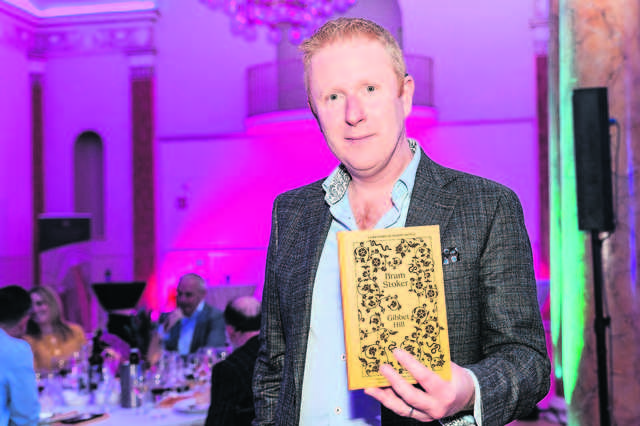
A ghost story written by Bram Stoker more than 130 years ago, then lost to literary history, has returned to print in time for Halloween, and every copy sold is helping fund research into preventable hearing loss in newborn babies.
‘Gibbet Hill’ was first published in a Christmas supplement of the Dublin Daily Express on December 17, 1890, but was never mentioned in any Stoker bibliography or biography.
It was rediscovered at the National Library of Ireland by Brian Cleary, a Rotunda Hospital pharmacist and lifelong Stoker enthusiast, and published by The Rotunda Foundation in 2024.
The story was written as Stoker was developing Dracula, the novel that would make his name.
Cleary’s search for the forgotten tale began after sudden sensorineural hearing loss changed his life in 2021.
The condition affects about 1,000 people in Ireland each year and requires urgent treatment by an ENT specialist to give patients the best chance of recovery.
Following cochlear implant surgery, and while on leave to retrain his hearing, he returned to his interest in Stoker and historical literature.
While researching Stoker’s work, he found an 1891 advertisement for the Dublin Daily Express Christmas Supplement. On October 12, 2023, he located the edition in the National Library of Ireland and found Gibbet Hill inside.
“Finding Gibbet Hill in the National Library was an absolutely extraordinary experience,” Cleary said. “I gasped when I saw it. I wondered, as I read, if I was the only living person who had read it.
“Since then, it has travelled further than I ever imagined, and I’m so grateful to everyone who has bought a copy. Stoker’s ghost story has found new readers, and Charlotte Stoker’s legacy is helping babies born today, just like the advocacy work for deaf children that she did herself.
“If you’re looking for something to read this Halloween, I hope you’ll choose Gibbet Hill, because every copy makes a real difference. I’m thrilled that we are able to fund research on potentially preventable hearing loss in newborns. What began with the loss of my own hearing might end with the possibility of saving someone else’s.”
All proceeds from the book go to the Charlotte Stoker Fund, administered by The Rotunda Foundation. The fund supports research into the prevention of acquired hearing loss in vulnerable newborn babies and is named after Bram Stoker’s mother, Charlotte, who campaigned for the education of deaf children more than 160 years ago.
Its first supported project, ÉISTIGÍ – Early Identification of Susceptibility to Gentamicin-Induced hearing loss – aims to identify newborns at genetic risk of hearing loss from gentamicin, an antibiotic. It uses a test called MT RNR1, developed by Genedrive.
The new edition of Gibbet Hill includes a foreword by Roddy Doyle, who writes from his own experience of deafness, along with Cleary’s account of the discovery, commentary from Stoker biographer Paul Murray, artwork by Paul McKinley, and a reproduction of Charlotte Stoker’s 1862 paper to the Dublin Statistical Society advocating education for deaf children.
• Gibbet Hill is available, priced €18.99, from rotundafoundation.ie/gibbet-hill/ and buythebook.ie, and as an ebook from Amazon.co.uk.
Related News