Star Wars fails to make the case for itself in 2026
Mike Finnerty 22 May 2026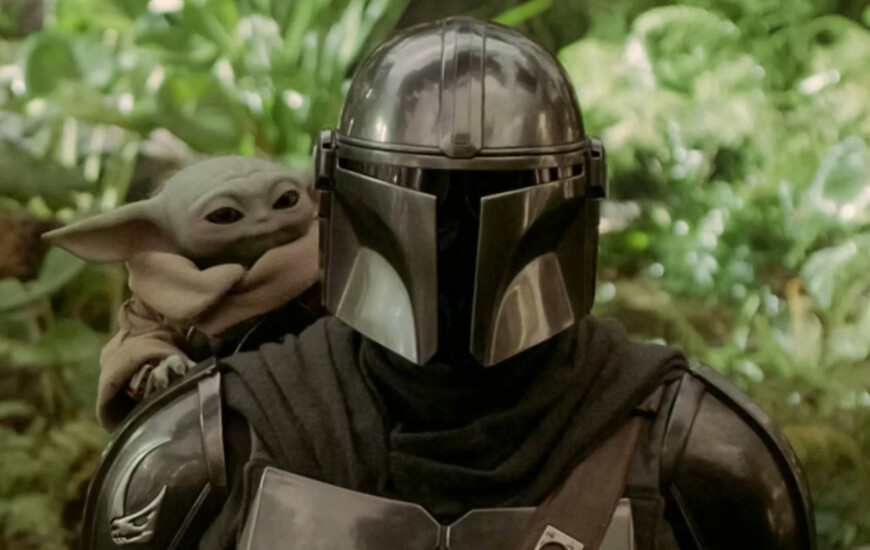
In the Rudyard Kipling poem The Ballad of East and West, there is the famous line “never the twain shall meet.”
The wheels have come off the Marvel Cinematic Universe after they expected too much of audiences; cinema-goers were expected to have watched seasons of television in order to get the full story.
Hence, the Kipling; film and television are two warring tribes, and should be kept separated.
Star Wars has also fallen victim to this curse.
2019 was a hinge point for Star Wars, with The Rise Of Skywalker jettisoning everything that was great from The Last Jedi and cobbling together an incoherent ending, and The Mandalorian breathing new life into the franchise.
Star Wars has been absent from cinema screens since The Rise Of Skywalker, with adventures in a galaxy far, far away taking place on the small screen since then.
The adventures of the Mandalorian and Baby Yoda (who, we are reliably informed, is actually called Grogu), were a genuine hit, and showed how Star Wars could operate in a TV straitjacket.
Each week, the Mandalorian arrives in a town, solves a problem, and rides off into the sunset like a Clint Eastwood cowboy.
There have been highlights of Star Wars’ transition to the small screen – season two of Andor being an explicit allegory for the limits of democratic protest under a military dictatorship is the best thing the franchise has done in years – but the sheen has worn off Star Wars again.
The franchise faces an interesting problem in 2026; how does it appeal to younger audiences, while still appealing to the hardcore fans who treat the franchise like a religion?
The Mandalorian and Grogu marking Star Wars’ return to the big screen implies that Disney are trying to appeal to those two demographics.
For the kids, Baby Yoda has been designed by a focus group to maximise cuteness and merchandise revenue, and for the hardcore fans, we get a story where Mando has to team up with Jabba The Hutt’s Son.
Baby Yoda gets all of the state-of-the-art puppetry and the movies’ big moments, while Mando gets the action scenes and the task of driving the film’s plot.
An early sequence, where the duo land on a city planet to find Jabba The Hutt’s son, is when the film sings; a four-handed merchant, voiced by Martin Scorsese of all people, captures the same spirit as the Mos Eisley Cantina scene from 1977.
The fast-talking, stammering merchant offers up information to Mando on where to find Jabba The Hutt’s Son, but refuses to take his money and asks him not to speak the name of local crime lords.
Scorsese’s character is only in two scenes, and yet you are left wanting more of him, as the film zips to the next location; it is exactly what Star Wars does best, inviting you to fill in the gaps of what happened next.
That scene also reveals the original sin of the film; it’s four episodes of the TV show stitched together.
It presents a chicken-and-egg situation; is the film trying to fit the established tone and style of the TV show, or is the TV show trying to fit the established tone and style of a Star Wars movie?
The episodic structure of the plot, the pacing, the requirement to have seen multiple episodes of the show to understand the story, and the flat, Netflix-style look lands the film in the “TV” camp.
Viewers with a keen eye may also notice the film using “The Volume” to generate large cities or forest landscapes; for those out of the loop, “The Volume” is a computer program, used on the TV show, to help bring down costs and explains why it looks like a video game.
Within 10 years, this film is going to look badly outdated; scenes using “The Volume” already carry the artificial gloss of AI imagery, and feel more like a fan film than an official Star Wars film.
In a post-Avatar world, Star Wars has struggled to claim the “wow” factor that the original films had in terms of location shooting; Tunisia and Norway are out, a hard drive and a blue screen in California are in.
The sequel trilogy had its issues, but it made the effort to shoot in real locations (such as Skellig Michael in County Kerry or Bolivia), which helped sell the fantasy.
The Red Hot Chilli Peppers lyric “space may be the final frontier, but it’s made in a Hollywood basement” springs to mind here.
The prequel trilogy has been reclaimed by millennials in recent years — ironic, considering the backlash helped push George Lucas to sell to Disney – and the film’s decision to mix real-life landscapes with CGI gloss creates this uncanny valley.
Harrison Ford became a global superstar because of the Star Wars films, in large part because it placed a regular guy in the middle of an epic battle involving space wizards, death stars and Jedi mind tricks.
Bill Murray was the breakout star of the Ghostbusters quartet because he was always one degree off to the side and felt like a normal person in the middle of paranormal hijinks.
In this case, we don’t have the human presence to act as the audience surrogate, and the film expects to coast on the cuteness of Baby Yoda to make up for it.
The choice of Jon Favreau as director makes sense; his work helped establish the visual tone and language of The Mandalorian upon release, much like how Michael Mann helped inform the look and style of Miami Vice.
Favreau is best known for his direction of the first two Iron Man movies (he was the man who convinced Marvel to give Robert Downey Junior a shot), as well as his work on the 2019 live-action Lion King remake.
Favreau is a technically accomplished director, and his direction here can be best described as “workmanlike.”
However, that may be the problem; this is a totally anonymous film with very few flourishes of what makes Star Wars, well, Star Wars.
Love it or hate it, The Last Jedi was at least an attempt by Rian Johnson to try something different and put his own mark on the Star Wars Universe, but in the case of Favreau, there is some heart and not much brain.
Favreau working alongside Dave Filoni, a Lucas protege, smacks of appeasement of the hardcore fans who throw their toys out of the pram the minute a director tries something with even the faintest bit of artistic flourish.
Favreau is the safe choice, a company man much like Roy Hodgson’s tenure as England manager, a yes man who won’t go against the grain.
As mentioned, 2026 is a strange cultural moment for Star Wars; next year marks 50 years since the very first one hit cinemas, but we are also a decade removed from the sequel trilogy.
The decision to bring Star Wars back to where it belongs, on a big screen, but basically releasing four episodes of a TV show duct-taped together, isn’t the bold thinking the franchise needs to stay relevant.
Related News