Planned Israeli matches set off political firestorm
Mike Finnerty 25 Feb 2026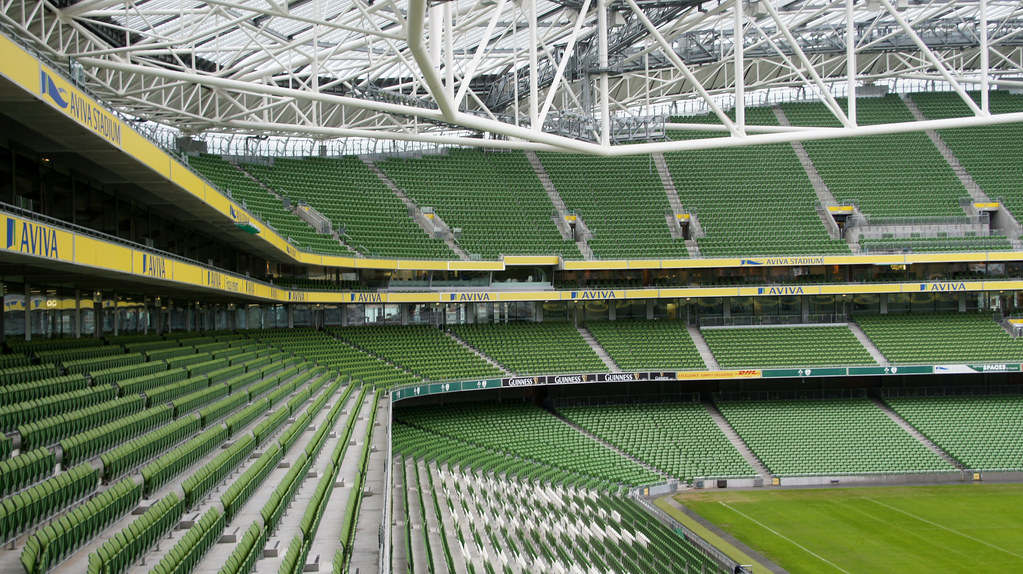
News that Ireland has drawn Israel in the UEFA Nations League has set off a political firestorm.
Politicians from government and opposition parties have weighed in on the issue, while organisation groups have questioned whether the fixtures should go ahead.
Ireland will begin their UEFA Nations League journey with two away fixtures in September, against Kosovo and Israel.
The first fixture with Israel will take place on September 27, and the return fixture against Israel will take place in Dublin on October 4.
The Israeli national team do not play their “home” fixtures in Israel itself since the war with Gaza began in 2023, with Israel playing their “home” fixtures in neutral venues (such as in Budapest).
However, there has been fierce resistance to Ireland taking part in the fixtures.
Former Ireland boss Brian Kerr said that the FAI need to “show a real bit of balls and refuse to play Israel.”
Speaking on Virgin Media, Kerr said “they should stand up, in my view, for the Palestinian state, the Palestinian people, and the Palestinian football organisation who have not been able to play games at home for years, but have also lost huge numbers of footballers during the war that was waged on them in Gaza.”
“They’ve lost their football grounds. Israel has at least six teams playing on ground and in stadiums that were previously the land of the Palestinian state; there’s been no real punishment for that.”
He called the government’s stance on the issue “complete baloney” and “a real sit on the fence job.”
Kerr’s comments came in the wake of the FAI saying that, despite being opposed to playing Israel on principled grounds, the sporting realities (namely, being disqualified from the UEFA Nations League) had to come first.
“While consultation has taken place with UEFA officials, the FAI does recognise that UEFA regulations outline that if an association refuses to play a match then that fixture will be forfeited and further disciplinary measures may follow – including potential disqualification from the competition,” the FAI explained.
The FAI wrote to UEFA, Europe’s football governing body, last year, and asked for UEFA to ban Israel from UEFA competitions.
The Switzerland-based UEFA ignored the FAI’s calls, and Ireland ended up being drawn in the same group as Israel for the 2026-27 UEFA Nations League (although there was a decent chance of those two particular teams being drawn together, based on current rankings and seedings).
Taoiseach Micheál Martin has said that the fixtures should go ahead, and asserted “there is no official boycott of Israel” from an Irish government perspective.
He said the fixtures should happen and sided with the FAI’s decision to have Ireland play Israel.
The Taoiseach told reporters that Ireland’s security authorities would make a decision on whether the match should be played in the Aviva Stadium or held in a neutral venue.
Tánaiste Simon Harris said that RTÉ should still broadcast the matches, despite the public outcry.
Ireland’s withdrawal from this year’s Eurovision Song Contest in Vienna (alongside Iceland, the Netherlands, Spain, and Slovenia) and RTÉ’s decision not to broadcast the competition have been viewed by some as a precedent for the FAI to pull out of the fixtures with Israel.
Advocacy group Jews for Palestine Ireland said that the matches should not go ahead.
The group noted that “Russia was rightly banned from both the FIFA World Cup and the Olympics following their unjust invasion of Ukraine in 2022. Apartheid South Africa faced numerous sporting restrictions over policies similar to those instituted by Israel today. Israel, now under investigation for genocide by the International Court of Justice, should also be banned.”
In August 2025, prominent Palestinian footballer Suleiman al-Obeid, referred to as “the Palestinian Pelé” was killed by Israeli forces as he was waiting in line to receive aid.
The group said that over 800 Palestinian athletes were killed by Israel following their invasion of Gaza in 2023.
Dublin Rathdown TD Sineád Gibney said that UEFA, Europe’s football governing body, must “read the room.”
“Our national team players, elite athletes at the pinnacle of their career, have been put in a very difficult position after they were drawn in the same group as Israel,” the Social Democrats TD said.
“We must respect their voices first and foremost. Ultimately, it is the players who step on the pitch and they must be central to the decision-making process”.
“As it stands, the FAI has stated it does intend to play these games, but if that changes, and it boycotts, any financial penalty must be paid by the government,” she said.
“It is international sports bodies like UEFA who should be held responsible for this situation. Israel should not be permitted to play in UEFA competitions, just as Russia was banned for its illegal invasion of Ukraine,” she noted.
“State inaction has contributed to this grim state of affairs. How can we expect sports regulatory bodies to ban Israel from participating when our government won’t even pass the Occupied Territories Bill or when the EU refuses to suspend the EU-Israel trade agreement?” she questioned.
Fine Gael Senator Evanne Ní Chuilinn said the FAI “cannot be expected” to boycott the matches with Israel, and stated the onus is “firmly” on global governing bodies to take stances, issue suspensions, or fine national teams where appropriate.
“We cannot have a situation whereby Irish high-performance athletes in football or athletics or basketball have to curtail their short playing careers in order to make up for the moral failings or otherwise of multi-million euro organisations,” Senator Ní Chuilinn said.
The Fine Gael Senator warned that an official boycott would “set a precedent that is not realistic or reasonable in the sporting landscape.”
She acknowledged that the FAI did attempt to get Israel banned, and that the International Basketball Federation failed to ban Israel from Eurobasket Qualifiers in 2024 despite Irish opposition.
“UEFA have failed to ban Israel, despite the FAI’s best efforts and intentions with last year’s submission; likewise, the International Basketball Federation (FIBA) failed to ban Israel from the EuroBasket Qualifiers in 2024,” she noted.
Ní Chuilinn pointed out that in that particular instance, Basketball Ireland stood to lose €180,000 if they didn’t fulfil those fixtures, but more importantly, in her view, “a cohort of women would have been denied the opportunity to play for their country.”
“It would also have heralded premature retirements from the sport, because Ireland would have been banned from EuroBasket events in 2027 and 2029,” she noted.
“Football is a wonderfully supported sport in Ireland, and a nation will hold its breath once again during the upcoming playoffs; calling for the FAI to boycott the fixtures against Israel however, will have wider implications for sport in Ireland and will set a precedent that is not realistic,” she said.
She explained that Ireland’s men’s football team could take a number of actions, such as refusing handshakes, similar to what the Irish women’s basketball team did, but said the matches must take place.
“Asking a group of athletes to take a collective stance on global political issues is unfair, unrealistic and flies in the face of what we strive for, which is an athlete-centric approach to high-performance sport.”
Labour MEP Aodhán Ó Ríordáin said, “drawing Israel in the Nations League is just the fixture that Ireland didn’t want.”
“No international association has done more to put pressure on international football authorities to ban Israel than the FAI,” and said that the FAI should boycott the fixtures, claiming “they would receive the support of the Irish public.”
“Any individual player who refuses to play against Israel should also be supported,” he said.
“History demands we stand against genocide and apartheid and for international law,” he added, citing the example of how Ireland treated Apartheid-era South Africa.
Last November, a major political row erupted in the United Kingdom after fans of Israeli team Maccabi Tel Aviv were banned from attending a fixture against Aston Villa.
The affair, which resulted in the forced early retirement of the chief constable of West Midlands Police, was a major political flashpoint in the UK.
Craig Guildford made the call to ban Israeli fans from travelling to Birmingham for the game, citing the risk of protests around the stadium as a factor in his decision, as well as a riot between Maccabi Tel Aviv and Hapoel Tel Aviv fans forcing the Tel Aviv derby to be cancelled.
The decision led to outcry from British politicians and wider British society, forcing Guildford into early retirement.
The club in question, Maccabi Tel Aviv, said, “as a result of the hate-filled falsehoods, a toxic atmosphere has been created, which makes the safety of our fans wishing to attend very much in doubt.”
While the consensus is that the games will be going ahead, despite protests, the question now remains if Israeli fans will be allowed to travel to Dublin for the match, or if the match will be played in a neutral venue.
Related News