Living Streets faces EU complaint
Padraig Conlon 22 Oct 2026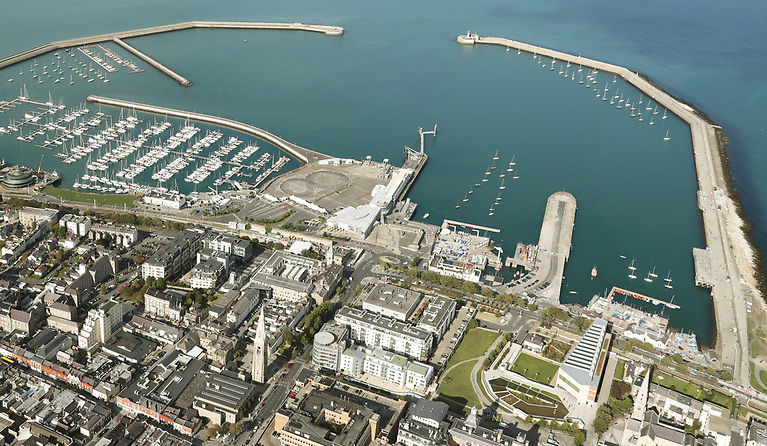
Dun Laoghaire’s Living Streets scheme risks making the town centre harder to reach for older people, hospital patients and shoppers, a local councillor has warned after lodging a complaint with the European Commission.
Cllr Maurice Dockrell has asked the Commission to examine whether the scheme and connected transport projects were assessed properly under European environmental rules.
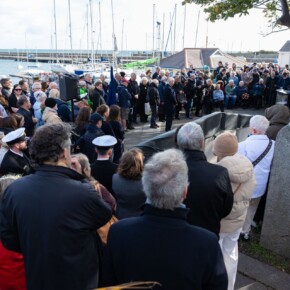
Speaking at a community-organised public event in Dún Laoghaire on Saturday, October 10, he warned that changes to bus access and traffic movements could turn “Living Streets” into “Dead Streets”.
Approximately 130 people attended, according to the organisers. The event was supported by councillors from Fine Gael, Fianna Fáil, Labour and People Before Profit.
Cllr Dockrell said removing buses from George’s Street Lower, including the city-bound stop outside Bloomfields, would create difficulties for people who depend on public transport.
He also raised concerns about access opposite St Michael’s Church and the distances passengers would have to travel to alternative stops.
“The first duty of municipal planning is to deliver public transport that people can actually rely on,” he said.
“That means buses that show up on time, serve essential destinations, and remain accessible to older people, disabled citizens, hospital patients, and families.”
He argued that directing passengers towards stops on Crofton Road and Clarence Street would place additional burdens on people with limited mobility, those carrying shopping and patients attending St Michael’s Hospital.
“If you strip buses off the high street and cut off access from both the Dalkey and Blackrock ends, people simply will not come,” he said.
“You do not create a Living Street, you engineer a Dead Street.”
Cllr Dockrell also criticised the proposed restriction on through traffic at Tivoli Road, arguing that vehicles would be diverted onto residential streets and narrow lanes.
He said residents were already experiencing displaced traffic, including delivery trucks and heavy commercial vehicles, and questioned whether Lynch’s Lane could accommodate additional movements.
His European Commission complaint challenges the approval process under the Environmental Impact Assessment Directive.
It asks whether Living Streets was considered separately when it should have been assessed alongside related council and National Transport Authority projects, including the Coastal Mobility Route and DLR Connector.
The submission also questions whether their combined traffic and environmental effects were adequately examined and whether a full Environmental Impact Assessment Report was required.
“I am not alleging bad faith or intentional wrongdoing,” Cllr Dockrell said.
“But the question must be asked directly: was Living Streets part of one wider Council and NTA supported project, and was that project divided into separate schemes for approval?”
The council’s published consultation material describes Living Streets as a sustainable mobility and public realm scheme involving pedestrianisation, road safety improvements, traffic filters and improvements to Clarinda Park.
Its published environmental screening documents concluded that significant environmental effects were not likely and that a full Environmental Impact Assessment was not required.
Cllr Dockrell said he had submitted two council motions concerning Living Streets and the DLR Connector but remained dissatisfied with the answers.
“I am making this complaint to ensure that we do things legally, properly, and transparently,” he said.
Related News