Road safety needs to be improved, Southside TDs say
Mike Finnerty 23 Sep 2026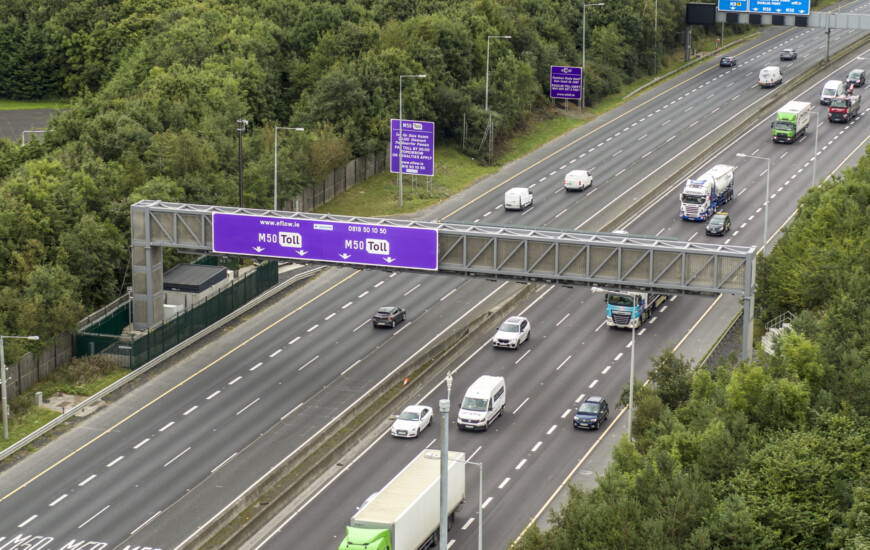
Southside TDs have said that improvements are needed to protect the people who use Irish roads.
With the Dáil returning this week after summer recess, TDs discussed the government’s legislation, which would establish a national file for vehicles and drivers, abolish the paper motor tax discs, and introduce broader legislation to improve road safety.
The legislation would give local authorities access to collision data, digitalise vehicle records, and potentially adjust legal speed limits.
Both government and opposition TDs were supportive of the legislation.
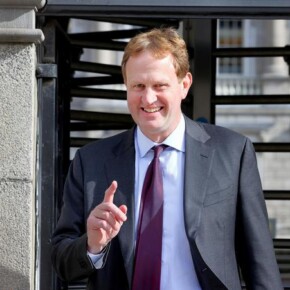
Fine Gael TD Barry Ward said the legislation would stop “rogue traders” from selling second-hand vehicles.
The Dún Laoghaire TD said that an employee in his office purchased a second-hand vehicle, but a problem emerged with the vehicle despite using private vehicle-checking websites.
He said that as it stands, consumers who fall victim to this kind of scam have no legal recourse, and praised the legislation for closing that loophole.
“If we make this information publicly available, as is provided for in the bill, we avoid the possibility of private rogue traders essentially circumventing the information that consumers think they are getting about a car they are buying, and avoid the situation where they buy something and do not realise there may be a history that makes it questionable,” he explained.
“Things like that are steps forward and progress that is necessary.”
Ward said that motorists “need to take responsibility for assessing themselves what the appropriate speed to travel at is.”
“Of course we should have speed limits, but we are allowing motorists to abdicate responsibility for making the judgment themselves that 80 km/h or 100 km/h on a particular day or in particular circumstances might be too fast.”
“I do not think we need to do that. We are much better off trusting people,” he said.
“My experience with driving on the M50 is that very often, the speed limit bears no relation whatsoever to the weather or traffic conditions. You will often find yourself on the M50 with an 80 km/h speed limit on a dry, bright day when the traffic is relatively light. From everything I can see, there is no need for it (bringing in variable speed limits).”
Ward also said that his constituents in Dún Laoghaire should not have to wait as long as they are for driving tests.
“In my constituency, Dún Laoghaire, we have the second-longest waiting list for driving tests; we waited a long time for the Sandyford driving testing centre, which we were told was going to be a pressure valve on those waiting lists.”
“We now understand that is not going to proceed because of some kind of administrative difficulty I do not need to go into. Now the people of Dún Laoghaire are still faced with long waiting lists. Despite the Department having applied more testers to that centre, there has not been a commensurate decrease in the number of people waiting or a commensurate increase in the number of tests that are happening on a weekly basis,” Ward said.
“It is not okay for this to continue the way it is. We need to deal with this as a matter of urgency. We owe it to young people in particular, and anybody who wants to get a driver test, whether it is a person who has come here to work and needs to qualify to drive in this jurisdiction or whoever it is; they should not have to wait months and years for driving tests, that is unacceptable.”
Independent TD Paul Gogarty said he was “broadly supportive” of the government’s measures to improve road safety.
The Dublin Mid-West TD said, “the decision to finally abolish the paper motor tax discs is an important measure.”
“For decades we forced motorists to have this piece of paper on their windscreens while the rest of society moved ahead with digitalisation. As such, moving to a digital system, backed by an online verification portal, makes a lot of sense, just as it did in the UK perhaps 14 years ago.”
Gogarty welcomed the decision to allow Gardaí and local authorities co-operate on shared data.
He said this part of the legislation is “crucial” but has been held up because of GDPR limitations.
“Councils cannot engineer safer roads if they do not have full information about where accidents are occurring. In this context, while the bill is a welcome step, this government and its predecessor have already failed the broader test of dealing with the deadly crisis unfolding on our roads.”
“As we all know, we are in the middle of a devastating spike in road fatalities, which are up significantly on the number in 2025. Depending on which figures are used, road fatalities are up 17% on last year and are rising at a time when the European Union average is falling.”
Gogarty said it was “shocking” that the number of road deaths are rising and said the government are not treating the situation with the weight and gravity it deserves.
“If we take the delay in delivering this piece of legislation as an example, the previous government allowed strict GDPR limitations and interpretations to legally block councils from getting collision data since November 2023, even though the Data Protection Commission explicitly stated that GDPR should not prevent proportionate publication of crash location details, especially when the technology exists to get rid of personal identifiers by anonymising or limiting the data,” he told the Dáil.
“The critics of this asked why the RSA could not just itself strip out names and addresses or pass on the coordinates to council engineers. I am wondering whether this was a resourcing issue above all or something else. It has meant that for three years local authorities have been effectively blindfolded,” Gogarty said.
“One has to ask how many accident black spots went unfixed while this bill was just dragging on.”
Sinn Féin TD Seán Crowe said that Ireland was paying the price for years of non-enforcement on Irish roads.
The Dublin South-West TD said, “inadequate Garda enforcement and years of government inaction have created a safety crisis that is costing lives.”
“It is families across Ireland who are paying the price of government failure on road safety. Rising road deaths are not unavoidable accidents; they are the consequence of years of underinvestment, inadequate Garda traffic enforcement and a lack of urgency from the government,” he said.
Crowe told the Dáil that his car was stolen recently.
“I was lying in bed when someone went around using the fob. I was away for a couple of days and got a phone message from a woman saying there was a stolen car in her area,” he relayed.
“I remember trying to deal with this issue 20 or 25 years ago. Many of us thought this was behind us but, unfortunately, it is on the rise again. Some of it is down to the new technology as well. Cars are not safe enough,” he said.
Crowe stated, “the statistics on those driving the wrong way down motorways are really worrying. The figures are going the wrong way rather than the right way in that regard.”
Related News