Laughing gas usage at “epidemic” levels says Ward
Mike Finnerty 02 Sep 2026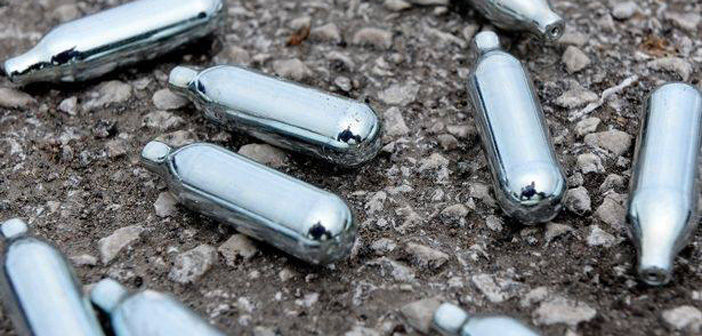
Sinn Féin TD Mark Ward has said that laughing gas usage has reached “epidemic” levels.
The Dublin Mid-West TD said that over 120,000 nitrous oxide canisters were disposed of last year, highlighting the scale of the problem.
Ward, who proposed legislation to heavily regulate the sale of nitrous oxide in the last Dáil, said that the government have “their hands in the sand” on the issue.
Ward visited Veolia Ireland in Cork during the week, alongside party colleague Pat Buckley, a TD for Cork East.
The two TDs found that the company were responsible for disposing of over 120,000 of the canisters.
Ward said he was “shocked, but not surprised” that the figure was that high.
“You only have to walk through any housing estate or park, and you will see discarded nitrous oxide canisters on the ground,” he said.
The chemical has become a popular drug among young people.
Nitrous oxide is commonly known as laughing gas, and it is used illicitly to get what Ward describes as a “quick high.”
Ward, who serves as a director of an addiction service in Clondalkin outside of politics, explained, “when the person inhales the gas, it shuts off the oxygen to their brain, giving them a lightheaded, giddy effect.”
“Over the last number of years, we have had many reports of the long-term health problems associated with nitrous oxide misuse, including numbness in their hands, feet and extremities, serious issues with balance, problems with their heart rate, mental health issues, neurological conditions, spinal cord damage, and frostbite.
While anecdotal evidence shows that laughing gas usage is widespread across Dublin, both Northside and Southside, Ward says that the hard statistics back up his fears about the usage being at an “epidemic” level.
“There has also been a 175% increase in the amount of young people accessing the HSE Adolescent Addiction Services for treatment. The Clondalkin Youth Drug and Alcohol disclosed that children accessing their service as young as 12 are using nitrous oxide,” he said.
“We have also had reports from waste management services who have environmental concerns about discarded canisters causing explosions in their treatment plants, causing millions of euros in damage.”
Ward noted that Veolia has designed technology that disposes of this gas in an environmentally friendly, with full approval of the EPA.
“They also recycle the metal canister, the brass top and the plastic bottom of the canister,” he explained.
“The fact that they have disposed of over 120,000 canisters in the last year shows that nitrous oxide misuse is an epidemic.”
He said that the Customs service, An Garda Síochána, waste management companies and local authorities all use this service.
Ward noted that because nitrous oxide has legitimate uses in medical and catering industries, so outright banning it is not possible, but he said that regulation is on the table..
“The legislation I have submitted will mean that wholesalers require a licence to sell nitrous oxide, retail sellers will need to be on an approved register and can only sell to exempt purchasers, which include registered doctors, dentists, nurses, midwives, veterinarians, catering businesses that are licensed, and food businesses.”
Ward said that his legislation has been on ice for 9 months, and isn’t holding his breath on the government parties acting on the issue.
“The government have their heads in the sand and has not produced any measures to tackle this issue. They delayed my legislation by 9 months, but now they must support the passage of this through the Oireachtas without delay,” he said.
Fianna Fáil Senator Teresa Costello said that she gathered nearly 200 discarded canisters in just an hour of clean-up in Tallaght.
Senator Costello, along with a volunteer (Nico Crowley), documented just how widespread misuse is in the Tallaght area.
The pair spent an hour collecting discarded canisters from roadsides, housing estates, green spaces, and church grounds.
By the end of the clean-up, they had gathered 198 canisters.
Speaking afterwards, Senator Costello said one of the most “alarming” discoveries from the clean-up was evidence suggesting the substance is being used by motorists.
Senator Costello said the findings are “so worrying.”
“The evidence shows that it’s been used while driving. That’s overwhelmingly apparent to us.”
Senator Costello said residents regularly contact her about canisters being dumped throughout the area and warned that the issue goes far beyond littering.
“It’s clear to see from the huge quantities of these canisters that recreational use is becoming more widespread,” she said.
“What concerns me most isn’t the litter, because litter can be fixed; it’s the health implications that can’t be undone.”
Senator Costello has written to Minister Jim O’Callaghan, raising concerns about nitrous oxide misuse and calling for stronger action to tackle its growing prevalence, particularly among young people.
“This isn’t something we can afford to ignore. The scale of what we found in just one hour shows the problem is growing, and we need to take it seriously before a tragedy occurs,” she said.
To Ward’s point about the government parties having their “heads in the sand” on the issue, Minister O’Callaghan said that stricter controls will be introduced in February of next year as nitrous oxide will be classified at EU level as a harmful substance.
The EU is also expected to bring in rules under the REACH chemicals regulation that will largely prohibit the sale of nitrous oxide to the public, while still allowing certain legitimate uses, such as in food production.
The “epidemic” isn’t limited to Dublin.
Cork TD and junior minister Christopher O’Sullivan stated in July that current legislation, as written, does not allow Gardaí to respond effectively.
“Recording seizures, offences and trends relating to nitrous oxide misuse would give us a stronger evidence base for decision-making and allow resources to be directed where they are needed most,” he said in July.
“Communities, local authorities and waste operators are already dealing with the consequences of discarded canisters. Better information and better data collection are essential if we are to get ahead of this issue rather than simply reacting to it,” he said.
Information and data collection is one part of it, but Ward has been a long-time critic of the government’s approach (or lack thereof) to tackling drug addiction.
In last year’s Budget, funding for local and regional drug and alcohol task forces was cut by 25%.
Speaking after the cuts in the Budget, Ward called the move “cynical.”
“Our drug services across the state are over-stretched and under-resourced,” he said.
“In my area there is not someone who is not affected by addiction, be it themselves, their family, their neighbours, or their friend; addiction services funding was butchered during austerity, but what is the government’s excuse now, with the country awash with money?”
Related News