Crisis-level delays continue at Tallaght Hospital A & E
Padraig Conlon 19 Aug 2026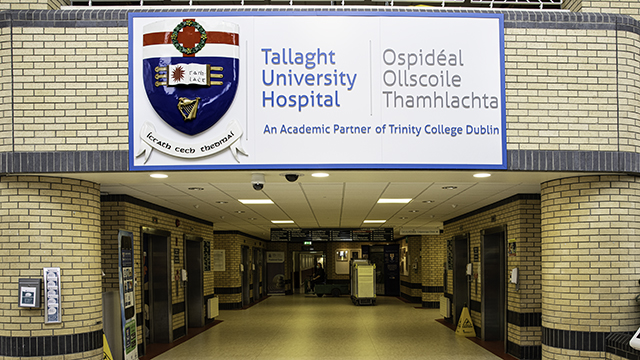
An average of 23 patients a day left Tallaght University Hospital’s emergency department without being seen during the first six months of this year, new HSE figures have revealed.
A further 1,869 patients spent more than 24 hours in the emergency department between January and June, equivalent to more than 10 patients every day.
Older people were among those caught in the lengthy delays, with 391 patients aged 75 or over remaining in the emergency department for longer than a full day.
They accounted for more than one in five of all patients who experienced waits exceeding 24 hours.
A further 185 people aged 75 or older left the department without being seen, according to the figures supplied by the HSE.
The data was released in response to a Parliamentary Question submitted by Sinn Féin health spokesperson David Cullinane.
Nationally, 27,791 patients spent more than 24 hours in emergency departments during the first half of 2026, while 58,594 left without being seen.
Tallaght accounted for 6.7 per cent of all patients who waited longer than 24 hours nationally and 7.2 per cent of those who left emergency departments without being seen.
The figures reflect the continuing growth in demand experienced by Tallaght University Hospital, which provides acute services to a large and rapidly expanding population across south and west Dublin and parts of neighbouring counties.
Approximately 63,000 patients attended its emergency department during 2025, an increase of 5.3 per cent on the 59,935 attendances recorded the previous year.
The increase was particularly pronounced among older people. Emergency department presentations involving patients aged over 75 rose by 11.2 per cent during 2025.
Tallaght University Hospital currently has 476 inpatient beds, according to its most recent annual financial statement.
Emergency department overcrowding does not necessarily mean patients are waiting throughout that period to receive their initial assessment.
Some patients may have been examined and treated but remain in the department while waiting to be admitted to an inpatient bed.
When beds are unavailable elsewhere in the hospital, admitted patients can remain in the emergency department, reducing the space and staff available for newly arriving patients.
The number recorded as leaving without being seen may also include people who registered or underwent an initial triage before departing without receiving a full medical examination or completing their treatment.

Dublin Mid West Sinn Féin TD Mark Ward (pictured above) described the Tallaght figures as “deeply alarming” and said they demonstrated the continuing pressure on emergency services at the hospital.
“In just six months, almost 2,000 patients were left waiting in Tallaght Hospital emergency department for more than 24 hours,” Deputy Ward said.
“These figures represent sick people, many of them older and vulnerable patients, who were left waiting for more than a full day for the care and hospital bed they needed.”
Deputy Ward said the 4,210 patients who left without being seen represented an extraordinary number of people departing
without receiving the assessment or treatment for which they had attended.
He said the figures should not be interpreted as a criticism of doctors, nurses or other hospital employees.
“Staff working in our emergency departments are doing everything they can under enormous pressure,” he said.
“They cannot compensate for years of government failure to deliver enough hospital beds, step-down beds, community services and properly staffed alternatives to emergency departments.”
The hospital has itself acknowledged the growing demands created by population growth, an ageing population and increasingly complex patient needs.
Its strategy for 2025 to 2029 states that the population within its catchment area is expected to increase from approximately 800,000 in 2024 to one million by 2030.
West Dublin is among the fastest-growing parts of the country, placing additional demands on emergency, inpatient and community health services.
The strategy identifies expanding bed and workforce capacity as one of the hospital’s central priorities over the coming years.
In March 2025, Tallaght University Hospital said a design team had been assembled to prepare plans for a development involving 128 new beds.
The hospital said the additional capacity would help reduce pressure on its emergency department.
No construction or completion date was included in the announcement.
The hospital has also pointed to improvements in the management of unscheduled care despite increasing attendances and admissions.
Its latest financial statement reported improvements across key unscheduled-care performance measures during 2025, as well as a reduction in delayed transfers of care during the second half of the year.
A delayed transfer occurs when a patient is medically ready to leave an acute hospital but cannot be discharged because appropriate home support, rehabilitation, nursing home care or another community service is not yet available.
Such delays can prevent beds from becoming available to patients waiting for admission through the emergency department.
Deputy Ward said the latest figures showed overcrowding could no longer be regarded as a difficulty confined to the winter months or short periods of unusually high demand.
“Emergency department overcrowding is not simply a winter problem or the result of occasional surges in demand,” he said.
“It is a permanent capacity crisis which now exists throughout the year.”
He called on the Government to accelerate the delivery of its hospital bed plan and provide additional funding for step-down care, home-support packages and
community health services.
Deputy Ward said opening new beds would also require the recruitment and retention of sufficient doctors, nurses, healthcare assistants and other frontline staff.
Additional physical capacity would make little difference, he argued, if hospitals did not have enough employees to operate it safely.
“Without urgent action, patients and frontline healthcare workers will continue to pay the price for the Government’s failure to properly plan, fund and expand our health service,” Deputy Ward added.
Related News