Government needs to reduce eye appointment waiting lists, says Moynihan
Mike Finnerty 17 Jun 2026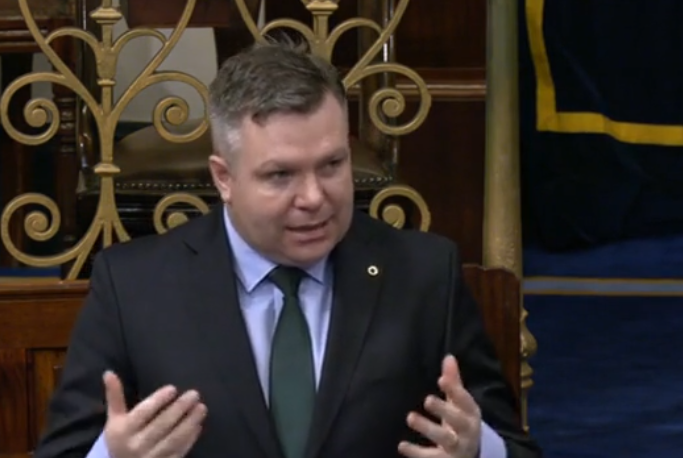
Fianna Fáil TD Shane Moynihan has said that more needs to be done to reduce the waiting list for eye appointments.
The Dublin Mid-West TD cited data from the National Treatment Purchase Fund, which showed that 42,000 people are waiting for eye care appointments, with 33% of those waiting longer than a year.
Moynihan questioned whether Ireland’s current community eye care model was fit for purpose in the modern era, and said that tackling waiting lists should be a government priority.
He noted that current paediatric eye care pathway is focused on early childhood screening and the identification of serious visual impairments, but Moynihan said the practice “does not capture” the changing nature of eye health among children and adolescents.
He said the “rapid rise” in incidents of myopia, or short-sightedness, is cause for concern.
“We know myopia typically develops between the ages of eight and 16, after school entry vision screening has taken place. This raises the question as to whether some children are developing vision problems without any structured follow-up or monitoring and, in fact, in many cases a diagnosis is reactive because a child will complain, for example, that they cannot see the blackboard or cannot engage properly with a lesson,” he told the Dáil.
“By that stage, there would have been some lag in academic outcomes, and the vision problem would have presented itself,” he said.
Moynihan pointed to “emerging evidence from Ireland and abroad that suggests that myopia is becoming increasingly common, particularly in younger age groups, with clinic-based data showing the highest rate of myopia now among people in their 20s.”
“While long-sightedness remains more prevalent in clinical populations, adjusted population estimates indicate that myopia is now becoming more prevalent as an eye condition, which shows the changing nature of eye health.”
Moynihan said that scientific consensus shows that undetected vision problems can negatively affect educational attainment, classroom participation, confidence and social development, and myopia is associated with a lifelong increase in serious eye diseases like retinal detachment, glaucoma or cataracts.
“This risk of myopia and the severity of it increases with age and we know that high myopia is much more associated with a high risk of vision loss compared with normal vision. This has significant public health implications. Individuals with high myopia face the greatest risk. The overall burden on services is likely driven by the growing number of people with moderate myopia as well.”
With all of that in mind, Moynihan argued, Ireland should update its eye care system, and the government should be taking more of an active role.
The Fianna Fáil TD said, “this is something we need to be very aware of in terms of how we design our eye care model and whether we should have proactive monitoring in place.”
In terms of immediate, actionable moves the government could make, Moynihan said that the Department of Health could “encourage and enable independent prescription of medicines for eye conditions by optometrists in Ireland, which is something that is not in place at the moment.”
“International evidence would suggest that allowing those prescribing powers to be made available to optometrists can allow more patients to be treated safely in the community. This reduces unnecessary hospital referrals and eases pressures on ophthalmology services,” he said.
“Large-scale clinical data from a number of studies suggests that electronic medical records can enable this as a potential cost effective tool for monitoring trends in eye health.”
Minister of State Mary Butler explained that the HSE provides optical services free of charge to children referred from child health and school health service examinations who are discovered to have sight problems. These children are referred to the appropriate service for treatment.
Under the community ophthalmic services scheme, COSS, medical card holders and their dependants aged over 12 can be seen by ophthalmologists, optometrists or dispensing opticians. They can receive an eye examination and be provided with prescribed optical appliances in accordance with a national schedule of approved optical appliances, she explained.
She said that the Department of Health are considering ways to expand the scope of practice for optometrists to ensure that the eye care needs of people, especially children and older persons, can be met.
The Fianna Fáil TD explained that in 2017, the HSE published two documents, the Primary Care Eye Services Review Group Report and the national clinical programme for ophthalmology.
The review report set out how a significant proportion of eye services could be delivered in a primary care setting, with a key recommendation that children aged between eight and 12 with routine eye care needs should be transferred to the care of local optometrists.
“These would receive an annual eye exam under the COSS, irrespective of their medical card eligibility. This remains a priority and work is ongoing to implement this recommendation,” she said.
Moynihan said that Minister for Health Jennifer Carroll MacNeill should prescribe powers for optometrists, which would allow them to engage with children presenting with eye problems, negating the need for an integrated eye care team.
In the last government, then-Minister for Health Stephen Donnelly was a proponent of delegating and designating more powers to local GPs and medical professionals, with the aim of taking pressure off the HSE and related healthcare services.
Moynihan asserted that early detection was crucial for getting ahead of eye conditions.
“Even with the model that is laid out at the moment, it seems to be a referral or reactive, which is a very good and strong way to find this,” he said.
Moynihan noted that studies from the United States and South Korea suggest that myopia affects 50% of the population towards the middle of their lives, which brings added risk of eye disease later on in life.
“How do we build on that early detection piece, in the same way we would have done with dental care and on the back of public health nurse checks in the first years of a baby’s life?” he asked.
“How do we keep an eye on – pardon the pun – the development of eye health and eye care but also address and ensure we use the data to inform monitoring and planning and learn about the prevalence of myopia?”
“One thing the increased use of screens has taught us is that nobody would have anticipated that it has had a very detrimental effect on the overall state of the eye health of children and adults in the country, which has led to this increased prevalence of myopia,” he said.
In reply, Butler said, “often when we think of eyes, we think about the glasses or the contact lenses but eye care is very important.”
“There is a huge amount of work done with older people with dementia, macular degeneration and cataracts. It is very important that the quality of life of a person can be so much improved if they have the correct eye care.”
Related News