2,500 new homes on way for Dunsink area
Mike Finnerty 08 Apr 2026
Fingal County Council has signed off on an adjusted plan to the county’s development plan, which will see 5,000 additional homes built in the area.
Of significant interest to Dublin 15 is the construction of 2,500 houses in the Dunsink area, with a 2029 date set in stone.
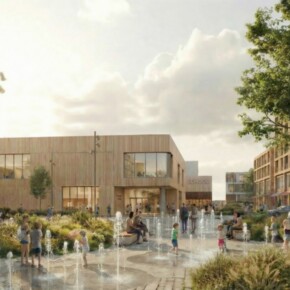
Long noted as a potential way for Fingal County Council to tackle the housing crisis, a major pillar of the approved variation is the planned development of a new residential area at Dunsink.
The council estimates that because of their early planning and assessment work, 2,500 new homes could be built there by the end of the government’s term, which is expected to end in 2029.
The council believe that the expansion will increase the overall development capacity of housing in the local authority, with the council saying that 40,000 homes will be delivered instead of the originally planned 35,000.
2022 census data is informing the data, along with overall updated housing targets set by the Department of Housing.
Mayor of Fingal Tom O’Leary said, “the decision to accommodate an additional 5,000 new homes marks a significant step toward meeting the housing needs of one of the country’s fastest?growing and most diverse populations.”
“As housing represents the single largest investment we are making, the approval of this variation demonstrates a strong commitment to delivering more sustainable homes in the right locations – places where communities can grow and thrive,” the Fine Gael councillor said.
At a marathon special meeting of Fingal County Council on March 30, councillors heard that the Dunsink development would be supported by strong transport links, services and “employment potential.”
Furthermore, councillors heard that the development of Dunsink will become one of the most significant urban expansion projects in the Dublin region during the lifetime of the development plan.
At a time when government party councillors in Limerick are bringing council business to a standstill in a bid to stonewall the agenda of an independent Mayor, the March 30 meeting of Fingal County Council offered a window into how a local democracy should function.
Councillors from both government and opposition parties were given the chance to say their piece, push for their local areas, and the overall aim of the meeting – building more houses for local residents – was met.
Chief Executive of Fingal County Council, AnnMarie Farrelly said “with this variation now approved, Fingal is positioned to move forward with renewed confidence and a clear commitment to sustained housing delivery across the county. There are now 852 hectares of zoned residential lands in the county, complemented by a further 164 hectares at Dunsink and 225 hectares within the strategic reserve.
“Together, these provide a strong and balanced pipeline that will add significant momentum to the delivery of new homes in the years ahead,” she said.
Councillors also heard that land will be rezoned in areas all across Fingal, from Clongriffin, Lusk and Malahide on coastal Fingal, to the Barnhill and Clonsilla areas in Dublin 15.
The areas were all identified during the council’s review as capable of supporting compact, well?connected development served by public transport and existing community infrastructure.
Roisin Burke, Director of Planning at Fingal County Council, said “significant work has gone into ensuring that the new zoning allocations strike the right balance between meeting housing demand, protecting the environment, matching infrastructure capacity and supporting long?term sustainability. The approved variation not only aligns with updated national targets but also positions Fingal to plan strategically and responsibly for the decades ahead.”
Solidarity councillor John Burtchaell said it “shouldn’t have taken a housing crisis” to proceed with the Dunsink housing plan.
The Blanchardstown-Mulhuddart councillor said, “affordable housing is the model that Fingal County Council should be moving ahead with.”
Green councillor David Healy said Ireland’s housing developments historically struggle with establishing good transport links, and said that the council has an opportunity to link the Dunsink area up with good public transport links “from the start.”
“I’m confident that our planning department is up to the challenge,” he said.
The Green councillor put forward a motion about the rezoning of greenbelt lands, and said that underused urban and brownfield sites should be redeveloped instead.
Councillor Healy also put forward a motion about the rezoning of land between the Navan Road Parkway and a local Travelodge, saying that the area being so close to transport links would make it ideal for housing developments.
The area marked by Healy is in what the council has designated as a “high technology zone,” but would have required a council vote to change the zoning designation at this stage of the council’s development plan.
Fine Gael councillor Kieran Dennison said, “we want people not just living beside transport nodes, but also working beside them. The idea here is that it’s beside a railway station and people would be able to commute to work.”
The Ongar councillor said he was “weary” of changing the zoning at this stage of the plan, noting that the Dunsink housing development was going to help tackle the housing crisis in the area, and it should not come at the expense of rezoning high economic value land for the sake of housing.
Labour councillor John Walsh said the Dunsink development was a good example of a “plan-led development,” and that the project is a “great opportunity” for the area.
The Castleknock councillor said that because the project is a council-led one, it has the potential to avoid what he perceives to be “developer-led mistakes,” such as not linking up with public transport or not building suitable infrastructure to support new residents.
Walsh’s Castleknock colleague, Fine Gael councillor Ted Leddy, said he contested the notion that the government were following a “developer-led approach,” pointing to the 2020 opening of the train station at Pelletstown along with further developments along the Maynooth/M3 Parkway railway line.
Leddy said it “wasn’t appropriate” for the Labour councillor to assert that the government were at the behest of developers.
“Three new train stations have been built there in multiple years, and multiple new schools, so this notion that it’s all being led by developers is something I oppose,” but overall said that the meeting was a “good day” for the council.
Sinn Féin councillor Angela Donnelly said she was “very concerned” about flood risks in the area, with the Ongar councillor noting that the planned works near Barnhill are “very close” to the Hansfield local development zone.
“I would feel a lot more comfortable if we did a top-level flood assessment,” she said.
Fine Gael councillor Kieran Dennison said he was looking out for the public purse strings, noting that the rail line and road to Dunboyne, which were installed “at great public expense” and that flood mapping had to be taken into account when the infrastructure was being built to begin with.
“This is the sort of place we want to build because we have schools and transport infrastructure,” and noted that Hasnfield is “nearly a new town” in terms of the town’s development.
Both Donnelly and Walsh noted that the Hansfield area has lost a secondary school in recent times, with Walsh saying it was a “textbook example of bad planning” on the government’s part.
Fianna Fáil councillor JK Onwumereh said that councillors were asked to be “futuristic” in terms of building more homes across Fingal, and to work across party lines.
The Blanchardstown-Mulhuddart councillor said, “we’ve had that opportunity today, and it’s a credit to everyone, regardless of what side you stood on, what we’ve accomplished today.”
He said that housing and development were “critical” to the future success of Fingal County Council and its residents.
Related News