Government not taking drone laws seriously, D15 TDs say
Mike Finnerty 11 Feb 2026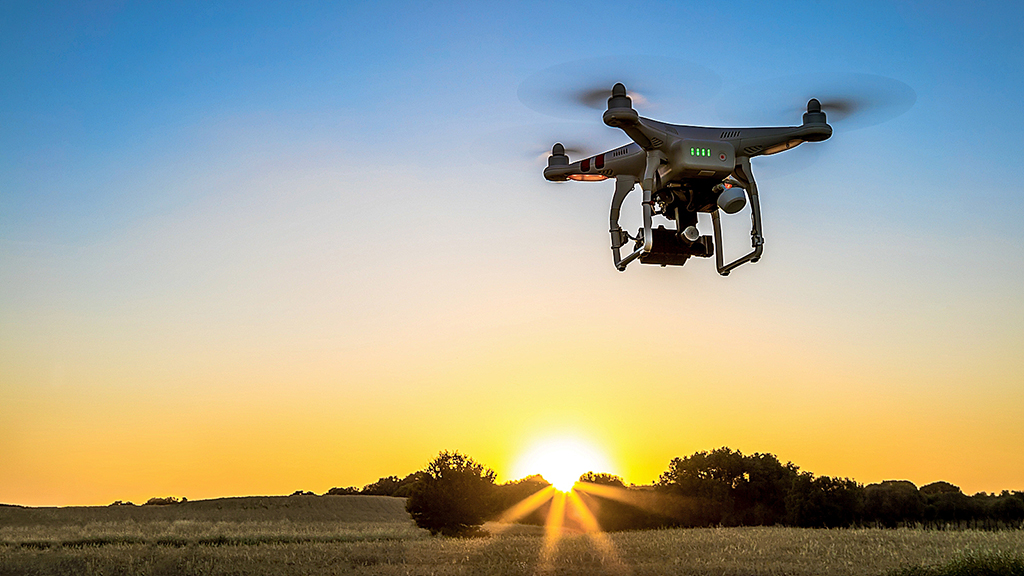
Government and opposition TDs from Dublin 15 have attempted to solve the ongoing issue of drone technology causing disruption for local residents.
Local TD Roderic O’Gorman is attempting to advance legislation through the Dail which would more strictly regulate the usage of commercial drones, and the Bill has made it to the second round of debate in the Dáil, putting it under scrutiny.
The government designated the legislation as a “timed amendment,” which means the government does not have to act upon the legislation for another 12 months, a move which O’Gorman called “disappointing.”
Over the last year, the usage of commercial drones in Dublin 15 has become a pressing issue among local residents and elected representatives.
The Green leader said that current legislation surrounding drone technology is outdated and has not kept pace with the advancements in drone technology.
O’Gorman said, “the air traffic control approach might have worked ten years ago, but we are dealing with an entirely different set of circumstances today,” and said that the provisions of his bill would bring Ireland’s drone technology law up to 2026 standards.
“That is simply what my Bill is trying to do; it recognises that every new technology and evolution must be regulated in the public interest. Regulation to guarantee safety is critical, but that is the basic minimum we should expect. We have to ensure that the operation of drones works for everyone in our communities.”
He acknowledged that the potential of drones and unmanned aerial systems is “significant” and said “they are an innovation that Ireland can and should harness,” but that shouldn’t come at the expense of local residents.
“A major change is happening in our society right now. Hundreds of journeys that up to this point took place on our roads are now being transferred into the skies over our homes and gardens. Many members of the public are asking how many drones flying over their house or gardens is too many. Up to this point, the state has refused to engage in a meaningful way in that particular conversation.”
The Green TD remarked that Dublin 15 was being treated as a “large-scale experiment” for drone technology.
“People living in Dublin 15 have raised with me and other Deputies and councillors a wide range of issues relating to airborne delivery drones, including concerns about the noise from the machines, their safety, the planning status of drone bases, privacy issues – as we know drones are fitted with cameras – and their impact on wildlife. Many people have told me that the frequency with which drones are seen and heard above their homes has increased as drone delivery services become more popular.”
“It cannot simply be the case that people are told ‘that is it, they are here now, so get over it’, local communities have a right to democratically shape and influence how their environment is used, how that changes and how those changes impact on them. That is the cornerstone of our democratic planning process,” he told the Dáil.
Minister for Transport Darragh O’Brien said, “it is very important that the concerns and views of local residents and communities impacted by the increase of drone usage are represented here, and it is right and proper that they are articulated here in the Dáil.”
The Minister said that the government understands that the use of drones for commercial and other purposes has grown “substantially” over the past decade.
“The growth has been facilitated by the publication of a suite of EU aviation safety regulations that promote the safe and secure development of the drone sector throughout Europe. Drones are now accessible to a broad range of users, and their use is becoming commonplace.”
“As the technology has evolved, drone use has presented significant opportunities in both commercial and public domains. Drones present exciting opportunities for businesses and the public sector to boost productivity, improve service provision and improve safety,” he said.
A provision of O’Gorman’s bill is the potential amendment of the Environmental Protection Agency Act 1992 to treat noise from a drone as a “nuisance.”
The Minister explained that such legislation may be “problematic.”
“I do not want to be overly negative about it. There is complexity within the process but I think that needs to be looked at within the framework itself. In many jurisdictions, including Ireland, existing environmental protection legislation specifically exempts aircraft noise from local authority regulation. A drone at the moment comes within the definition of “aircraft”.”
“Nuisance law often relies on individual complaints and legal action, which is an inefficient and impractical way to manage the potentially high frequency of transient drone flyovers expected from widespread commercial operations,” he explained.
He added, “the District Court could obviously see a significant increase in noise complaints about drones, and I do not think the courts should necessarily be the place to be clogged up with these complaints. We do have a distance to go in respect of fully addressing drone noise before a role for the courts can be considered.”
The Minister said, “I am committed to moving forward and working with the monitoring group and the national UAS policy framework; I believe this will be the key driver for bringing forward regulations, and further regulations, which will be needed.”
Sinn Féin TD Paul Donnelly remarked, “it is interesting that it (the debate surrounding drones) comes this week in light of the scrambler issue.”
“Businesses do not seem to be confused about what they think they can do, however. This is a real example of the government not getting its act together with regard to new technologies.”
“We are going to see this on a monthly basis with the development of AI technology; we are going to be scrambling to try to deal with things literally every week,” he warned.
Donnelly said, “It is really disappointing to see this happen to another bill brought by the Opposition; the government constantly asks us to bring forward our solutions. Every time something happens in here, we are told to bring forward our solutions and that the government will listen to us.”
“Deputy O’Gorman has brought forward a solution, and what has the government done? It has kicked it down the road for another 12 months. It is really disappointing.”
Fine Gael TD Emer Currie said, “I want to see innovation and the deployment of drone technology but I also want to see effective regulation and enforcement of that regulation.”
“There are politicians in the area who just want an end to the drones. That is fine but I am not in that camp. I recognise the benefits and potential benefits of drone technology but I believe there must be practical and implementable safeguards for communities. I still believe that can be achieved.”
The government TD said “communities, planning authorities and businesses should be engaged with to build an effective and workable regulatory framework. Enterprises, especially those with ambitious plans for global expansion, should be up for that.”
She warned “we have seen what happens when innovations, for example, e-scooters, come in without a robust regulatory framework and enforcement measures; the government must do more.
Currie noted that Fingal County Council granted a temporary three-year trial at Blanchardstown shopping centre for a drone delivery service; now that the trial period is coming to an end, Currie said that a balance must be found between residents’ complaints and the concerns of businesses.
Solidarity TD Ruth Coppinger noted that when a similar drone delivery hub was announced for Dundrum last year, there was opposition from both government and opposition TDs (Fianna Fáil TD Shay Brennan notably called for more engagement with the local community), and Coppinger said the contrast between Dublin 15 and Dublin 18 was apparent.
“200 people showed up to a meeting there – fair play to Dundrum; the people said ‘hang on a second; and that they were not having it. The company had to have some level of consultation there. This was a turning point last summer.”
Coppinger said, “I do not think they (drones) should be used for commercial or fast-food delivery in highly built-up residential areas.”
“I do not see that as being essential, not compared to the scale of the impact it is having on people,” and said it was “jaded” by government TDs to say “some TDs do not like technology and we are Luddites, we do not just welcome technology for the sake of technology. It is about how technology impacts on people.”
“Someone out in their back garden should not have a company with a drone taking a photograph of them,” she told the Dáil.
O’Gorman said, “the Minister can bet that I will be holding his feet to the fire, because I do not see anything in the response from him that gives me clarity about how we are to address the fundamental issue here.”
“The fundamental issue here is we have not had a proper debate about how much of what happens on the roads should happen in the sky.”
He concluded, “it is serious; it is just touching one community now, but it will become a bigger issue. I recommend that the government take a more proactive approach to how it addresses this.”
Related News