“Missed opportunity” with remote work legislation say Dublin 15 TDs
Mike Finnerty 04 Feb 2026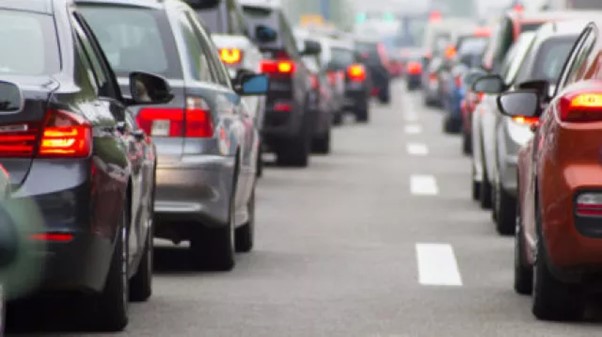
Dublin can lay claim to many different statistics – it has the biggest capital city park in Europe in the form of Phoenix Park, it has the widest it has one of the widest streets in Europe in the form of O’Connell Street and last year, it claimed a new statistic; the average Dublin motorist spent 8 days in traffic last year.
New statistics have shown that gridlock has returned to the roads of Dublin, following a brief reprieve during the pandemic era.
The forced return to office by major employers, and subsequent lack of improvements to Dublin’s infrastructure, has created a perfect storm of Dublin city traffic becoming among the worst in Europe.
The era of remote work saw pressure eased on Dublin’s roads, but the return to office has seen old traffic problems rear their head.
In what could be described as a Shakespearean or Alanis Morissette level of irony, a Labour motion, which pressured the government to beef up remote working legislation, saw the TD that was meant to deliver the speech, Kildare TD Mark Wall, delayed in traffic on the M50 and could not make it to the Dáil on time.
Research from Labour found that Dublin is ranked as the third-most congested city in Europe and the 11th-worst in the world, and employees in Ireland have no right to flexible and remote work, only a right to request it from their employer.
The party noted that the recent mothballing of the Luas Finglas project would only add to traffic woes in Dublin.
Labour TD and transport spokesperson Ciarán Ahern noted that “a single incident on the M50 can bring the entire city to a standstill, as happened just before Christmas.”
Ahern said “we are witnessing a rollback on one of the few genuinely positive legacies of the Covid pandemic. People were forced to work from home at that time and the world did not collapse.”
“Businesses continued to operate and profits largely remained intact. Study after study has demonstrated the positive impact of remote and flexible working on productivity. Despite this evidence, we see large corporations, including AIB and major tech and finance firms, issuing blanket return-to-office mandates.”
“More worryingly still, public bodies have followed suit. Enterprise Ireland’s recent reversal of its remote working policy is a prime example. I commend Fórsa on pushing back against these regressive moves, which lack justification and often lack any consultation with staff on them. This is fundamentally a workers’ rights issue and a quality-of-life issue,” he said.
Local Green TD Roderic O’Gorman said “fundamentally, Labour’s motion recognises that our economic health as a country is intrinsically linked to the well-being of workers, students and carers. Our economic health is linked to their ability to live, travel and pursue their lives in a way that is facilitated and supported by the choices that the state makes.”
The Dublin West TD said, “too often, people feel they face a battle just to get to and from work. They have longer and longer commutes and spend more time away from their kids and families. When this happens every day over many years, it leaves people feeling failed and frustrated that things never seem to change.”
O’Gorman noted, “we know that progress can be made, and we have seen how effective remote and flexible working can be in some areas. Evidence shows it can boost long-term productivity and reduce attrition and turnover.”
O’Gorman noted that remote and flexible working can allow for people in a caring role to continue as full members of the workforce, and more to the point, helps tackle congestion.
“There are many wins in embracing flexibility and remote working in a co-ordinated way. This was at the heart of many of the initiatives my party took in government. Our investment in the prioritisation of public transport has led to record journey numbers being undertaken in urban and rural areas.”
O’Gorman pointed out that when the Greens were in government, the party pushed for Metro, Luas and Dart electrification, along with a 2:1 ratio on public transport compared to road building, all measures that have fallen by the wayside under the government which took office in January 2025.
When the Greens lost all but one seat at the November 2024 general election, an astute observer may note that Fianna Fáil and Fine Gael, who are now reliant on the support of rural independents, eschewed anything that could be seen as vaguely Green-related.
In recent weeks, Fingal County Council heard that the government were backtracking on proposed changes to speed limits, delaying plans to reduce speed limits in urban areas from 50km/h to 30km/h.
January’s meeting of Fingal County Council heard that the plan to reduce speed limits, initially supposed to come into place in early 2025, has slipped into 2027.
Green councillor David Healy said that the government were now effectively “abandoning” the plans.
Fine Gael TD Emer Currie said she was broadly supportive of the idea of remote work, but dismissed criticisms that her party were not doing enough on the issue.
Currie took issue with Labour’s charges that Irish employees have no right to flexible and remote work, and only have a right to request it from their employer.
She noted that in her research, Finland was the only European nation to offer the same right, and even then, it was for office workers.
Currie said, “we must be careful not to give the impression that legislation will fix all of this, which is not accurate. A bigger approach is needed when making cultural changes in society and in workplaces.”
The Fine Gael TD said that the previous government invested in 400 co-working spaces across Ireland, rolled out broadband in rural areas and said that Ireland is “higher up the table” than most other European nations in terms of people who avail of remote work.
She said, “is the system perfect? No, it is not, which is why it is time to devise a new strategy on remote and flexible working to protect what we have and improve it.”
Currie said, “Ireland should be the best country in the world for remote working. That must be our ambition. We should have a strategy that targets global companies that work remotely and digitally first and attracts them to Ireland. That would have a halo effect on other companies in Ireland because it would show the productivity and success levels of those companies with a remote-first approach.”
She said there was room for improvement on the legislative front, noting “there is a spectrum when it comes to the right to request remote working and we are on the wrong side of that spectrum in terms of the legislation having teeth.”
“There are ways in which we can make it a lot stronger, such that it boils down to allowing only genuine business reasons for companies to have an issue with remote work.”
She said there was a “missed opportunity” in the introduction of flexible work for carers of children only up to the age of 12.
“The real cultural and social change will come when there is a degendering of that provision and it is not just, as it usually is, the mother accessing flexible work. It should be available to everybody,” she said.
Related News