TDs criticise “cruel” proposed cuts to blister pack scheme
Mike Finnerty 17 Dec 2025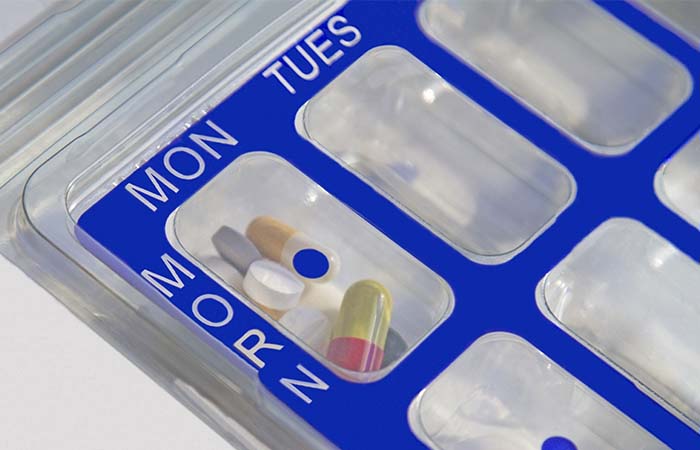
The government has been criticised by local politicians for adding to healthcare costs during the cost-of-living crisis.
From January 1, patients may have to pay up to €50 per month for blister packs to help manage their medicines.
Previously included as part of the Community Pharmacy Agreement, the government has indicated it will be winding down support for the scheme and passing the cost back to the consumer.
Sinn Féin TD Paul Donnelly said the decision was “cruel” and that older and more vulnerable people will be hardest hit by the price hike.
Donnelly said that those with disabilities and patients on complex medication will be hit hardest by the change, and that the extra charge risks avoidable medication errors, illness and hospital admissions.
The Dublin West TD said the principle of the move, increasing costs for people during the cost-of-living crisis, is what irks him.
“It is simply wrong that vulnerable patients will no longer receive tablet blister packs free of charge, as they have for decades,” he said.
“This cruel move by the government is unfair and must be stopped.”
Donnelly said, “blister packs are not a luxury or an optional extra. They are a basic safety measure that helps people manage multiple medications correctly.”
“For many older people and those living with long-term conditions, blister packs are the difference between taking medicines safely and risking missed doses, double dosing, or dangerous confusion.”
Donnelly said that the government has ignored the opposition’s calls to continue the funding, but said that his party’s concerns have “fallen on deaf ears.”
“Instead, the government has decided to leave this vital service outside the agreement, meaning people who need it most are now facing new charges”
The Sinn Féin TD said the government’s move was a “bad” one.
“This is a bad decision for the government to make at any time, but to make this choice during a cost-of-living crisis, when every euro is precious to people, is cruel.”
“We’re talking about tens of thousands of people living with conditions such as dementia and Alzheimer’s now facing additional charges of up to €50 per month for these packs,” he noted.
Donnelly remarked, “it’s like this government is determined to make life harder for people. Hiking up student fees, the local property tax, the cost of petrol and diesel, allowing big energy companies to jack up electricity and gas bills – and now hitting the most vulnerable and elderly people with this blow.”
He said that the health evidence was clear – good medicine management is efficient in keeping hospital waiting lists down, and passing the buck onto the consumer is a “short-sighted and unfair” move.
“I am calling on the Minister for Health to urgently re-engage with pharmacists and ensure blister packs are funded and provided free of charge for older people and at-risk groups; no one should be priced out of safe medication management. The government must step in and do the right thing,” he said.
Labour TD and health spokesperson Marie Sherlock said that the proposed government move is “a recipe for confusion, missed dosing, and a loss of independence for elderly people and people with disabilities.”
The Dublin Central TD called the government move “short-sighted and a complete contradiction to the principles of care in the community.”
“This gross inefficiency in the lack of state support for blister packs will hurt the most vulnerable: older people, people with disabilities, and people on social welfare payments who will struggle to afford an additional €50 per month to pay for a blister pack service.”
She said that the Minister for Health must “urgently intervene” to ensure that vulnerable people who are reliant on blister packs can avail of those services this winter.
“There is additional funding of €50m for the Community Pharmacy Agreement next year. It is crucial that some of this additional funding be allocated to vulnerable patient hardship blister pack services,” she said.
She noted, “traditionally, many pharmacies have used phased dispensing funding to maintain a blister pack service for vulnerable patients. This has now become a crucial element of care in the community. We know that the Community Pharmacy Agreement also sets out that any savings generated from the removal of phased dispensing for many individuals will be used by pharmacists for other services and “will be reinvested in the sector”, older people and those with a disability should not be made to suffer to ensure investment elsewhere.
Dubbing the government plans “exceptionally short-sighted and reckless,” she said, “these changes will have a very real impact on those who rely on community care the most.”
“Blister packs have enabled older people and those with a disability to manage their condition more effectively and continue living at home. It has allowed people to know that they are taking their medication the right way every day. Families, carers and individuals themselves have all told us how vital this measure is. It is also completely at odds with government’s own stated ambition to keep more patients at home,” she said.
“These changes will deter people from getting blister packs as a result of the additional costs and may result in poor medicine management. Monitored dosing is a critical element of disease management. Concerningly, this decision runs the risk of jeopardising patient safety and progress in the management of chronic health conditions and other illnesses.”
Sherlock questioned the government’s sincerity in their claims to improve home care.
“Over the summer, in the wake of the nursing home scandal, Ministers repeatedly spoke about the need to support people to remain in their homes for longer. Yet the reality is that the Community Pharmacy Agreement does the exact opposite. It undermines the very tools that have enabled people to live independently and safely.”
“Blister packs have become a straightforward measure that has supported community-based care and the independence of countless people for decades. Forcing the cost of this onto people will put huge pressure on families, carers and frontline services, while leaving vulnerable people exposed to greater risks and unnecessary hardship. There is no reason why this service, which has been in place for decades would be excluded from the Community Pharmacy Agreement.
“I am calling on the Minister for Health to urgently intervene to put in place vulnerable patient hardship blister pack services this winter. Anything less will be an abdication of responsibility to older people, those with disabilities, and their families. The government must act now,” she said.
Taoiseach Micheál Martin said that the scope is still there for the HSE to engage with the Irish Pharmacy Union and prevent the proposed price increase.
“There needs to be an engagement between the Irish Pharmacy Union and the HSE on this, but it cannot be the case that every new system or modification of a system or approach is just agreed. That cannot be it either,” he said in the Dáil during Leader’s Questions.
Since this article appeared in print, it was announced that changes to blister pack pricing will be pushed until later in 2026 – but the spectre of increased costs for people on medication remains.
Related News