Big-budget Northside rail improvements in the works
Mike Finnerty 05 Aug 2026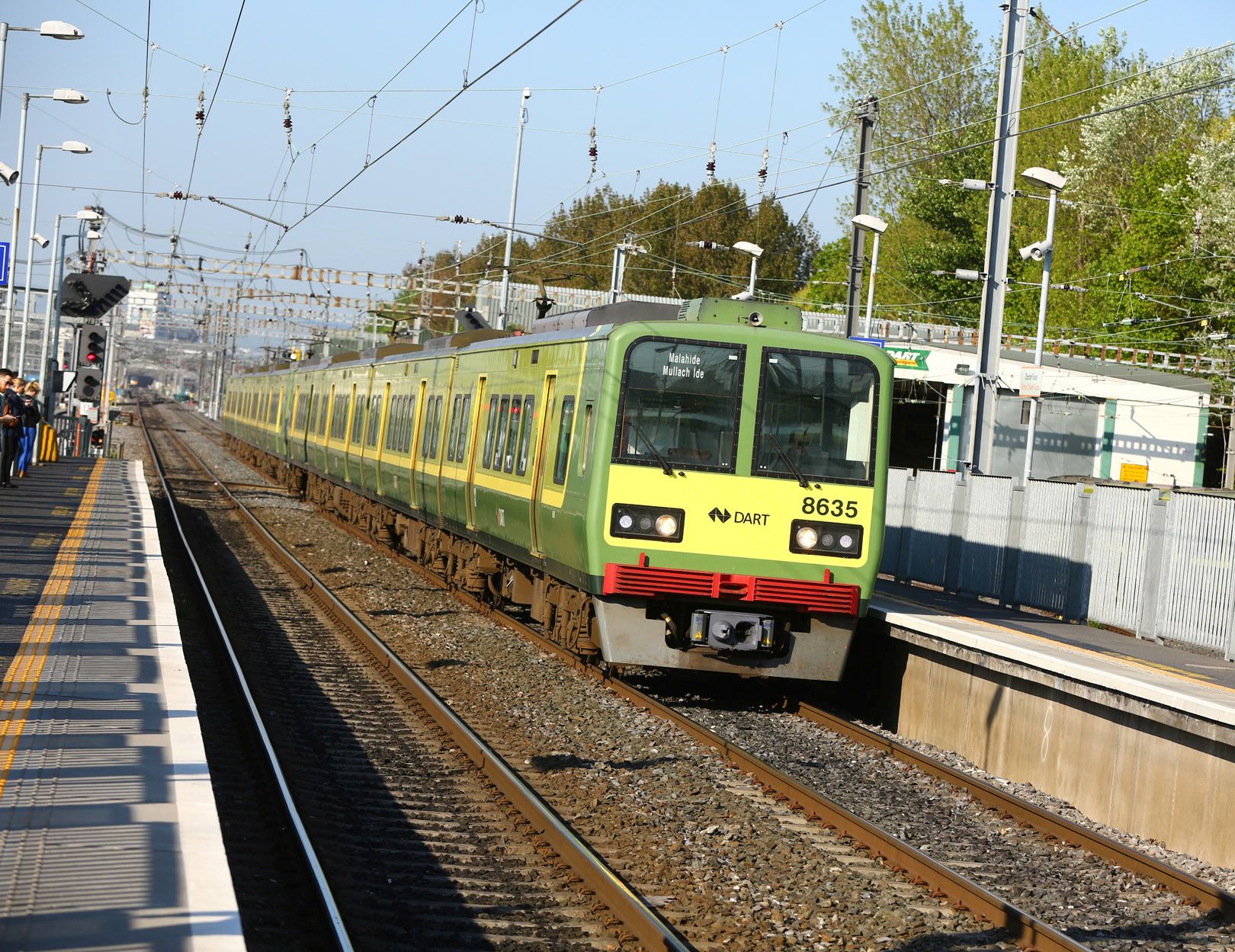
The railway line between Connolly Station and Malahide is due for a transformative upgrade.
A big-budget plan to change the existing two-track railway line between the two Northside stations will help ease congestion for commuters, said Minister for Transport Darragh O’Brien.
While the MetroLink saga shows no signs of resolving itself anytime soon, the expansion of the railway line is a quick, easy win for the government on transport policy.
Minister O’Brien said, “this government is already making investments in the Northern Line to help ease rail congestion.”
“These investments will improve journey times and reliability for Enterprise and DART passengers, including those who will benefit from the new battery-electric DART+ fleet operating as far north as Drogheda from the middle of next year under DART+ Coastal North.”
He noted that passing loops and turnback facilities are to be delivered at Mosney, Skerries, Malahide and Clongriffin in the next few years, supported by funding from the EU and the Shared Island Fund.
The Dublin Fingal East TD said “the rail line between Dublin Connolly and Malahide is one of the busiest on the island, and track capacity is a major constraint on frequency and capacity upgrades”
“The Four North project will not only unlock future growth and support additional DART, Commuter and Enterprise services, but will also enhance reliability and enable speed improvements for the services already operating today,” he said.
Fianna Fáil Senator Lorraine Clifford-Lee said the upgrades are a “once-in-a-generation-investment” for the Northside.
Senator Clifford-Lee said the investment would bring “real benefits” to communities across Dublin Fingal West, particularly for those travelling to and from Balbriggan, Skerries, Rush and Lusk.
“This is a hugely significant announcement for commuters across North Dublin. Every day, thousands of people from Balbriggan, Skerries, Rush and Lusk rely on the Northern Commuter line to get to work, college and appointments. Increasing capacity on this vital corridor will deliver more reliable, more frequent and more resilient rail services for our growing communities,” she said.
The Fianna Fáil Senator said the investment was proof that the party were committed to delivering on public transport, following criticism from the opposition that the government were putting more of a priority on roads instead of public transport in previous Budgets.
“Working with my colleague, Minister for Transport Darragh O’Brien, we are committed to delivering commuter services that work for our communities. Investments like FourNorth are essential if we are to provide people with the reliable public transport they deserve while supporting sustainable growth across Fingal and the wider Dublin region,” she said.
“This investment is about planning for the future while also delivering improvements in the short term. I encourage everyone to engage with the public consultation process when it begins later this year so that local voices are heard as this transformative project moves forward,” she added.
Iarnród Éireann Chief Executive Mary Considine said, “FourNorth is about more than new tracks. It is about building a resilient, high-capacity rail corridor that supports everyday journeys, strengthens regional connections and helps deliver a sustainable transport future for Ireland – making space today for the needs of tomorrow. “
“We look forward to developing and confirming the preferred option throughout the remainder of this year, and to the input of our customers, the communities we serve and all stakeholders,” she said.
Junior transport minister, Seán Canney said “FourNorth represents a long-term and transformative investment in rail capacity, in line with our 2050 vision set out in the All-Island Strategic Rail Review.”
“Improvement of public transport services, and especially rail infrastructure, is key in improving people’s lives and unlocking economic growth, which is why I am very glad to see this critical project advancing through the design stages.”
“I encourage the public and interested stakeholders to engage with the consultation process, as their feedback will be an important part of the design process.”
Labour councillor Corina Johnston broadly welcomed the plans, saying “current twin?track system forces commuter, DART, intercity, and freight services to share the same corridor, creating chronic congestion and limiting the scope for service improvements, particularly at peak times.”
Johnston said that coastal Labour representatives have advocated for a four?track system to separate commuter and intercity services.
The Rush-Lusk councillor said that All?Ireland Strategic Rail Review from 2024 identified this particular project as a long?term goal for delivery by 2050, but Johnston said that the Northside cannot wait that long.
She cited the Rail Project Prioritisation Strategy from December 2025, which called for the delivery of DART+ North “for completion in the next decade, subject to securing necessary approvals and funding,” alongside short?term passing loop measures.
“This reinforces our position: the Four North Project must be prioritised and delivered, not deferred,” she said.
Broadly welcoming the announcement, Johnston said the government could not afford to rest on its laurels with the project.
“While this project is welcome, it falls short of providing clear timelines or confirmed funding for the full delivery of the FourNorth Project,” she said.
“Communities along the Northern Commuter Line deserve certainty, ambition, and a commitment to delivering the infrastructure required to support a rapidly growing region.”
Johnston said, “we will continue to press for this project to be fully approved, funded, and delivered without delay; residents deserve a modern, reliable, high?capacity rail service and we will not accept anything less.”
The FourNorth programme will see improved capacity, allow for more services, and improve punctuality.
A series of works on Northside DART lines earlier in the summer (notably, over the May and June Bank Holiday weekends) revealed the limits of existing, creaky rail infrastructure.
As Ireland’s railway infrastructure ages, more maintenance work will be required; in essence, it is cheaper (and more convenient for commuters) to build newer infrastructure.
During peak periods, even small disruptions cause ripples across the network.
The line is the busiest rail corridor in the country, with northside DART, Northern Commuter, Belfast Enterprise and rail freight services all sharing the existing two tracks.
FourNorth will allow more capacity, more services and more reliability by proposing the provision of additional tracks alongside the existing two-track railway between Dublin Connolly and Malahide stations.
The project is funded by the Department of Transport and the Connecting Europe Facility Transport programme, Iarnród Éireann will today publish initial details of the project aims and priorities, as the programme progresses through early option development.
As it stands, the Connolly to Malahide section of railway is the main gateway for North Dublin commuters travelling into the city centre and a key link between the island of Ireland’s two largest cities.
The railway line also contains a critical bottleneck, which means that rail services are not as frequent as they should be.
The FourNorth project said that they specifically wanted to increase capacity, frequency and reliability, with fewer maintenance closures.
Iarnród Éireann plans to begin public engagement in late 2026, giving communities, passengers, businesses and local authorities the opportunity to help shape the emerging design.
Consultation will take place at key stages and will include online resources, mailed information, public events and hosted sessions – designed to provide clear project updates and meaningful opportunities for feedback for all stakeholders.
Irish Rail said that the FourNorth is currently in the early design and option development stage, and is still subject to a number of engineering, operational, environmental and community considerations.
Related News