O’Brien defends carbon tax from Sinn Féin attacks
Mike Finnerty 25 Mar 2026
Editor’s note: This article appeared in print in Northside People went to press on Friday, March 20th. For posterity, we are presenting the article as it originally appeared in print, prior to the Cabinet’s meeting on Tuesday, March 24th.
Fianna Fáil Minister Darragh O’Brien has defended the coalition’s stance on carbon tax.
Despite the Fianna Fáil/Fine Gael/independent government spending the last year wiping all traces of any Green Party involvement from the government’s agenda, the carbon tax is being kept despite pushback from Sinn Féin.
The carbon tax, first introduced in the 2010 Budget (when the Greens were first in coalition), has become a popular tool for Sinn Féin to attack the government with in the context of the cost-of-living crisis.
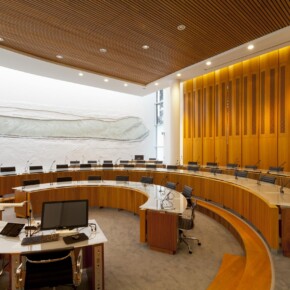
This week in the Dáil, the chamber heard a motion from Sinn Féin’s finance spokesperson Pearse Doherty, which called for the scrapping of planned increases to home heating oil on May 1, and the removal of excise duty on home heating oil, petrol and diesel.
Doherty criticised the government ministers as being “too busy packing their bags for Paddy’s day” and claimed “they were not even bothered with the fear that was gripping people in their constituencies.”
“They are not listening to families who are worried about how they are going to fill the car or older people and elderly people whose heating oil is running out or running low, and who cannot afford the refill.”
O’Brien defended the government’s stance on the issue, saying “there are many people out there who are vulnerable at the moment, and the government is committed to assisting them, and we will bring forward targeted measures – a number of measures – not just for households but for the sector as well.”
He remarked that Sinn Féin’s plan was “made up on the back of an envelope” and said that their plan would scrap €600 million worth of supports of households.
He said that the government’s response to the crisis will be done in a “structured way, in a sustainable way and not done by way of a knee-jerk reaction to curry support in other areas.”
“We take this situation very seriously, and that is why we will approach this situation in a serious and structured manner. We will bring forward supports next week for households and for businesses in a targeted, structured and sustainable way so we can continue to invest in things like home retrofitting and supports for small businesses, which Deputy Doherty would scrap.”
Doherty and O’Brien are no strangers to facing off against each other in the Dáil – the two clashed during O’Brien’s tenure as Minister for Housing – and the latest row showed no signs of the Donegal and Dublin Fingal East TDs kissing and making up in the context of a national emergency.
O’Brien quipped that Doherty has been the opposition’s finance spokesperson for nearly 20 years and “there is a reason you have not actually been in government.”
Doherty responded by branding O’Brien a “complete spoofer.”
“The Minister talked about back-of-envelope stuff. No harm to the Minister, but that was Fianna Fáil’s job, the last time you wrecked the economy, yourselves down in the Galway tent with the back of the envelopes with the bankers and the developers. We know all the lectures in relation to that,” Doherty fired back.
Sinn Féin TD Louise O’Reilly said, “there is an emergency right now.”
“The Tánaiste needs to come to this chamber with action, not words. Words are not going to pay people’s bills. The Tánaiste needs to come up with action, and he has not. He is short this evening when he comes in here and tells people they have to hang on and wait, and that another scenario might unfold. God forbid there might be a knee-jerk reaction,” the Dublin Fingal West TD remarked.
“They have to make awful choices in homes the length and breadth of this State. They want the Government to step up and be on their side. The opposition needs to speak with one voice.”
“The carbon tax that is coming down the line will increase the cost of heating people’s homes. People cannot afford it as it is, and they most definitely cannot afford an increase. The opposition will be united in confronting the Government on this and putting forward solutions, which is exactly what we have done,” she said.
Dublin Bay North TD Denise Mitchell called the government out on their stance on the issue (see page four for more), but fellow Dublin Bay North TD Naoise Ó Muirí questioned how exactly Sinn Féin were going to pay for their proposals.
“As the opposition finance spokesman well knows, the estimated cost of reversing carbon tax increases in the past two years is well north of €300 million. That money directly funds energy upgrade works, schemes for those in or at risk of energy poverty, the fuel allowance, the working family payment and several other vital schemes.”
The Fine Gael TD stated, “it is populist politics but poor policy-making. It is easy to make assertions like that from over there, but government requires difficult decisions at times.”
Ó Muirí said, “ultimately, decarbonising our energy system is the best way to secure energy independence and reduce costs for families. That means clearing the decks for progress in offshore wind. I urge the Minister to make energy decarbonisation a non-negotiable priority for this government.”
The Dublin Bay North TD also questioned an assertion by Aontú leader Peadar Tóibín that the government had “burned through 200 million tonnes of carbon in the past two weeks.”
“I would love to see him stand that allegation up. It seems like an enormous figure,” he said.
O’Reilly’s hope that the opposition would speak with one voice on the issue was dashed by Green TD Roderic O’Gorman saying he would not back the bill.
The Dublin West TD said, “I think the targeting of the carbon tax that is part of the motion is a step backwards; the reason we have a fuel price crisis in Ireland now is not because of the carbon tax but because our economy continues to be entirely dependent on imported fossil fuels.”
The Green leader stated, “the carbon tax is the one piece of public policy that is ring-fenced to tackle that, through immediate supports for the most vulnerable, increased social protection payments and longer-term measures to support the insulation of homes through a range of targeted measures.”
“If we cut the carbon tax, that would only prolong our addiction to dirty, unpredictably priced imported fuels. People are hurting because of the Iran war. The government can take targeted steps to address that, but changing the carbon tax is not the right thing to do at this time.”
Sinn Féin’s stance on carbon tax has put them at distinct odds with potential coalition partners; the Greens, the Social Democrats, and Labour have all come out in favour of keeping the carbon tax, but Sinn Féin are adamant about cutting it.
Labour TD and environmental spokesperson Ciáran Ahern said he knew that Sinn Féin’s concerns about the carbon tax are “very real”, but he said that Labour “fundamentally believes that we must be careful not to undermine the very measures that help households reduce their energy bills permanently”
“I am not here to defend government action on this, but I am being realistic that the revenues from the carbon tax fund the fuel allowance, support vulnerable households and invest in home retrofitting programmes that make homes warmer and cheaper to run,” the Dublin South-West TD explained.
Social Democrats TD Cian O’Callaghan said that the government’s “hands-off approach to the energy crisis is callous and cruel.”
The Social Democrats TD said that the cost of living crisis was already putting a strain on households, adding “that was before Trump and Israel launched their illegal war on Iran, causing carnage across the whole region and causing economic chaos across the globe.”
O’Callaghan questioned the government’s urgency on the issue on Thursday (March 19), with Tánaiste Simon Harris insisting that the government’s plans on the crisis would be discussed at the next Cabinet meeting on Tuesday (March 24).
“Where is the urgency? The Tánaiste could act today, if he wanted to. The Tánaiste could clear the Dáil schedule and get this done, as he did when he had to appoint Ministers. The Tánaiste cleared the Dáil schedule to fill up his ranks,” O’Callaghan noted.
The Tánaiste discussed O’Callaghan’s calls for the €400 energy credit, saying, “I know it is put forward in good faith; nobody should be dismissing anybody’s ideas that are brought forward in good faith because I do not doubt they are.”
“We are all trying to achieve the same thing here. The only point I would make is that I am not sure the speediest or most effective way, being truthful, with the time of the year we are coming into, that is, bringing in temporary energy credits – and I am not saying this to be flippant – in a summer period that would not be in place in a winter period.”
“There are other ways, more quickly, we can alleviate and help. I know this idea is brought forward in good faith. As I say, we all need to approach this with humility, and I certainly do too. However, it would require primary legislation and the likes. There may be quicker ways of helping people and possibly achieving the same aim the Deputy is trying to achieve as well.”
Fellow Dublin Bay North TD Barry Heneghan said, “the reality is that Ireland remains too exposed.”
The independent TD invoked the history books during the Dáil, noting that during the Second World War, Winston Churchill reduced the supply of coal to Ireland to “try to force de Valera’s hand to end Ireland’s neutrality.”
“That is what we do when we do not allow our country to have its own energy independence and security,” Heneghan said.
Heneghan said, “I am blue in the face saying in this chamber that we have to enable private wires to connect renewable energies, invest in long-duration energy storage and accelerate other storage systems like green hydrogen, particularly alongside offshore renewable energy. We cannot have curtailment and dispatch down.”
Related News