Government “abandoning” changes to reduced speed limit, Healy says
Mike Finnerty 21 Jan 2026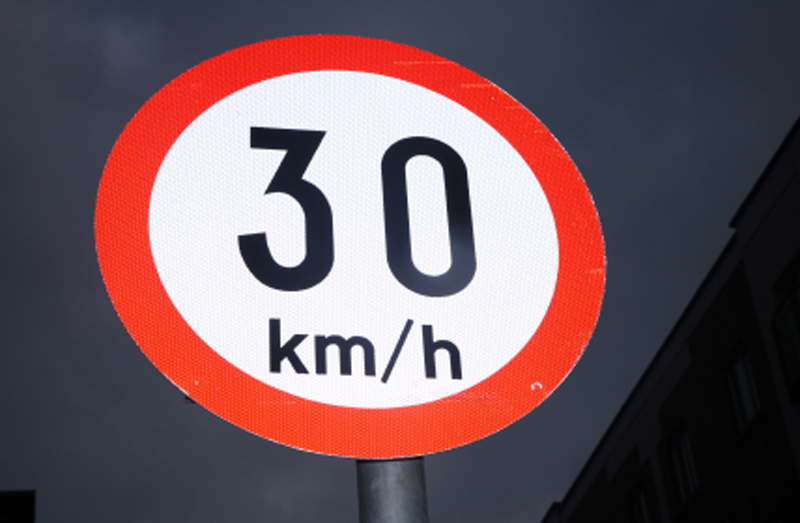
Green councillor David Healy has questioned the government’s sincerity in their plan to lower speed limits in urban areas.
In the previous Fianna Fáil/Fine Gael/Green government, plans were announced to reduce speed limits in urban areas from 50km/h to 30km/h.
The plan, initially supposed to come into place in early 2025, has slipped into 2027, as per the great Irish tradition of government projects being announced and subsequently delayed.
In September 2023, the Department of Transport, then led by the Greens, announced plans to reduce speed limits on national secondary roads from 100km/h to 80km/h, the default speed limit for the network of local and rural roads throughout the country reducing from 80km/h to 60km/h, and the default speed limit on urban roads (which include built-up areas as well as housing estates and town centres) reduced to 30km/h.
Since then, only speed limits on national secondary roads have dropped.
Then-Minister for Transport Eamon Ryan said, “this report is being published at a critical time, when fatalities on Irish roads are increasing at an unacceptable rate and after a particularly painful period of time when we have lost too many young people and families who all set out on their journeys expecting to arrive safely.”
Ryan was subsequently replaced as Minister for Transport by Dublin Fingal East TD Darragh O’Brien of Fianna Fáil, and a trend has emerged since the Fianna Fáil/Fine Gael/independent-backed government took office last January; erase any trace of Green influence from the government.
Following last week’s admission from Minister O’Brien that Ireland is unlikely to meet its legally binding climate targets, the government’s seeming apathy in reducing speed limits has irked Councillor Healy.
Speaking at this month’s meeting of Fingal County Council, the Clontarf councillor said that the government was effectively “abandoning” the planned changes, noting that local authorities were waiting from Feburary 2025, when the initial plan was meant to come into place, until October 2025, when the new, revised plan was announced by the Department of Transport and with major changes from the initially agreed-upon plan.
Fingal County Council members have been informed that a consultation process is ongoing with regard to how many updated speed limit signs and poles were needed; it is estimated that the consultation process will finish by the end of February.
Healy questioned whether the government will be able to meet the deadline, as it still needs to go to local area committees and a public consultation process.
Fellow Howth-Malahide councillor Joan Hopkins agreed with Healy’s assertions that the government have put road safety issues on the back burner.
The Social Democrats said, “the trend has gone one way; it’s gone the direction we don’t want it to.”
“It’s not good enough that we are taking so long to do this (drop speed limits), and we should have gone ahead with the process we were promised.”
Councillor Hopkins said the difference between 30km/h, 40km/h and 50km/h is “staggering” in the context of road traffic accidents and said “we need to bring some sense to our roads.”
Independent councillor Joe Newman said that enforcement was “crucial,” noting that it was fine to change the signs, but enforcement of the new speed limit rules were just as important.
“Changing the signs without backing it up is not going to do much,” he said.
In June 2025, the Northside People reported that a local area committee meeting of Howth-Malahide councillors were told that the central government had effectively ceased communication with Fingal County Council on changes to speed limits and that the council were in the dark about updated signage.
The meeting was told that in February 2025, speeds on local rural roads were reduced from 80km/h to 60km/h, but no road signs documenting the new changes have been installed in the Howth/Malahide area (indeed, just 133 new road signs were installed across all of Fingal, the majority in the Blanchardstown and Swords areas).
James Culhane, an engineer with Fingal County Council, told councillors in September 2024 “if the signage isn’t up by November, the guards won’t be able to prosecute,” and said that further guidance was needed from the Department of Transport.
There were 190 fatalities on Irish public roads and in public places in 2025, per the Road Safety Authority, up from 174 in 2024.
The RSA noted that in 2025, 54% of fatalities on Irish roads occurred on roads with a speed limit of 80km/h or greater.
Fine Gael councillor and Mayor Tom O’Leary said that the 30km/h limit was needed in his area of Skerries.
O’Leary and Fianna Fáil councillor Eoghan O’Brien sent a letter to the Department of Transport on October 16, asking about what needed to be done to implement changes to speed limits across Fingal, but implied that they had not received a response.
The Balbriggan councillor said that a 30km/h limit would allow people to cross the road safely, “without wondering if a speeding car is coming at you in our own town and village.”
In October 2025, Minister O’Brien designated €20 million in funding for local authorities to support changes to speed limits, including buying and installing poles and signs”
Speaking at the time, Minister O’Brien said, “we need to work together to increase protection for all, but particularly vulnerable road users. Having lower speed limits in built-up and urban areas will greatly improve road safety, especially for those who walk, scoot or cycle.”
Mary T Daly, Head of Operations at Fingal County Council, said that the deadline to bring in the next change in the speed limit plan is March 31, 2027.
“There’s quite a lot of work involved in it (the implementation of new speed limits) and local area engineers are working on it,” she told the meeting.
She said the delay is to do with legislation at a government level, effectively creating a situation where changes to the law are within the remit of central government but not local government, and local government are waiting for guidance from central government that never comes.
The government’s indifference to local authorities has become apparent since the government took office last January; this week’s edition of Northside People discusses how members of Dublin City Council feel as if major decisions are being made without councillors receiving any input, and have to find out about major decisions through the media (see page 4).
“The 30km/h speed limit is a reserve function of the council,” she noted, which means that it is within the council’s remit, whereas the drop from 80km/h to 60km/h in urban areas was under the jurisdiction of the central government and the changes to the law lay with them.
She said, “I can assure you that work is underway, but the deadline is March 2027; we hope to have it done earlier, but we have to go through the process, and we intend to stick to those deadlines.”
Related News