City’s bar stories revealed in new campaign
Dublin People 11 Feb 2012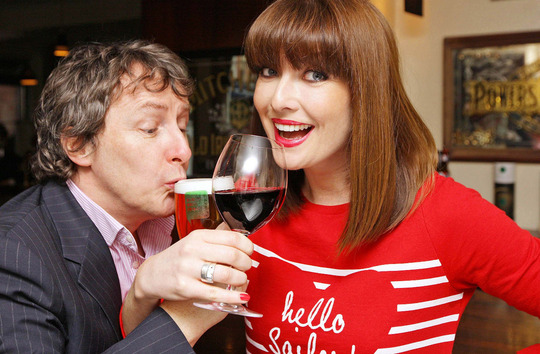
THE country’s only full time historian of the licensed
pub industry has shed some light on the fascinating stories of the Southside’s
public houses.
Publicans across the city have joined up with the
Licensed Vintners’ Association to launch a new advertising campaign entitled
‘Dublin Does Fridays’ that runs until the end of March. The idea is to attract
those in their mid-to-late 20s back into the pub on Friday evenings.
Eamonn Casey is the country’s only full time historian
with specialist knowledge of the pub trade and public houses in Dublin. He is
the author of several books on the subject, most notably the
‘Dublin Pub
Saunter’.
He explained why he believes pubs are key to
understanding the context to much of Irish history and culture.
“The importance of pubs to Ireland is reflected in the
fact that the story of the country has been told through the history of the
pubs,
? he said.
“The pub has a very important part to play in Irish
life primarily because so many of its great characters drank in pubs.
?
Mr Casey revealed that events which would profoundly
shape the political and cultural landscape of late 19th and early 20th century
Ireland took place in one of the south inner city’s best loved haunts.
“The Long Hall is one of the finest examples of an
original Victorian pub,
? he said.
“It has a very fascinating history in that
from 1865 to 1867 the Fenian Rising was effectively planned in there and it was
closed by the order of the courts.
“The licensee at the time was a guy called Joseph
Cromien who was deported to America where he got heavily involved in Clann na
nGael.
“He remained in the license trade with Clann na nGael
and they helped to finance the 1916 Easter Rising. He was very active in Irish
American politics after that.
?
Mr Casey also revealed the origins of one of the
oldest pubs on the Southside that was established as a consequence of the
ill-fated 1798 rebellion.
“Bugler’s Ballyboden House was first licensed in
1798,
? he related.
“It was licensed as a consequence of the construction of
Military Road just after the 1798 rebellion when fellas like Michael O’Dwyer
came down from the Wicklow Mountains. They would attack the British garrisons
and escape back into the mountains afterwards.
“When the British constructed the 28-mile road there
were battalions of red coats using it and the first thing they needed to keep
these men going was a station of sustenance. As a consequence Bugler’s pub was
licensed.
?
Mr Casey revealed how many Southside pubs such as
McDaid’s and the Duke were frequented by some of the most illustrious writers
of 20th century Ireland including Joyce, Kavanagh and Beehan.
Mr Casey explained that the aim of the current
campaign is to attract what he described as a
“lost generation
? back into the
pubs of Dublin.
“The whole concept is to reinvigorate Friday evening
because the license trade in the last number of years has suffered.
“There is an entire generation of people who don’t go
into the pub and they drink at home instead. Dublin Does Fridays is all about
getting those people back into the pub.
?
Related News