Call for night-time economy to be embedded in policy
Padraig Conlon 25 Sep 2026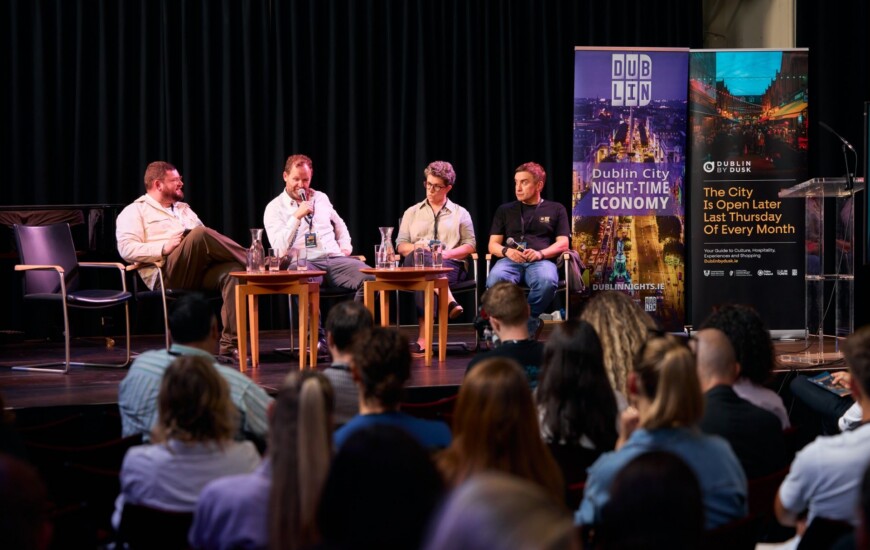
Dublin’s night-time economy needs to be embedded in policy and city planning from the outset, rather than treated as an afterthought, according to one of the key messages to emerge from Bright Nights, Big City: Culture, Music, and the Future of the Night-Time Economy.
More than 30 speakers from Ireland and internationally gathered at the National Concert Hall on 22 September for the conference, presented by AIM Ireland and Dublin City Council’s Night-Time Economy Advisor, Ray O’Donoghue, with support from the Department of Culture, Communications and Sport.
Across the day, speakers repeatedly returned to the need for a more joined-up approach to culture, transport and safety, alongside planning, licensing, affordability, public space and support for the people and businesses that make the night-time economy happen.
Ray O’Donoghue, Dublin City Council’s Night-Time Economy Advisor, said, “If we’re serious about creating a better Dublin at night, the night-time economy needs to be thought about from the start when we plan our city, not added on afterwards.
“Culture, transport, and safety are all connected. So are planning, licensing and public space. The next stage has to be about joining those pieces together and moving from good conversations and pilots towards long-term policy, investment, and delivery.”
Colm Hanley, Managing Director of AIM Ireland, said “Today’s grassroots venue is where we’ll discover the next headline act. We need to keep investing in Irish music and in the people and places that turn talent into careers.”
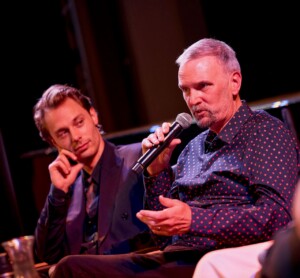
The need for a more joined-up approach was echoed by Michael Kill, CEO of the UK Nighttime Industries Association, who told the conference, “If we don’t try to get ourselves into a position where we are embedded in governance, we are always going to be playing a part that’s defragmented.”
The pressure on cultural spaces and grassroots nightlife was another major theme. Speakers called for greater protection for existing venues, pubs, clubs, independent promoters and creative businesses, alongside more imaginative use of empty buildings, meanwhile spaces, streets, and public spaces.”
Richard Tierney, CEO of St Patrick’s Festival, spoke about the importance of community, Irish subcultures and creating events that reflect the city, while contributors across the day highlighted the need to support the smaller venues, promoters, and cultural spaces from which creativity grows.
The scale of the challenge was underlined by CORE Research, which presented figures showing that the number of nightclubs in Ireland has fallen from 522 in the early 2000s to 82 today, while 77% of the public still express an appetite for music.
Safety was also a recurring theme, with Nicki Killeen of the HSE describing the importance of creating a “community of care” around nightlife. Discussions highlighted harm reduction, bystander awareness, good late-night transport, well-run venues, and busy streets as all contributing to a safer city after dark.
Dr Ciara Power, anthropologist specialising in music, culture and policy, told the conference that “policy makers must take lived experience seriously,” as speakers examined how regulation and licensing can better recognise the cultural, social, and economic role of nightlife.
International contributors included Michael Stewart, Belfast Night Czar; Carly Heath, Bristol’s former Night-Time Economy Advisor; Michael Kill; and Freek Wallagh, Night Mayor of Amsterdam. Despite the international perspectives, the message was not that Dublin should replicate another city, but that it should build on its own culture, communities, and character.
Wallagh summed up the potential of a vibrant night-time city, “More is more, not less is more.” He argued that streets can be safer when more people are using them and that cities need to create room for local talent, backed by investment and trust.
Following the conference, a series of dedicated Bright Nights workshops and panel discussions will be announced, exploring key issues including culture, transport, safety, licensing, and space, ahead of plans for Bright Nights, Big City to return in 2027.
Bright Nights, Big City: Culture, Music and the Future of the Night-Time Economy took place at the National Concert Hall, Dublin, on 22 September 2026.
Related News