Housing crisis reshapes work of addiction charity
Padraig Conlon 09 Sep 2026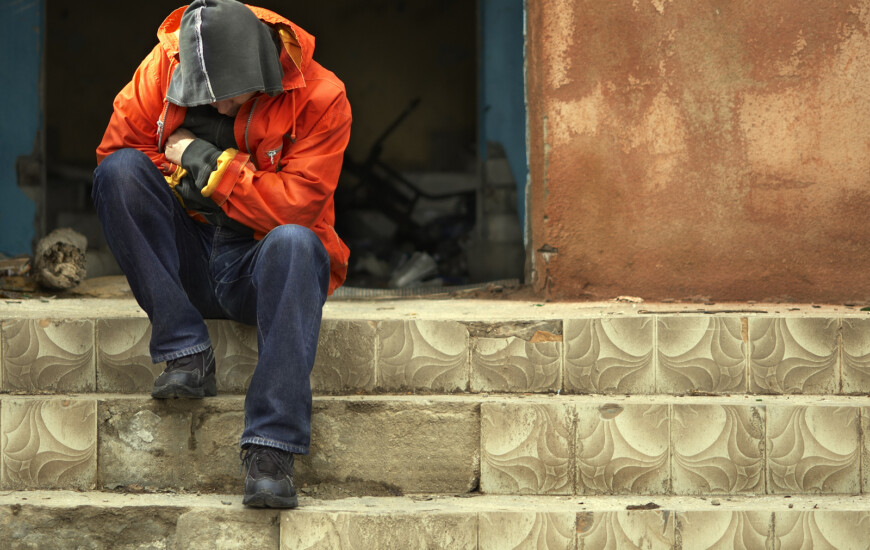
A charity founded to help people affected by drugs is now receiving more requests for housing support than for substance-use treatment.
Figures contained in the Ana Liffey Project’s 2025 annual report, released last week, show that housing and homelessness accounted for 27.8 per cent of the needs presented to the charity last year, ahead of substance use and treatment at 23 per cent.
Ana Liffey supported 4,609 people through its centres and outreach services in Dublin, the midwest and northeast last year.
Its clients included people sleeping rough, adults living in emergency accommodation, young people who became homeless after leaving State care and women forced to flee their homes because of domestic violence.
For an organisation established as a Dublin drugs project in the 1980s, the figures reveal a marked change in the difficulties facing those who come through its doors.
Addiction remains central to its work, but the absence of a safe home has become the need encountered most often.

Dawn Russell (pictured above), chief executive of Ana Liffey, said increased economic pressure had contributed to some people becoming homeless.
“The sense that we are all only one pay cheque away from the risk of homelessness really resonates at the moment,” she said.
The charity’s Dublin case-management team works with people living in private emergency accommodation, while its rough sleeper project in Limerick helps people in crisis to stabilise their lives and seek supported housing.
The work also challenges a familiar assumption about homelessness.
Although housing insecurity and addiction frequently overlap, Ms Russell said many people seeking accommodation were not experiencing addiction.
Nor were all clients receiving help with substance use homeless.
Beyond housing and addiction, social support and welfare accounted for 15.3 per cent of needs recorded in 2025.
Training and education represented 10.1 per cent, followed by physical health at 9.1 per cent.
Legal and criminal justice matters accounted for 5.3 per cent and mental health for 4 per cent.
The figures illustrate how one crisis can deepen another. Homelessness can damage physical and mental health, interrupt treatment and make work or education more difficult to sustain.
For those already dealing with several problems, navigating different State services can itself become an obstacle.
Ana Liffey has increasingly developed programmes intended to address those connected needs.
Its Law Engagement and Assisted Recovery programme provides intensive case management to people affected by addiction, homelessness, mental-health difficulties and criminality in Dublin and Limerick.
The charity is also working with Dublin’s Drug Treatment Court, which offers a health-led alternative to custody for people whose offending is linked to addiction.
An Ana Liffey support programme began operating within the court in September 2025.
The organisation said the additional assistance was already helping participants achieve better outcomes.
Journalist and author Brian O’Connell, speaking at the annual report’s launch in Limerick, said he had witnessed the effect of the court’s approach.
“Just as addiction can be non-discriminatory, society should not be placing barriers to recovery in people’s way,” he said.
Ana Liffey also expanded its overdose-prevention work last year, providing training in the use of naloxone, a medicine that can temporarily reverse an opioid overdose.
It worked with State agencies to identify potentially dangerous drug samples amid concern about synthetic opioids, crack cocaine and illicit tablets.
The annual report records recovery but also loss. Staff celebrated with clients who were rebuilding their lives, while mourning others who died through overdose, suicide and health conditions associated with poverty.
Ana Liffey expects the dangers facing its clients to grow as potent street drugs emerge and more people seek help with homelessness and domestic violence.
Its findings show why housing, addiction, health and poverty cannot be treated as separate problems.
For more people approaching the charity, the first step towards recovery is the most fundamental one: finding somewhere safe to live.
Related News