“Unthinkable” energy bills need to be reined in, opposition says
Mike Finnerty 12 Aug 2026
New figures have shown that a record number of Irish households are in arrears on their energy bills.
New statistics from the Commission for Regulation of Utilities (CRU) show that 322,298 households are now in arrears.
This time last year, the figure stood at 301,379.
The lack of energy credits in the two Budgets was criticised by opposition parties, and the government are under pressure to include some kind of relief for households in the October Budget.
By May, there were 733 homes disconnected across Ireland; in 2023, when the government introduced energy credits in Budget measures, the same figure stood at just 154.
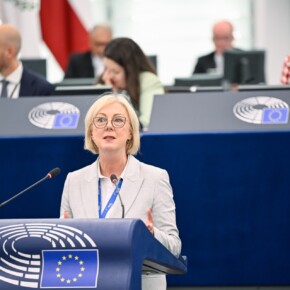
Sinn Féin MEP Lynn Boylan and TD Louise O’Reilly, who serves as the party spokesperson on social protection, said that the government needs to be doing more to prevent high electricity costs for consumers.
Ireland has the dubious record of having the highest consumer prices for electricity in Europe, and members of the opposition have pointed out that a precedent was set after the fuel protests, when the government spent €505 million in supports to end the protests.
MEP Boylan called the arrears crisis “another stain on the record of this Fianna Fáil and Fine Gael government.”
“There are more people struggling to pay their bills now than at any point since before the Russian invasion of Ukraine,” she said.
Political analysts noted that the absence of the Greens from the Budget table last October was a major reason why windfall taxes and energy credits were not present in last year’s Budget measures.
Boylan stated “Fianna Fáil and Fine Gael sit on their hands while households are left to struggle by themselves,” remarking “the best they could come up with was another taskforce.”
Announced last summer, the taskforce to tackle energy costs hasn’t produced a single policy paper, while 24,000 more households have fallen into arrears on their bills.
“The next big idea was to axe the energy credits in the absence of evidence that the need had gone away. But there are almost 22,000 more households behind since the government pulled the rug out from households by cancelling the energy credits in Budget announced last October,” Boylan said, dubbing it the “cliff-edge” that her party had warned about.
Dublin Fingal West TD O’Reilly criticised the CRU for adding a €41 cost to households, with the CRU citing upgrades to the electrical grid as their excuse.
“€41 extra is only part of the picture – these charges have increased almost €200 in the past three years alone, and people are not any better off now than they were then,” O’Reilly noted.
“These charges are the exact kind of tariff that impacts people struggling most in our society: lone parent families who are stretched thin and households with one or more disabled members or working families, especially those with older children.”
O’Reilly said, “in my offices I see this all the time – people who are working hard but can’t keep up with the cost of living.”
“The reality that this government is ignoring is that people have nothing left to give. These charges here and there, year on year, add up and all the while people’s purchasing power is diminishing as they pay some of the highest electricity prices in Europe.”
With Budget kite-flying in full effect from the government side, O’Reilly had a warning for the government parties.
“We need to see serious cost of living measures in this forthcoming Budget, particularly for households with disabilities, one-parent families and where people are struggling,” she said.
The Social Democrats also looked to get their digs in at the government, calling the statistics a “grim milestone.”
Energy spokesperson Jennifer Whitmore noted that even prior to the latest American boondoggle in the Middle East, households were already struggling with energy costs.
“Yet when the government first observed the number of customers in arrears surpass half a million, it did nothing to stop the situation reaching even lower lows,” the Wickow TD noted.
Whitmore criticised the government’s “head in the sand” approach, and said that the party’s suggestions of a €400 energy credit for households should be implemented.
With official confirmation from Met Éireann that July was the driest on record, the party said that adapting solar power should be the next priority for the government.
“We have been pushing for the Government to adopt our ‘Solar for All’ plan. Our proposal includes a doubling of grants for solar installation to €3,600; the inclusion of solar panels in the ‘Warmer Homes Scheme’ to help families cut electricity costs by an average of €450 a year; and the rollout of new technology for plug-in solar,” Whitmore explained.
“If these are the struggles households are facing during spring and summer months, the prospect of a cold winter without major government intervention is unthinkable,” she warned.
Related News