PBP back publicly funded grocery stores
Mike Finnerty 05 Aug 2026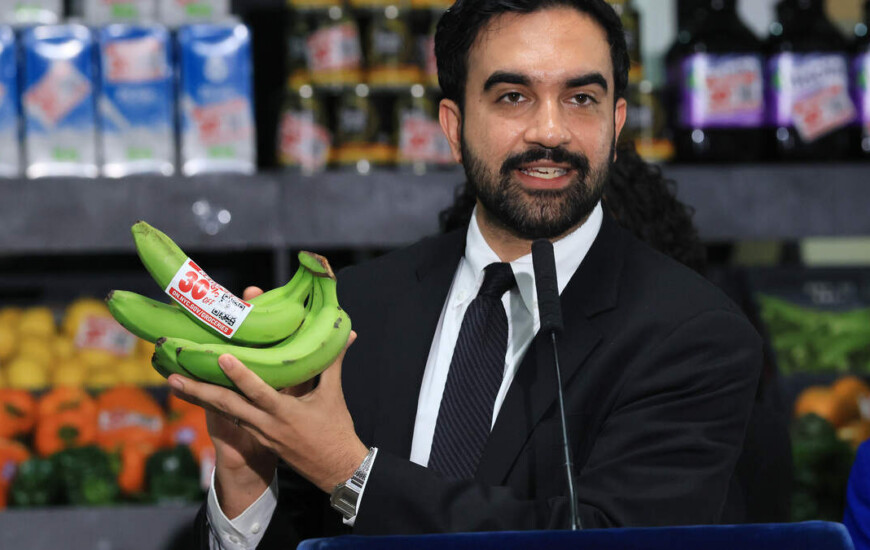
New York City Mayor Zohran Mamdani continues to be a touchstone for progressive parties across the world.
Last week, it was announced that Mamdani would establish publicly funded grocery stores, which offer essential goods at up to 30% below normal retail prices.
With the cost of living crisis still biting for many Irish households, People Before Profit believes that a similar plan could work in Ireland.
Dublin City Council member Conor Reddy said that Mamdani’s plan is an example of what happens when governments directly intervene to reduce food costs.
Reddy said that Ireland should go farther than what Mamdani is proposing.
The party first proposed a pilot programme of five publicly owned grocery stores in its Alternative Budget last October.
The party’s proposal would establish state-run grocery stores selling a basket of essential goods at reduced prices, alongside measures to develop a new relationship between the public sector, farmers and food producers to ensure sustainability and fair prices for producers.
The proposal also includes a publicly backed food distribution hub and aggregator.
The party said, “this would give farmers and producers greater certainty about the price they receive for their produce, while allowing the State to support lower prices for consumers.”
Reddy explained, “the state could subsidise this model. There is already a clear precedent for large-scale public intervention in response to inflation, including the supports offered to farmers and hauliers in the wake of the fuel protests.”
The Ballymun-Finglas councillor said, “Zohran Mamdani deserves enormous credit for showing that governments do not have to stand back while people struggle to afford the basics.”
“Our proposal is about providing cheaper groceries, but it is also about building a food system that works for ordinary people, for farmers and for public health.”
Reddy cited a survey from Barnardos, which found that 44% of Irish parents surveyed said they had skipped meals or reduced portion sizes in order to keep food on the table for their children, an increase of four percentage points on the previous year’s survey.
He said the Barnados findings pose a stark juxtaposition, as more 300,000 households are in arrears on their energy bills, while food, housing and other essential costs continue to place severe pressure on people.
Reddy said “access to healthy, affordable food should not be treated as a luxury. It is something that can and should be guaranteed by the State, particularly in a country with the wealth and prosperity that exists in Ireland.”
“The fact that children are going without and families are skipping meals is a total indictment of the system we have built. It is not working for ordinary people, just as the housing system is not working, just as so many of our public services are failing to deliver what we need,” he said.
Reddy asserted “it is time to look at the very foundations of that system and at how we meet basic needs. A society is nothing if it cannot meet the basic needs of its members.”
“Instead of another giveaway budget for big business and the rich, support should be directed towards the people who actually need it. Last year we saw fast-food chains benefit massively from the VAT reduction for hospitality, while families continued to struggle with the cost of groceries.”
While Fianna Fáil and Fine Gael wouldn’t exactly be thrilled to hear an elected representative talk about challenging the very notion of capitalism, People Before Profit insisted that their proposal is fully funded.
The party said the plan would be funded through a Public Nutrition Levy on the profits of the largest grocery retailers and fast-food chains.
The five largest grocery retailers paid approximately €28 million in corporation tax in 2023. At the standard corporation tax rate, that would imply taxable profits of at least €224 million, and potentially more once tax allowances and other adjustments are taken into account.
People Before Profit are also calling for greater transparency around the profits of large grocery retailers and fast-food corporations, many of whom do not publish clear, standalone figures for their Irish operations.
Reddy, who received a doctorate from Trinity College in Inclusion Health Immunology examining the biological and social foundations of health inequalities, said that affordable nutritious food must be viewed as a “critical public health intervention” as well as an economic one.
“People on lower incomes and people from poorer backgrounds are more likely to die early. They are more likely to be overweight, more likely to experience nutritional deficiencies and more likely to develop chronic illnesses. Social inequalities translate into health inequalities. Access to high-quality nutritious food is one way of addressing those inequalities and improving overall population health.”
He said, “food prices are increasingly vulnerable to climate shocks, war and disruption to global supply chains. In an unstable world, we need to be able to look after the basic needs of our population. This means breaking the mould and being willing to experiment with radical policies.”
“A public grocery network could provide affordable essentials, stability for producers and help in the transition towards a more sustainable food system.
“This is about taking profit out of the provision of basic necessities and beginning to build a food system organised around human need.”
Related News