Delays in inner-city flat regeneration “breaching human rights,” warns IHREC
Dublin People 12 May 2026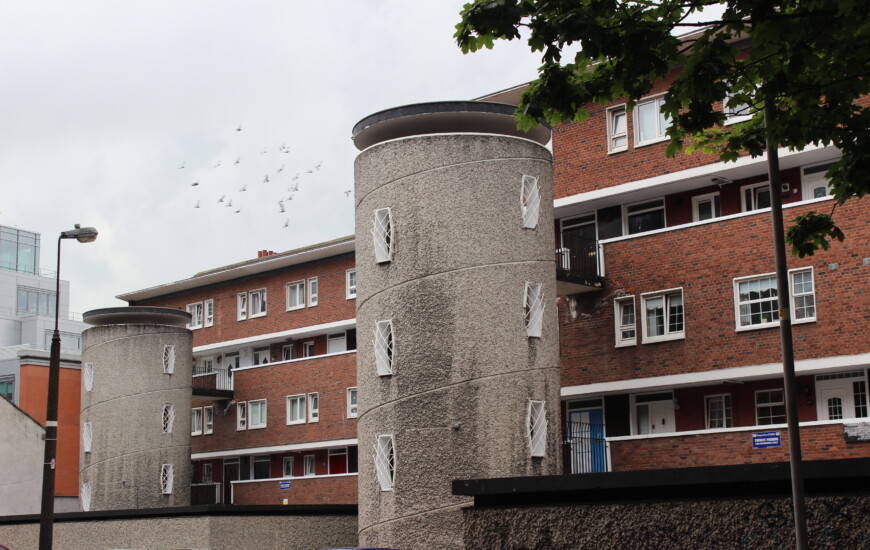
The Irish Human Rights and Equality Commission (IHREC) appeared before the Joint Oireachtas Committee on Housing, Local Government and Heritage today, Tuesday, 12 May and warned that continued delays in regenerating Dublin’s inner-city flat complexes are leaving families trapped in housing conditions that breach fundamental human rights obligations.
IHREC Director Deirdre Malone told TDs and Senators that the State’s failure to address long-standing problems including damp, mould, sewage issues, infestations, poor insulation, fire safety concerns and chronic repair delays amount to an ongoing denial of the right to adequate housing.
The Committee session follows recent reports that plans for the regeneration of Oliver Bond House have been halted.
The Commission will outline how Ireland remains in breach of its obligations under the European Social Charter almost a decade after the European Committee of Social Rights found that the State had failed to ensure adequate housing conditions for many local authority tenants.
In repeated follow-up assessments, most recently in 2024, the Committee found that Ireland had still not brought the situation into compliance and that progress on regeneration had stalled.
Speaking in advance of the hearing, IHREC Director Deirdre Malone said:
“Families in Dublin’s inner-city flat complexes have waited years, in many cases decades, for safe, healthy and dignified housing conditions. What residents continue to experience is not simply poor housing policy; it is a persistent failure to vindicate basic human rights.
“Children are growing up in homes affected by damp, mould, leaks, pest infestations and chronic disrepair while regeneration projects face repeated delays, uncertainty and now, in some cases, cancellation. That is unacceptable in a modern republic.
“The European Committee of Social Rights found in 2017 that Ireland was violating the rights of families living in local authority housing. Nearly ten years later, the State still has not remedied those violations. Delays are not neutral; they perpetuate harm and deepen inequality.
“Residents and communities must be placed at the centre of regeneration decisions. Human rights require meaningful participation, accountability and urgency. The State cannot continue to defer action while people remain living in inadequate and unhealthy conditions.”
The Commission will also highlight concerns regarding:
- The absence of a national timetable for refurbishment and regeneration of local authority housing stock;
- The continued lack of comprehensive national data on housing conditions;
- The disproportionate impact of inadequate housing on marginalised and low-income communities;
- The lack of effective remedies available to many social housing tenants;
- The need for significantly increased investment in social and affordable housing.
IHREC will reiterate its position that access to adequate housing is a fundamental human right recognised under international law, including the International Covenant on Economic, Social and Cultural Rights and the European Social Charter.
The Commission is also calling for:
- A significant scaling up of social and affordable housing delivery;
- Greater accountability for delays in regeneration projects;
- Stronger protections and remedies for social housing tenants;
- A referendum to enshrine the right to housing in the Constitution by 2030;
- Ratification by Ireland of Article 31 of the European Social Charter on the right to housing.
Related News