Transfers the name of the game in Dublin Central by-election
Mike Finnerty 15 Apr 2026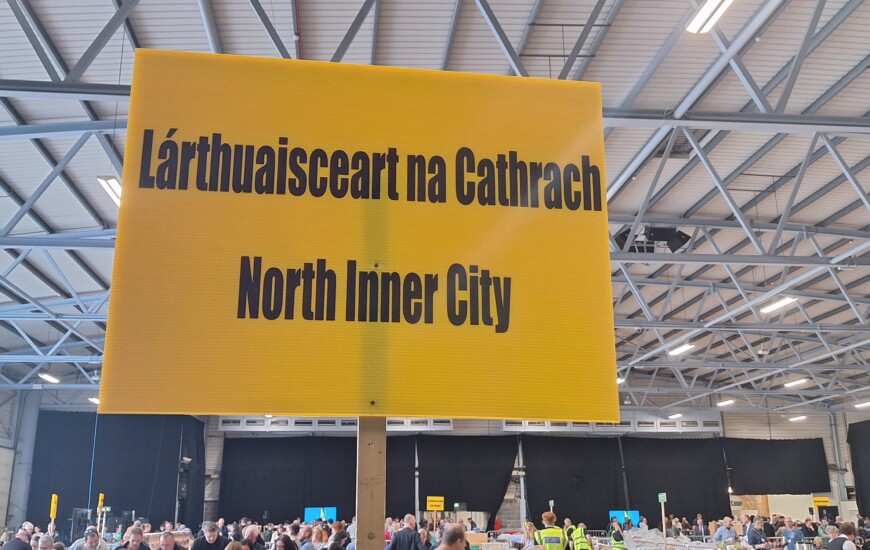
Next month’s by-election is highly likely to be decided on transfers.
October’s presidential election was highly unusual for Ireland, as Catherine Connolly was declared the winner within an hour of the boxes opening.
In May, getting enough of a high first preference is the name of the game; the last by-election, the 2021 by-election in Dublin Bay South, might offer a hint of how the day could go.
On that occasion, future Labour leader Ivana Bacik picked up 30.2% of first preferences, ahead of future Fine Gael TD James Geoghegan on 26.2%, with transfers doing the rest.
On an ideal day for a political journalist, the Dublin Central results will be like that by-election result; we will know early doors that a candidate has pulled in a high number of first preferences, transfer patterns will quickly emerge, and home in time for the football.
That’s the ideal day at the count centre for a political journalist; on this occasion, it is more likely to be more akin to the marathon North Inner City race of 2024.
In Dublin Central, it will be a matter of figuring out which of the opposition candidates will be in the top 2 and whether they have the numbers to go up against Fine Gael’s Ray McAdam.
As far as the government parties are concerned, Ray McAdam is widely seen as having the better chance of holding onto the government’s seat in the constituency, with McAdam having the distinct advantage of serving the North Inner City constituency since 2009 (compared to Fianna Fáil’s John Stephens, only elected for the first time in June 2024).
North Inner City and Cabra-Glasnevin are the two local electoral areas that make up Dublin Central at a local level, and thanks to June 2024’s local elections (alongside the 2024 general election and last October’s presidential election), we have a good idea of how the constituency votes.
Donohoe’s re-election in November 2024 was never in doubt, as the former Minister for Finance had enough of a first preference vote to keep himself in contention and ultimately receive more preferences than Mary Lou McDonald.
Donohoe received most of his preferences from Fianna Fáil Senator Mary Fitzpatrick (1794 of a possible 2802) and 306 from Green TD Neasa Hourigan (of a possible 2352).
Stephens’ role on the day will be to mop up enough preferences that will give McAdam a much-needed boost on the third or fourth count.
2024 was a disappointment for Fianna Fáil’s Dublin Central camp.
Mary Fitzpatrick’s 5th bid for a Dáil seat failed to pan out, and the party dropped from 19.8% in 2019 in Cabra-Glasnevin to 12.4% in 2024.
In the North Inner City, Fianna Fáil’s election can only be politely described as a debacle.
Three candidates failed to get elected, securing a paltry 5.9% of the vote between the three.
For that reason, Stephens’ candidacy is serving just one purpose; give McAdam a boost on transfers.
Not surprisingly, Fianna Fáil’s three candidates in the North Inner City all transferred to each other, and when it came time for their pooled-together votes to be distributed, 109 of a total 441 went to Ray McAdam.
In Cabra-Glasnevin, it was a similar result; outgoing councillor Eimer McCormack pooled together 868 votes, and 327 of those went to her running mate John Stephens, 170 went to Fine Gael’s Colm O’Rourke, while another 108 went to Fine Gael’s Gayle Ralph.
Government party discipline is likely to show again at the polls in May, especially as the stakes – holding onto a government party seat in the heart of Dublin – are high for the coalition.
For Fine Gael, the outlook is a bit sunnier; McAdam has the distinct advantage of being tied to Donohoe, has served the area as a councillor since 2009 and is the incumbent Lord Mayor of Dublin.
Being the incumbent Lord Mayor of Dublin is a big boost for a candidate when looking for a Dáil seat; Fianna Fáil TD Paul McAuliffe held the position when he was elected to the Dáil in 2020, while Dublin Bay South TD James Geoghegan was in command of the chains when his number was called in 2024.
Two councillors in Cabra-Glasnevin (Colm O’Rourke and Gayle Ralph), along with McAdam’s poll-topping performance in the North Inner City in 2024, make Fine Gael, on paper, a top 2 candidate heading into polling day.
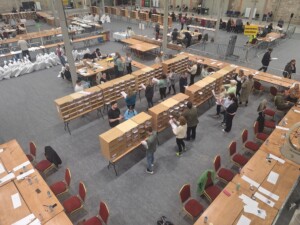
Transfers will be a key deciding factor in May’s by-election
The million-dollar question then becomes who will be McAdam’s rival for a Dáil seat from the opposition bloc.
The 2024 locals were a severe disappointment for Sinn Féin at a local level, and the party’s performance in Dublin Central was an underachievement compared to their 2020 high; 35.7% of first preferences in 2020 for Mary Lou McDonald dropped to 23.3% in 2024 for McDonald and running mate Janice Boylan.
With just one candidate in the race, Sinn Féin’s tried-and-tested method of giving running mates a high preference will need to adapt for a by-election.
While it’s a blunt instrument, analysing where McDonald’s surplus went in 2024 is worth discussing; of the 738 votes dispersed, 218 went to Gerry Hutch, 175 went to Gary Gannon, and 116 went to People Before Profit’s Eoghan Ó Ceannabháin.
Despite broadcast media doing their best to get Gerry Hutch elected and giving him free airtime, the independent candidate was not successful in taking a Dáil seat in 2024.
Breaking down who he received preferences from made for interesting reading; Hutch staying in the race until the final round has been well-documented, but it was receiving 1262 votes from independent, anti-immigrant councillor Malachy Steenson that put him in contention.
With Steenston also standing in the by-election in May, both Hutch and Steenston will be lobbying for the area’s historic anti-establishment independent vote (and in all likelihood, one will end up giving each other a boost on transfers).
Neasa Hourigan, who was suspended from the Greens twice for voting against the coalition, lost her seat in the 2024 general election; her share of the vote dropped by exactly 6%, with Gary Gannon gaining 4% compared to his 2020 performance, and Marie Sherlock gaining 2% compared to Labour’s showing in 2020 (in that case, those Green votes were crucial in helping Labour take the final seat).
Horner’s strong performance in the North Inner City in 2024, along with Feljin Jose topping the poll in Cabra-Glasnevin, shows that the area is a relative stronghold for the Greens despite their much-publicised struggles elsewhere in Dublin.
After Hourigan’s race was run in 2024, 2352 of her votes went up for grabs; 949 of those went to Gannon, and 851 went to Sherlock.
Gannon’s performance in 2024 was notable in terms of his increased share of the vote compared to 2020 (jumping from 9.3% in 2020 to 13.3% in 2024) and from whom he received transfers.
After veteran leftist Clare Daly bowed out of the race with 1539 votes (and with McDonald already elected), it was Ó Ceannabháin and Gannon who benefited to the tune of 456 and 388.
In the following round, when Ó Ceannabháin was eliminated, 1336 of a total 2112 votes went to Gannon.
The unofficial Soc Dems/PBP transfer pact was apparent in the 2024 local elections, with the Soc Dems’ Cabra-Glasnevin councillor Cat O’Driscoll receiving more preferences from People Before Profit than any other party, with O’Driscoll scooping 192 of a possible 565 votes.
Likewise, in North Inner City, 100 of a possible 630 transfers from a Social Democrats candidate kept Ó Ceannabháin in the race until the bitter end (with 126 of those going to Janet Horener and 310 going to Daniel Ennis).
Whether that same unofficial pact holds in May is another question (two years is a long time in politics, as Keir Starmer will tell you), but it is food for thought.
The wildcard, as far as transfer patterns go, is who Labour’s Ruth O’Dea will transfer to.
The big story in Dublin Central last time out was Marie Sherlock winning back the old Joe Costello seat, and it was transfers from Senator Fitzpatrick and Minister Donohoe that got Sherlock over the line.
Examining the 2024 locals as a base, Labour’s 323 votes in North Inner City went in interesting directions, with 70 of those going to Janet Horner and 50 going to Ray McAdam (with 66 going to the Soc Dems).
In Cabra-Glasnevin, the party’s councillor Declan Meenagh lost out after 15 rounds and attained 1,507 preferences; his running mate, Angela Boyle-Shafer, picked up 668 votes before going out in round 9.
Of those 668 votes, 260 went to Meenagh, 126 went to Jose, 92 went to Fine Gael’s O’Rourke and Ralph, and 71 went to O’Driscoll.
All in all, the transfer patterns from 2024 are a snapshot of how the electorate felt on those days in June and November; a lot may have changed since then in terms of global politics, but Irish voters, if nothing else, crave stability and normalcy.
While a full-size preview of the Dublin Central by-election will run closer to the date itself, the word on the ground has indicated that Ennis and McAdam are vying for the top two slots, with transfers deciding the outcome; understanding local transfer patterns, we hope, will give our readers an indication of how local voters have typically behaved.
Related News