Mortgage rules set to ease for cancer survivors
Padraig Conlon 25 Mar 2026
Cancer survivors are set to gain long-awaited access to fairer mortgage protection under new legislation that will go before Cabinet in the coming weeks, in what is being described as a major step forward for people trying to rebuild their lives after illness.
The Central Bank (Amendment) Bill 2025 will introduce a statutory right allowing certain cancer survivors to no longer disclose a past diagnosis when applying for mortgage protection insurance, removing one of the most significant barriers to home ownership.
The move follows sustained political pressure and years of campaigning by patient advocates, with key changes now agreed that will reduce the required remission period from seven years to five and increase the sum assured threshold from €500,000 to €650,000.
For many families, particularly in areas across the Southside where property prices continue to rise, those changes could mean the difference between securing a home or being locked out of the market entirely.

Fianna Fáil TD for Dublin South Central Catherine Ardagh (pictured above), who first introduced the legislation, said the changes will bring clarity and fairness to people who have already faced immense personal challenges.
“Cancer survivors continue to face some of the greatest barriers when it comes to mortgage protection.
“In my work as a solicitor, I have seen the devastation caused when a home purchase falls through because cover cannot be secured. That is simply not acceptable for people who have already endured so much.”
“The measures confirmed today will give cancer survivors greater clarity and certainty about the protections this legislation will provide.
“This has been a long time coming for so many people.
“No survivor of cancer should face financial discrimination, particularly when it comes to mortgage protection, which should provide security and peace of mind.
“Although this Bill is a significant milestone, barriers remain for survivors trying to access other forms of financial cover.
“I will be pushing to work with Government and Oireachtas colleagues to ensure these protections are applied more broadly.”
The legislation builds on a voluntary code introduced by the insurance industry in 2023, but crucially moves beyond guidelines to create enforceable legal rights, something campaigners have long argued is essential.
Tánaiste and Minister for Finance Simon Harris confirmed that the revised measures are designed to make a tangible difference to people’s lives and to address what many have seen as a longstanding injustice.
“The reforms being introduced under this legislation are designed to make a meaningful difference to the lives of cancer survivors and their families.
“A cancer diagnosis should never define somebody’s financial future or inhibit them from owning their own home. For too long, this sadly has been the case.
“Along with Minister Troy, I’m pleased today to announce clarity on two important components of the new measures.
“Firstly, the remission period for which cancer survivors can avail of mortgage protection will be reduced from seven years to five. The threshold for mortgage protection insurance will be set at €650,000 and this will be the subject of future reviews.
“I look forward to bringing these measures to Government for approval next month and progressing them swiftly through the Oireachtas.
“I’m conscious that these measures have been talked about for many years; Thanks to the work of the Irish Cancer Society and many others, Government is now is a position to put them into action.”

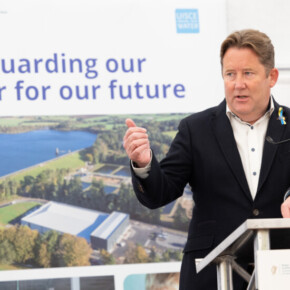
Minister of State for Financial Services Robert Troy (pictured above) said the changes were about ensuring the financial system works for everyone and acknowledged the cross party support behind the legislation.
“This is an important step forward in ensuring that our financial system works for everyone.
“It has been a priority of mine to ensure that we go far enough to support as many people as possible, and the reduction to 5 years from 7 treatment free means that more cancer survivors will have the ability to buy their own home.
“This Bill was first introduced by my colleague Deputy Catherine Ardagh as a private members bill, and I sought to prioritise it as a Government Bill to ensure it would be enshrined into law as quickly as possible.
“These amendments which I have secured and are being announced today provide certainty for those who have gone through cancer diagnosis and treatment.
“This is legislation which has support across the house, and I look forward to its quick passage for the remaining stages.
“It is important to acknowledge the work of Deputy Ardagh who has championed this for many years.
“It has been very valuable to work with her, as well as the Irish Cancer Society and Insurance Ireland, in progressing this legislation and ensuring it is comprehensive for those who have survived cancer.”
Behind the political statements lies a reality that has affected thousands of people, many of whom found themselves effectively excluded from the housing market despite being medically clear.
For survivors, the issue has never been abstract. It has been deeply personal, often arriving at a moment when they are trying to move forward after treatment.
Lydia Whelan, a breast cancer survivor, described how her diagnosis derailed her attempt to buy a home.
“As somebody who got the devastating news of my cancer diagnosis shortly after I went sale agreed on a home with my partner, the news today that Government will be legislating on the ‘Right to be Forgotten’ and crucially, that they will be dropping the disclosure period from seven to five years, is hugely welcome.
“Everything came to a standstill for me once my diagnosis was confirmed. With the support of friends and family, we were able to complete the purchase but my name is not on the property.
“The thoughts of being medically clear of my cancer within five years of my treatment ending, but then having to wait seven years to get my own name on my house, it would be prolonging the trauma of my diagnosis and needlessly preventing me from getting on with my life.
“That’s why this is such great news for cancer patients and survivors and I’m truly delighted to have been part of this Irish Cancer Society campaign to help make such a difference for patients and survivors coming after me.”
The Irish Cancer Society, which has been central to the campaign over the past five years, said the legislation marks a significant turning point.

Speaking last Friday (20th)CEO Nikki Gallagher (pictured above) said the announcement brings Ireland closer to recognising the changing reality of cancer survival.
“Today’s announcement is a significant step forward to enacting ‘Right to be Forgotten after Cancer’ legislation.
“More and more people are now surviving cancer, so ensuring survivors can access financial products and services is crucial.
“Listening to the cancer community and working with affected cancer survivors, we launched the ‘Right to be Forgotten after Cancer’ campaign five years ago and we are now one step closer to legislation being enacted.
“We’d like to thank Tánaiste and Minister for Finance, Simon Harris, Minister of State, Robert Troy, Deputy Catherine Ardagh, who proposed this legislation, and all members of the Oireachtas who have supported the legislation on a cross-party basis.
“We look forward to this legislation being enacted as soon as possible so that cancer survivors can begin to feel the benefits of this landmark law change.”
The Bill, first adopted by Government in July 2025, has been refined through consultation with stakeholders and is expected to pass through the remaining stages of the Oireachtas in the coming months.
It will also include provisions to review the €650,000 threshold in line with property price changes, a recognition of the rapidly shifting housing market that continues to shape life across Dublin.
For many on the Southside and beyond, the impact of the legislation will not be measured in policy terms but in the ability to put their name on a home, move forward with confidence, and leave a difficult chapter behind.
Related News