Dublin named Europe’s most polluted ferry port in new report
Padraig Conlon 03 Mar 2026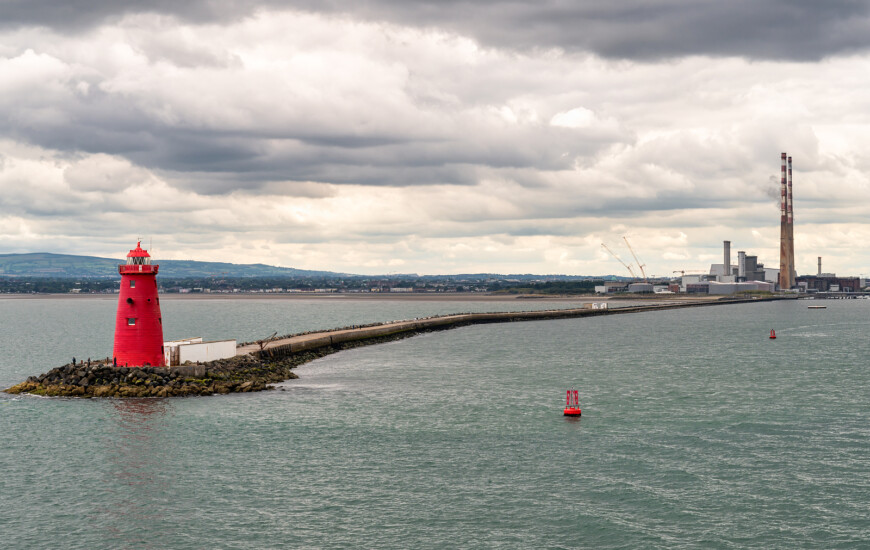
The ferries docking in Dublin each day are producing more toxic air pollution than every car on the city’s roads combined, according to a new European study that has ranked the capital as the most polluted ferry port in Europe in 2025.
Dublin has been named the most polluted ferry port city in Europe in 2025, according to new research published by Transport and Environment, a European advocate for clean transport and energy.
The report claims that ferries operating in Dublin are responsible for more toxic sulphur oxide air pollution than all the cars registered within the city’s limits.
Researchers analysed 1,043 ferries operating across Europe and found that, in 2023 alone, they emitted 13.4 million tonnes of carbon dioxide, the equivalent of 6.6 million cars over the course of a year.
While Barcelona was identified as the port with the highest ferry CO2 emissions overall, Dublin topped the rankings for ferry-related air pollution.
According to the study, Dublin is currently the most polluted port city in Europe when it comes to ferry air pollution, followed by Las Palmas and Holyhead.
The findings are based on modelling of the 100 busiest ferry ports in Europe, using methods from an International Maritime Organisation study and comparing sulphur oxide emissions with car emissions calculated from vehicle registration data within city boundaries.
Ferries play a crucial role in connecting Ireland with the UK and continental Europe, particularly for freight and passengers travelling through Dublin Port.
However, many of the vessels currently in operation are ageing and heavily reliant on fossil fuels.
The average age of ferries in Europe is 26 years.
Transport and Environment says this creates significant climate and public health concerns for people living and working near major ports, including communities in Dublin’s Docklands and surrounding areas.
The report does point to potential improvements on the horizon.
From 2027, new emission control areas will come into effect in the North-East Atlantic, limiting air pollution from maritime fuels.
Similar measures already apply in parts of the Mediterranean, although the study notes that in cities such as Barcelona, ferries still emit 1.8 times more sulphur oxides than all the city’s cars.
A major shift towards electrification could offer a solution.
The research suggests that at least 60 per cent of Europe’s ferry fleet could run on battery power by 2035.
More than half, 52 per cent, would already be cheaper to operate than fossil-fuelled vessels.
Electrification and hybridisation of ferries could cut CO2 emissions by up to 42 per cent, according to the report, while also significantly improving air quality in port cities.
Felix Klann, Shipping Policy Officer at Transport and Environment, said: “Ferries should connect communities, not pollute them.
“Too many ferries are burning polluting fossil fuels, pumping toxic air into Europe’s port cities.
“Electrifying them could dramatically cut emissions and bring a breath of fresh air to millions of people.”
He added: “Electrification makes economic sense.
“Electric ferries are already cheaper to run on many routes, and more will become cost-competitive in the coming years. With the average age of ferries in Europe at 26 years, now is the time for a clean renewal.”
The study also suggests that the infrastructure challenge may be less daunting than feared. It found that 57 per cent of ports would only require relatively small chargers, below 5 megawatts, to support electric ferry operations.
Electric ferry routes are already beginning to appear across parts of Europe, demonstrating that clean ferry travel can be commercially viable.
For Dublin, the findings are likely to add to ongoing debates about air quality, transport emissions and the environmental footprint of major infrastructure.
With passenger and freight traffic through Dublin Port remaining strong, the pressure to balance economic connectivity with environmental responsibility is set to intensify in the years ahead.
Related News