Airport expansion plan raises environmental questions for Dublin
Padraig Conlon 26 Feb 2026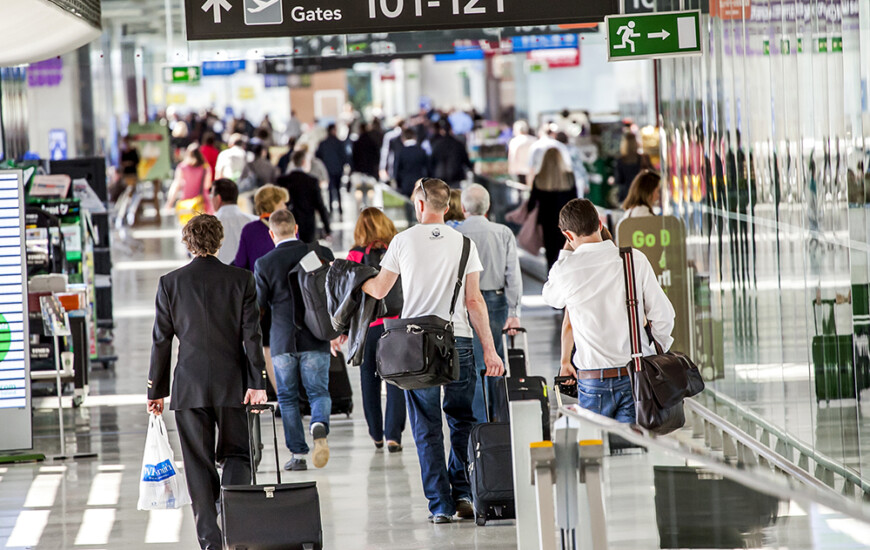
Plans to lift the 32 million passenger cap at Dublin Airport and prevent any future limit being introduced have sparked fresh debate about the long term environmental impact of continued aviation growth, with concerns centered on emissions, noise levels and the pressure expansion could place on Ireland’s climate commitments.
A record 36.4 million passengers travelled through Dublin Airport in 2025, making it the busiest year in the airport’s history.
That figure was a a 5.1% increase in passenger traffic compared to 2024 and intensified pressure on the Government to address the limit through legislation.
The proposed move would not only allow the Minister for Transport to revoke or amend the cap but would also preclude the imposition of future passenger caps at the airport.
The Department of Transport confirmed that the Programme for Government includes a commitment to lift the cap and that Cabinet has approved a legislative approach to do so.
A spokesperson told Northside People that the Minister for Transport will be empowered to revoke or amend the 32 million limit by ministerial order.
Crucially, the legislation would also prevent any future passenger caps from being imposed, removing what has been one of the primary legal constraints on long term passenger growth at the State’s main airport.
“It is important… to balance the legitimate views of stakeholders who are concerned about the environmental and aircraft noise impacts at the airport, with the objectives of the National Aviation Policy, and the needs of business and tourism,” the spokesperson said.
The Department stressed that before making such an order, the Minister will engage with An Coimisiún Pleanála, which will screen the proposal under relevant EU environmental directives and, if necessary, undertake a full environmental assessment.
In outlining the broader policy context, the Department pointed to measures at EU and international level aimed at reducing aviation emissions.
These include the EU Emissions Trading System, which requires airlines to purchase and surrender allowances for every tonne of carbon dioxide they emit, and the ReFuelEU Aviation Regulation, which obliges fuel suppliers to ensure an increasing share of sustainable aviation fuel is blended into aircraft fuel at Union airports.
The Department also referenced Ireland’s first Sustainable Aviation Fuel Policy Roadmap, published last year.
Dublin Airport operator daa has welcomed the move.
Kevin Cullinane, Deputy Director Communications at daa, told Northside People the airport faces “a multifaceted challenge” in providing global connectivity and supporting thousands of Irish jobs while managing its environmental footprint and impact on local communities.
“We welcome the Government’s decision to remove the outdated 32 million passenger cap at Dublin Airport,” he said, describing the change as essential to keep Ireland “connected and competitive” and to meet growing passenger demand.
Cullinane said sustainable growth is the airport’s priority and pointed to international regulation of aviation emissions through the UN’s CORSIA carbon offsetting scheme and the EU’s Emissions Trading System, as well as the increasing use of quieter, more fuel efficient aircraft.
“This means increased flights at Dublin Airport will not compromise Ireland’s climate targets, as only the small volume of domestic aviation emissions is included in the country’s carbon budgets,” he said.
While international aviation emissions are regulated through global and EU schemes rather than Ireland’s domestic carbon budgets, environmental groups argue that overall atmospheric emissions still rise regardless of how they are accounted for nationally.
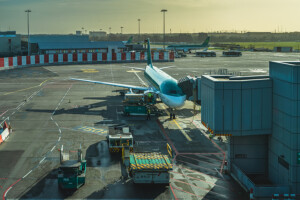
Aviation remains one of the most challenging sectors to decarbonise due to its reliance on fossil fuels and the limited availability, at scale, of lower carbon alternatives.
The introduction of newer aircraft is widely seen as a positive step.
Modern planes burn less fuel per passenger and generate less noise on take off and landing than older models.
However, critics point out that the central issue is not just emissions per flight, but the total number of flights operating.
Environmental groups have sharply criticised the proposal.
Deirdre Duffy, CEO of Friends of the Earth, said lifting the cap risks moving Ireland further away from its climate obligations.
“Clean air and a safe climate are legal obligations, not optional extras,” she said.
“Publishing legislation to lift the aviation cap moves us in the opposite direction towards more pollution, less protection, and no credible pathway to our climate targets and a healthy environment.”
Campaigners argue that even if individual aircraft become more efficient, a significant rise in passenger numbers could still result in higher overall emissions.
They contend that removing the cap eliminates one of the few hard limits on aviation growth in Ireland at a time when binding climate targets are in place.
A spokesperson for the Environmental Protection Agency said the passenger cap is ultimately a policy matter for Government.
“Consideration of the Dublin Airport passenger cap is a policy matter and, as such, questions are best directed to DECC (Department of the Environment, Climate and Communications),” the spokesperson said, noting that daa has submitted a planning application regarding passenger numbers and proposed infrastructure developments which are subject to environmental assessment by Fingal County Council.
Beyond climate considerations, noise pollution remains one of the most immediate local issues for communities living under flight paths in areas such as Swords, Portmarnock and Malahide.
Even with quieter aircraft, an increase in flight frequency can mean more noise events throughout the day and night, particularly during early morning and late evening periods.
Celestine O’Reilly of Children’s Rights Over Flights described the passenger cap as an imperfect but important safeguard.
“The passenger cap is a pretty crude instrument to limit aviation emissions,” she said.
“But at least it’s a guardrail until the Government gets its act together and puts a strong aviation policy in place, one that’s aligned with Ireland’s climate and child rights obligations and with best available science.”
daa said it continues to invest in mitigation measures, including more than €23 million on home insulation and voluntary purchase schemes for residents most affected by aircraft noise, and reported a fall in recorded noise complaints last year.
Cullinane said the airport engages regularly with local resident groups through community liaison structures and environmental working groups, and that the airport is committed to acting as a “good neighbour” as it grows.
“Our commitment to community engagement is unwavering,” he said.
“In the past year alone, we’ve met more than ten times with local resident groups through our Community Liaison Group and Environmental Working Group, listening to and addressing their concerns.
From an economic perspective, Dublin Airport plays a central role in supporting employment, tourism and trade.
Supporters of expansion argue that lifting the cap will allow the airport to respond to population growth and sustained demand for international travel, while maintaining Ireland’s competitiveness.
For critics, however, the removal of the passenger limit marks a significant policy shift.
By preventing the introduction of future caps, the legislation would remove a mechanism that has, until now, acted as a ceiling on annual passenger numbers.
They argue that if growth accelerates, pressure may increase on climate targets, local infrastructure and surrounding communities.
As the legislation progresses, the debate is likely to centre on whether existing European and international climate mechanisms, combined with newer aircraft and sustainable fuels, can offset the environmental impact of sustained passenger growth.
For supporters, the reform is about unlocking capacity and planning for the future.
For opponents, it risks deepening the tension between aviation expansion and environmental responsibility.
Whether those competing priorities can be reconciled will determine how Dublin Airport’s next phase of growth is judged, both by policymakers and by the communities living beneath its flight paths.
Related News