Harris “scapegoating” migrants, Ó Ríordáin claims
Mike Finnerty 07 Jan 2026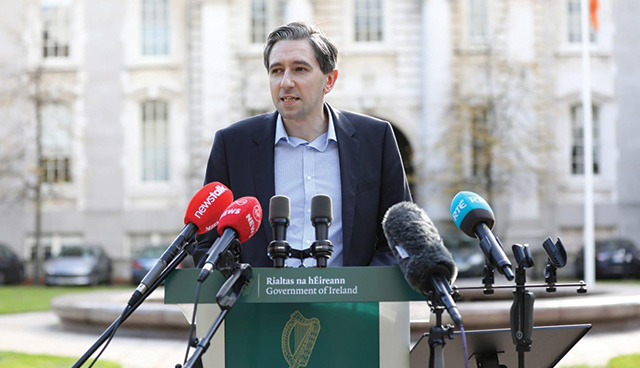
Labour MEP Aodhán Ó Ríordáin has dubbed Tánaiste Simon Harris “shameful” after the Fine Gael leader claimed that a number of people in homeless accommodation do not have a housing need.
In an interview with The Irish Times, published on December 31, the Tánaiste asserted that “a significant number” of people in emergency accommodation “do not have housing rights”, without citing exact numbers or offering proof of his claims.
“A lot of people who are in emergency homeless accommodation, or certainly some people who are in emergency homeless accommodation, don’t have a housing right in Ireland,” he said.
In the same article, the Tánaiste’s comments were challenged by Mary Hayes, Chief Executive of the Dublin Region Homeless Executive, saying “that is not my experience; anyone who presents for and is provided emergency accommodation has a right to housing or establishes that right very quickly.
The article cited stats from the DRHE, which showed more than 12,000 people were in emergency shelter in Dublin, including 8,141 adults, and 3,883 children (or from another perspective, enough to fill Dalymount Park or Tolka Park).
In recent weeks, the Tánaiste said that he was trying to have a debate on the issue of immigration, but claims he has been “shut down” by “the left,” with critics calling Harris’ comments a “distraction” from rising homeless figures.
The most recent round of homeless figures were published on the afternoon of January 2nd, after this article went to print, and the figures found that 16,996 people were in homeless accommodation in Ireland.
Of that figure, over 12,000 of those are in Dublin.
The lifting of the no-fault eviction ban in March 2023, coupled with the government withholding funding from local authorities for tenant-in-situ schemes, has directly led to a sharp rise in people in emergency accommodation.
Homeless figures for April 2023, the first report since the no-fault eviction ban was lifted in controversial circumstances, stood at 12,441.
The most recent set of homeless figures, prior to going to print on January 2, stood at 16,766, an increase from the figure of 14,996 on the day of the November 2024 general election.
In March 2018, then-Taoiseach Leo Varadkar declared the homeless crisis a “national emergency” at a time when homeless figures stood at 9,807 across Ireland.
With the figures nearly doubling since then, and a change in Fine Gael leadership occurring in the mean time, Ó Ríordáin criticised Fine Gael’s approach to the homeless crisis.
Ó Ríordáin said, “what the Tánaiste has said is simply untrue.”
“People do not end up in emergency accommodation by accident or choice. They are there because the government has failed to provide secure, affordable housing.”’
The Northside Labour stalwart said, “the Tánaiste’s comments also expose the government’s warped priorities. Just last month, this government was happy to throw €650 million at a sector that did not need it,” in reference to the controversial VAT cut granted to the hospitality industry in the recent Budget.
Branding Harris’ comments as “vacuous”, Ó Ríordáin stated that the Tánaiste was engaging in victim-blaming.
“The Tánaiste clearly believes that victim blaming is the way forward instead of owning the scale of the housing emergency,” he said.
Ó Ríordáin said, “he (Harris) is attempting to cast doubt on the legitimacy of people’s housing need. That is not leadership, and it is beneath him.”
“I am calling on Simon Harris to withdraw these remarks. The government must stop scapegoating, stop the spin, and start delivering the homes people urgently need. That is the only path out of this housing emergency,” he stated.
Last April, Ó Ríordáin remarked, “I’d like to see a bit less concern in government for the rights of Michael Lowry and a lot more concern for these children, who are paying the price for political failure.”
The Labour MEP said “we shouldn’t be surprised” about the figures, stating “this government has shown zero interest in Dublin, its people, and its development. We are now witnessing a full-blown social catastrophe in our capital.”
Sinn Féin TD and housing spokesperson Eoin Ó Broin said that Harris’ comments were “dishonest and dangerous.”
Ó Broin called Harris’ comments “a new low”, and said that the comments ran the risk of fueling far-right sentiment.
“Conflating the issues of homelessness and immigration is not only dishonest – it is dangerous. As we have seen in the past, it puts front-line homeless services workers at risk from far-right elements and has resulted in arson attacks on buildings earmarked for accommodating people experiencing homelessness,” he warned.
Ó Broin’s own constituency of Dublin Mid-West was the site of anti-immigrant riots at Citywest in October, and asserted that the government’s failure to get a grip on housing is fueling far-right sentiment.
He said that immigration is not the cause of rising homelessness, and said it is caused by “bad government housing policy.”
“Year after year, the government is failing to deliver a sufficient volume of social and affordable homes. Their over-reliance on the private rental sector to both meet social housing need and transition people with status from Direct Provision is no longer working as the private rental sector is shrinking.”
The Dublin Mid-West TD said that there has been a small but growing number of single people moving from Direct Provision into homeless accommodation.
He explained that those people have refugee status, and in many cases are eligible for social housing, but are unable to find private rental accommodation and end up being located in IPAS centres.
He noted, “instead of having a coordinated approach to assisting these people to move out of IPAS accommodation, the Department of Justice is effectively evicting them into homeless accommodation.”
“All of this has been known for many years, but the government has failed to plan and invest either in the delivery of public housing or to stabilise the private rental sector,” he said.
Ó Bróin has warned that the number of people in homeless accommodation is likely higher than what is widely reported, with the homeless figures not accounting for “invisible homelessness”.
In November, Ó Broin noted “when all those in emergency accommodation and rough sleepers are taken into account, the figure is closer to 22,000, and that doesn’t take into account the hidden homeless; sofa surfing or those living in overcrowded and unsuitable accommodation.”
With the Fianna Fáil/Fine Gael/independent government marking its first year in power later in January, it will start 2026 with an unwanted hangover and a ghost of Christmas past lingering over it; their seeming apathy towards tackling the homeless crisis.
Related News