Europe finally steps in as housing crisis deepens across continent
Padraig Conlon 02 Jan 2026
With Dublin locked in a housing crisis that shows no sign of easing, the European Union has finally moved to intervene.
The intervention came on Tuesday, December 16, with the launch of the first ever European Affordable Housing Plan, marking Brussels’ most direct step yet into a crisis reshaping daily life for renters, buyers and families across the capital.
The plan, aimed at boosting supply, unlocking investment and giving cities greater powers to respond to spiralling rents and prices, comes as housing affordability has become one of the defining political and social challenges of the past decade leaving young people locked out of home ownership, families stuck in insecure accommodation and essential workers struggling to live in the communities they serve.
Across the European Union, average house prices have risen by more than 60 per cent over the last ten years, while rents have increased by more than 20 per cent, trends that have been felt sharply in Dublin where demand continues to far exceed supply.
In Ireland, housing shortages and record levels of homelessness have become defining features of public debate, with emergency accommodation increasingly used as a long term solution for families and children who have nowhere else to go.
Although housing policy remains primarily a national responsibility, the Commission has acknowledged that the scale and persistence of the crisis now demands action at European level, using the tools available to support countries, regions and cities under sustained pressure.

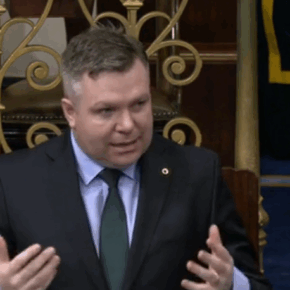
EU Commissioner for Housing Dan Jørgensen
The European Affordable Housing Plan sets out a broad package of measures designed to increase housing supply, trigger investment, speed up construction and address the impact of short term rentals in areas experiencing the greatest strain.
At the core of the plan is a renewed focus on boosting supply by supporting a more productive and innovative construction and renovation sector, tackling the mismatch between demand and delivery that has built up over many years.
The Commission is proposing a European Strategy for Housing Construction aimed at modernising building methods, improving efficiency and addressing skills shortages that continue to slow housing delivery across many Member States, including Ireland.
In an Irish context, where planning delays, labour constraints and rising construction costs are frequently cited as obstacles, the emphasis on productivity and training is likely to be welcomed, even if its practical impact may take time to be felt.
The plan also places renewed emphasis on the New European Bauhaus, an initiative that promotes sustainable, affordable and high quality design in the built environment, linking housing delivery with climate goals and long term affordability.
Through the NEB Academy, the Commission intends to support re skilling and up skilling across the construction ecosystem, focusing on sustainable and circular building techniques that can lower costs while improving standards.
Funding and finance form another central pillar of the plan, with revised EU State aid rules intended to make it easier for governments to support affordable and social housing without facing lengthy approval processes.
For countries such as Ireland, where the scale of public investment required to meet demand is substantial, this change is seen as providing greater flexibility to respond quickly to housing need.
The Commission has said it has already mobilised €43 billion in housing related investment and will continue to do so under the next long term EU budget, alongside the development of a new pan European housing investment platform.
This platform is being developed in cooperation with the European Investment Bank and national and regional promotional banks, with the aim of attracting large scale funding into affordable housing projects.
Planning and permitting delays are also addressed in the plan, with the Commission committing to work with national, regional and local authorities to simplify rules that restrict housing supply.
Although planning reform remains politically sensitive in Ireland, EU officials argue that delays and complexity are a shared problem across Europe and a significant driver of rising housing costs.
Short term rentals are another focus of the plan, with new EU legislation proposed to support areas under housing stress and give cities greater legal certainty to regulate tourist lettings.
In Dublin, where the growth of short term tourist accommodation has long been criticised for reducing the supply of long term rentals, this proposal is expected to be particularly significant.
The Commission has said the plan is designed to benefit those most affected by housing pressure, including young people, students, essential workers, low income households and other disadvantaged groups.
Measures include mobilising new investment in student and social housing and supporting Housing First approaches to homelessness, which prioritise permanent homes rather than long stays in emergency accommodation.
Implementation of the plan will be driven by a new European Housing Alliance bringing together Member States, cities, regions, EU institutions, housing providers, industry representatives, social partners and civil society organisations.
The Commission has committed to publishing a progress report before the end of its current mandate, while also announcing the first ever EU Housing Summit in 2026 to maintain political momentum.
Housing has been elevated to a central priority under Commission President Ursula von der Leyen, following the appointment of the first ever Commissioner for Housing and repeated commitments during the 2025 State of the Union address.
The European Council had previously called on the Commission to bring forward an ambitious affordable housing plan, while the European Parliament established a dedicated committee to focus on housing policy.
Irish members of the European Parliament have broadly welcomed the plan, while using its publication to highlight sharply differing views on how effectively the housing crisis is being handled at national level.
Fine Gael MEP Regina Doherty, Vice Chair of the European Parliament’s Housing Committee, said the launch of the first ever European Affordable Housing Plan was long overdue and marked a necessary shift in how Europe responds to the crisis.
“For too long, Europe has watched rents soar and supply fall while families, workers and young people paid the price,” Doherty said.
“Housing is now the single biggest cost of living pressure people face, and it is about time the EU treated this as the crisis it is.”
She said the situation in Ireland shows why a European response has become unavoidable, pointing to the difficulty faced by young people, students and essential workers trying to live in the communities they serve.
“In Dublin and across the country, young people cannot afford to move out of home, students cannot find digs, and nurses, teachers and Gardaí are being priced out of the communities they serve.
This is no longer just a national problem, it is a European housing crisis.”
However, she warned that waiting until 2027 for key elements of the Housing Simplification Package is not acceptable during a housing emergency.
Labour MEP Aodhán Ó Ríordáin, who represents Dublin and acts as the lead Socialists and Democrats negotiator on housing, also welcomed the publication of the EU plan.
“This is a major moment in the fight to tackle the housing crisis in Dublin, in Ireland and across Europe.
“It didn’t happen by chance. It is the direct result of last year’s European elections, when we made housing action at EU level a central part of our platform in Dublin and demanded that Europe finally treat this crisis as the social emergency it is.”
He said the plan begins to address underlying causes of the crisis, particularly the impact of short term tourist lettings, while arguing that further action will be needed at both European and national level.
For Dublin residents facing high rents, overcrowding and uncertainty, the plan will ultimately be judged on delivery, with real homes on the ground now the only measure that will matter for families, workers and young people locally.
Related News