Housing failure deepens as Europe arrives late to the crisis
Padraig Conlon 03 Dec 2025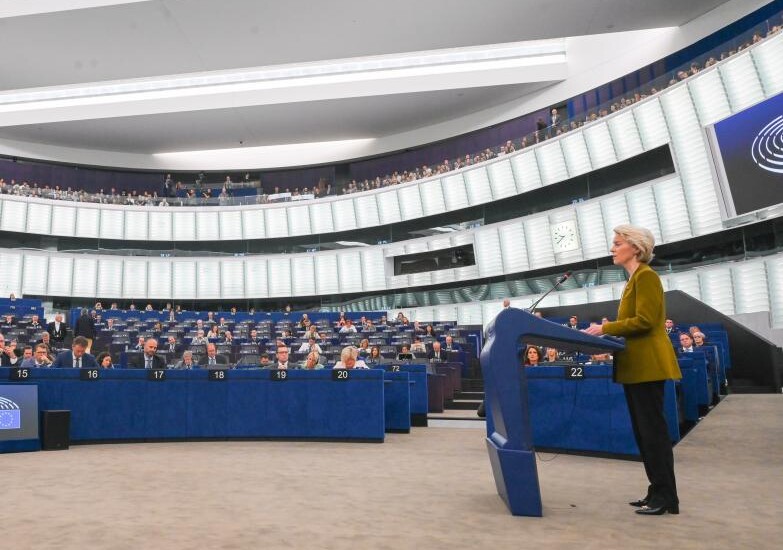
I’ve spent almost ten years reporting on Ireland’s housing crisis and watched it move from emergency to everyday reality.
Long enough to see families evicted, workers priced out, and homelessness figures delivered like weather reports.
The story is familiar. And it is still getting worse.
Earlier this month at a briefing in Brussels with a group of Irish journalists, we were told the crisis is finally being treated with the urgency it deserves.
The European Union now accepts what has been clear on the ground for years.
Housing is no longer just a market issue. It is a social one.
Back in September, Commission President Ursula von der Leyen used her annual State of the European Union address to say something that grabbed a lot of attention.
She called Europe’s housing situation what it is: “a social crisis.”
She spelled it out clearly, house prices are up, building permits are down.
“It tears at Europe’s social fabric,” she said.
“It weakens our cohesion. And it also threatens our competitiveness. Nurses, teachers, and firemen cannot afford to live where they serve. Students drop out because they cannot pay the rent.
“Young people delay starting families.”
Von der Leyen did not sugar-coat the problem.
She did not try to explain it away. She named it.
And in fairness, the European Commission is proposing action. A new affordable housing initiative.
A review of state aid rules to make it easier for governments to build. Tighter regulation on short-term lets.
A framework for student housing. More support for cities trying to meet demand.

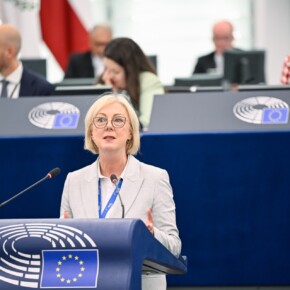
The European Commission has even created a Commissioner for Housing, Dan Jørgensen (pictured above), for the first time last year, and he is steering it and member states towards a housing summit next year.
On paper, this all sounds encouraging.
But I have been covering this issue for too long to feel confident that good intentions will lead to good outcomes.
Earlier this month our own government unveiled its new housing plan, called Delivering Homes, Building Communities, which aims to deliver 90,000 “starter homes” over the next five years.
Overall, the Government has pledged the delivery of more than 300,000 new homes by the end of 2030.In Ireland, we have had more than our fair share of housing strategies. Rebuilding Ireland. Housing for All. Countless targets, taskforces, committees, and summits.
At every launch, we were told that this one would be different.
That this time it would be delivered. Yet here we are.
House prices in Dublin have soared by over 70% since 2015.
Rents have doubled in many parts of the city.
Homelessness has hit record levels, again.
Planning permission is slow, supply is constrained, costs are climbing, and local authorities are still being asked to solve a crisis without the funding or staff to do so.
We have not turned a corner. We are still in the eye of the storm.
The faces behind the podiums have changed. But the reality on the ground has not.
So forgive me if I do not rush to celebrate Brussels finally discovering that housing is a crisis.
I do not want to dismiss the EU’s plan out of hand. It contains good ideas. And it is welcome that housing is now being seen as a European-wide issue rather than just a domestic problem. But speeches are the easy part.
What happens when this new European initiative meets Ireland’s broken planning system? What happens when it meets under-resourced local councils?
What happens when it meets developers who are sitting on land waiting for prices to rise?
What happens when it meets a political system that has, for years, prioritised investors over renters, and market forces over basic needs?
Those are the questions I am asking. Because I have seen how this goes.
We are told that building more homes is the answer. And of course, supply matters.
But the kind of homes being built matters too. In Dublin, we have seen a rise in build-to-rent apartments targeted at high-income tenants.
We have seen blocks bought up by global investment funds before the public even knew they were available.
We have seen student accommodation charging €1,000 per month for a single bed.
We have seen “affordable” homes priced at €400,000.
Supply without affordability does not solve the problem. It just moves it around.
And while new units are announced, old problems continue.
And the message we keep hearing is the same: wait. Just wait a bit longer. Help is coming.
We are turning the corner.
I believe the EU means well and von der Leyen’s words were sincere.
But this problem will not be solved by sincerity.
It will be solved when governments make different choices.
When they stop treating housing as a commodity and start treating it as a human right.
When they empower local authorities to build again.
When they enforce rules on vacancy and short-term letting.
When they put working people before investors.
When they stop pretending that the market will fix what the market helped break.
Housing has become the defining issue of our time.
Not just here in Dublin, but across Europe.
It affects everything. Health. Education. Work. Family. Community.
When people cannot afford a stable, secure home, every other part of their life suffers.
And yet, somehow, it has taken this long for leaders to say it out loud.
Now that they have, the real work begins.
Because this will not be fixed in Brussels alone.
It will not be fixed in Strasbourg or Luxembourg or Berlin.
It has to be fixed in Dublin.
It has to be fixed in council offices, in local planning departments, in funding decisions, and in national policy.
It has to be fixed by politicians who stop asking what is popular and start asking what is necessary.
And it has to be fixed fast. Because the damage is already deep.
And the knock-on effects of this crisis are everywhere.
We see it in the recruitment crisis in schools and hospitals, where staff cannot afford to live near their jobs.
We see it in mental health statistics, in addiction services stretched thin, in rising reports of stress and anxiety linked directly to housing pressures.
This crisis is not just about bricks and mortar. It is about dignity.
It is about what kind of country we are, and what kind of country we are becoming.
If this new European plan means anything, it must start with that.
Not just a spreadsheet of units to be delivered, but a commitment to restore fairness, to restore possibility, to restore the idea that having a stable home should not be a privilege.
Because right now, for far too many people in this city, it still is.
So while I welcome the EU’s attention, I also know this.
Attention is not the same as action.
And until people see a difference in their daily lives, until they can afford to rent or buy in the communities they live in, until they are no longer afraid of eviction or rent hikes or homelessness, the crisis will continue.
I hope Brussels is serious. I hope their plan leads to something tangible.
But I will believe it when I see it.
Because I am tired of words. I want to report on homes being built, not just announced.
On families moving in, not just waiting.
On councils empowered to act, not just apologising for delays.
Related News