Budget row reveals different sides to Greens and Labour
Mike Finnerty 03 Dec 2025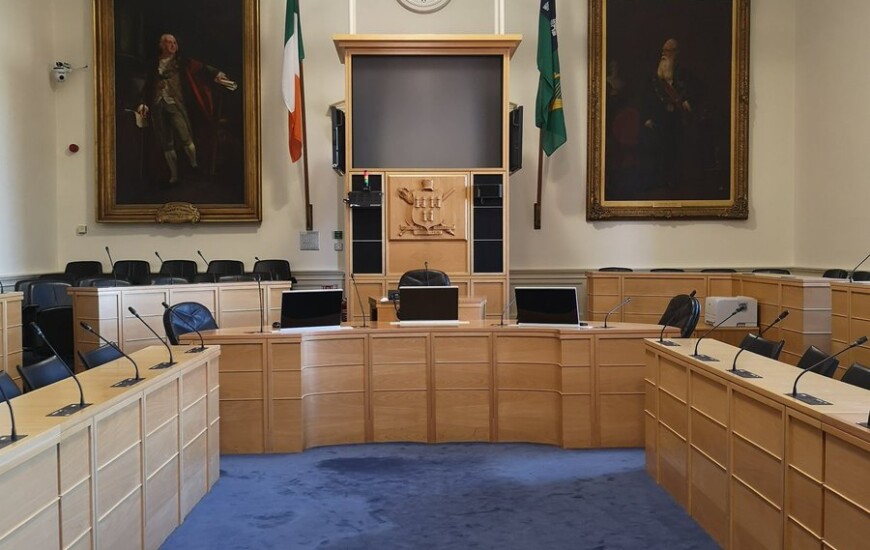
Dublin City Council passed its most controversial budget for years, with Labour and the Greens rejecting calls from fellow parties of the left to vote with Fianna Fáil and Fine Gael to help the budget pass.
At present, tenants pay a weekly rent based on 15% of the income of the highest earner, and an additional €15% to a maximum of €21 per occupant up to €84.
A proposed change to the system increases the same rate to 18%, with the changes taking effect next April.
The budget, which will raise rates for council tenants for the first time in nearly 30 years, has been seen as a major stress fracture in the pan-left alliance that helped deliver a landslide victory for Catherine Connolly in October.
In that campaign, Sinn Féin, the Social Democrats, People Before Profit, Labour and the Greens all worked together to deliver a comprehensive victory for the Galwegian leftist, but just as soon as talks of a pan-left alliance began, it appears to have fallen apart as far as Dublin City Council is concerned.
The aftermath of the June 2024 local elections saw a “Progressive Alliance” of the aforementioned parties floated, with talks falling apart over the issue of local property tax and Labour and the Greens’ councillors backing Fine Gael’s James Geoghegan for Lord Mayor.
In June, the same offer was made to Labour and the Greens to pull the plug on the coalition and vote down Ray McAdam’s ascension to the role of Lord Mayor; once again, Labour and the Greens voted alongside Fianna Fáil and Fine Gael.
At the third time of asking, when Labour and the Greens voted with Fianna Fáil once again, this time to pass a controversial budget, it appears hopes of left-wing unity on Dublin City Council will be on the back burner for the remainder of the council’s term, which expires in 2029.
Indeed, the vote on November 24th passed by just one vote, 31-30, with independent councillor Nial Ring proving to be the deciding vote.
In the aftermath of the vote, Sinn Féin councillor Daithí Doolan noted “the real problem is that central government are starving Dublin City Council of essential funding to cover maintenance of council housing.”
“The government are ignoring the needs of Dublin city; we have the highest concentration of council housing in the state, much of it not even fit for purpose.”
The Sinn Féin group leader on Dublin City Council said, “only last month, the Fianna Fail and Fine Gael government were applauding themselves on a historic budget surplus of over €9 billion. That money must be invested in housing here in Dublin.”
People Before Profit councillor Conor Reddy said, “Labour and the Greens call themselves progressive parties, but when the moment came, they sided with Fianna Fáil and Fine Gael.”
Independent councillor Cieran Perry remarked, “it’s difficult to take accusations from Greens and Labour seriously given their history of screwing the working class”.
The vote itself saw heated scenes in the chamber, with Green councillor Janet Horner saying that the opposition parties were “selling lies and snake oil instead of actually allowing for action to take place.
The North Inner City councillor said that any councillor who voted against the rent increase was being “cheap and manipulative” and pandering for the sake of Instagram likes.
“It is insulting, and it is outrageous on behalf of the constituents we represent,” she said.
The 2024 general election saw a near-wipeout for the Greens as the progressive voters that backed them in 2020 bolted for the Social Democrats (as was the case in Dublin Rathdown, Dublin South Central and Dublin Bay South), and the more governance-focused wing of the party opted for Labour (as was the case in Dublin Fingal West, Dublin South-West and Dublin Central).
The Greens have said internally that they are in the process of “rebuilding” but have remained stagnant in opinion polls since last November’s general election.
While press releases from Green councillors dub the Fianna Fáil/Fine Gael government as the “do-nothing government,” they are happy to work with them on Dublin City Council.
Their doom in the November 2024 general election was foreshadowed by the party voting to lift the no-fault eviction ban in March 2023, which majorly damaged their reputation among the progressive voting bloc who didn’t vote for Sinn Féin in the 2020 general election but backed the Greens on that occasion; that same voting bloc has since gone elsewhere on the left.
Green councillors on Dublin City Council appear to be operating on a different wavelength to the ones on Dún Laoghaire-Rathdown Council; on November 25th Green councillors on Dún Laoghaire-Rathdown Council voted against the Fine Gael/Fianna Fáil budget, with councillor Robert Jones calling the rent increases for council tenants “a rip-off.”
In a statement, the Greens’ six councillors on DLR said “we had a clear choice this year: protect those who are already struggling, or squeeze them further while handing a property-tax discount to some of the most expensive homes in the country.”
“The Green Party put forward an alternative that didn’t rip-off the poorest and most vulnerable. We refused to raise social housing rents, parking charges or green-waste fees in the same year that owners of high-value homes received a tax break.”
“This entire crisis was avoidable. Fianna Fáil and Fine Gael chose to slash Local Property Tax by the maximum, creating the very funding gap they are now asking ordinary residents and employers to fill. The Green approach shows that you can balance the books without balancing them on the backs of those least able to pay.”
The differences between Greens in Dún Laoghaire and those serving on Dublin City Council are stark.
A similar contrast is present within Labour, who also voted against Fianna Fáil and Fine Gael on Dún Laoghaire-Rathdown Council and most notably, on Fingal County Council.
On Fingal County Council, where the party is in coalition with Fine Gael and Fianna Fáil, the party has broken ranks with their governing partners twice in as many months on the issue of local property tax and this year’s budget.
On Dublin City Council, where the party is weaker (just four councillors compared to their seven on Fingal County Council), there appears to be a distinct difference between the different branches of the parties.
On Fingal County Council, Labour councillors said they would not be voting to increase rents for council tenants, with the Labour grouping saying that increasing rents for social housing tenants was unacceptable on “moral and social grounds.”
Compared to their Dublin City Council colleagues, the Fingal grouping is more representative of the revitalised, social democratic Labour that Ivana Bacik has been keen to promote, while the Dublin City Council one has more in common with the Alan Kelly era that the party has been trying to move away from.
Every party has their own factions – the Greens know this all too well, with their “Realo”, governance-focused wing clashing with their “Fundi”, idealistic, anti-governance wing – but in the case of Dublin, it appears that the ideological make-up of the Greens and Labour varies on a council-by-council basis.
Related News