Killer comedy No Other Choice is a cut above the rest
Mike Finnerty 21 Jan 2026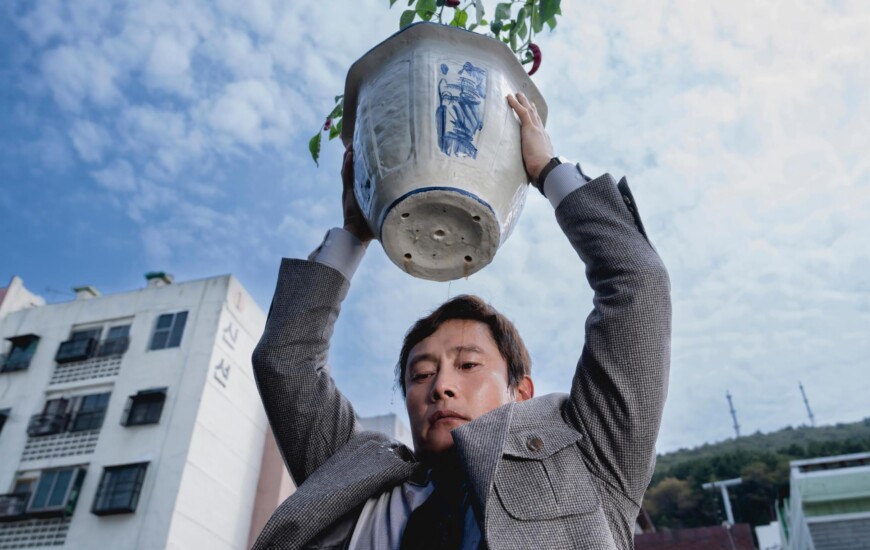
South Korean director Park Chan-Wook played a large part in helping Asian cinema cross over into the mainstream in the early 2000s, and now the auteur is back with the timely No Other Choice.
Chan-Wook’s compatriot and friend, Bong Joon-Ho, put South Korean cinema on the map in 2020 when his satirical thriller Parasite swept the Oscars (which, in hindsight, was the last good thing to happen in 2020).
In 2021, the thriller series Squid Game became an unlikely global sensation, and it peeled back another layer of how South Korean creatives feel about the capitalist system in their nation.
Having a working knowledge of the current political and economic climate in South Korea would be an advantage heading into No Other Choice, but Irish audiences might find something strikingly familiar about it.
No Other Choice tells a story that may or may not become extremely relevant to Irish audiences; after 20 years of loyal service, Man-Su is laid off from the paper company he works at following a takeover by Americans.
In the only line of spoken English in the film, Man-Su is told there was “no other choice” but to lay him off.
Man-Su thinks he has it all; he finally brought his childhood home, has a loving wife, two kids, two dogs and two cars.
As Man-Su explains, the house is a part of his identity, but the bank is threatening to take the house.
The life he strived for is now under threat, and Man-Su does what any rational person would do in his situation – kill the people who are also applying for jobs in the same field as him.
When you put it like that, it seems obvious, really.
Park Chan-Wook’s films are the best in their field at mixing jet-black comedy, brutal violence and dense plots that fold in on themselves.
This time, Chan-Wook is adapting the work of American novelist Donald Westlake and his novel, The Ax.
The novel was written in the 1990s as a commentary on the wave of globalisation that preceded the end of the Cold War; capitalism won, and communism was the runner-up, much like how Will Young won Pop Idol and Gareth Gates was the runner-up.
Since the novel was published, the threat of automation, outsourcing and more recently, AI has only become more relevant.
Chan-Wook has been seeking to adapt the novel for over a decade, and the film was previously adapted by French auteur Costa-Gavras in the mid-2000s.
Costa-Gavras is given a dedication in the credits, and his children serve as producers on the film; the French-Greek firebrand courses through the veins of this film.
At his best, the films of Costa-Gavras (namely, the 1969 film Z and the 1982 film Missing) are radical, bleeding-heart films that couldn’t have possibly been made by an American filmmaker.
The oft-invoked Milos Forman, who we often reference when discussing films with a satirical bent, is another example of a director who worked in and outside the American studio system but always kept his Central European sensibility when he was poking holes at grander systems.
We mention those two filmmakers because their influence is apparent and informs how Chan-Wook approaches the material.
South Korea may have a reputation as the ultimate triumph of capitalism, a shining example of how a country recovered from authoritarianism and is thriving in comparison to its communist neighbours to the North, but No Other Choice builds upon films and shows such as Parasite and Squid Game to reveal that so-called progress comes at a price.
Chan-Wook would be the first to tell you he’s a political filmmaker (he took part in protests against the South Korean military government in the 1980s), and similar to how Jafar Panahi’s struggle with the Iranian regime informs the potency of It Was Just An Accident, Chan-Wook isn’t shy about telling the audience that he thinks he was sold a fib about how great South Korea is.
No Other Choice represents the promise of foreign language cinema; an Irish publication can review a South Korean film about the shortfalls of capitalism, and it feels like a universal film that transcends language barriers or class.
For fans of Chan-Wook’s other movies, there is plenty to love; it has the twisty, dense plotting of Decision To Leave, the heightened comedy of I’m A Cyborg, But That’s Ok and the crunching violence of Oldboy.
Of course, it wouldn’t be a Park-Chan Wook film without having five or six shots that look like something from a Martin Scorsese film, and the director’s use of dissolves or scene transitions elevates a good film to a great one; any aspiring filmmakers would do well to watch this and pick up some tricks from a master.
On the acting front, leading man Lee Byung-hun reunites with Chan-Wook following their highly successful collaboration in 2000’s Joint Security Area, a film that proved to be a breakout hit for both director and star.
Byung-hun has become a star in his own right (just last year, he was a voice in K-pop Demon Hunters and is known for his role in Squid Game), and Byung-Hun is just brilliant in the lead role here.
Byung-hun plays the desperation of a man who is fighting for his family and trying to survive within a crushing system with aplomb.
Over the course of the film, we see the lengths he is willing to go through in an attempt to gain full-time employment again; the film sees him settle on three people he perceives as more likely to be hired than him, and sets about to bump them off.
Each time, something goes wrong, or there is an element he couldn’t have predicted, and the film becomes a laugh riot; it’s all down to Byung-hun’s performance.
His facial expressions are priceless, as is his overconfidence in believing he is doing the right thing; you fully buy into his madcap ideas.
It is genuinely surprising how funny No Other Choice is, and it is indeed funnier than most other films that present themselves as comedies these days.
Balancing the killing of people with comedy is a very delicate balance; go too far in one direction, and it becomes a Final Destination film, go too far in the other, and it becomes American Psycho.
No Other Choice makes it all feel effortless, and comes highly recommended for fans of jet-black comedy or people with a dark sense of humour.
Chan-Wook’s lampooning of capitalism, and specifically, the Americanisation of everyday life, makes No Other Choice a very timely film that meets the moment.
Related News