Dublin People’s Top 10 Films Of 2025
Mike Finnerty 07 Jan 2026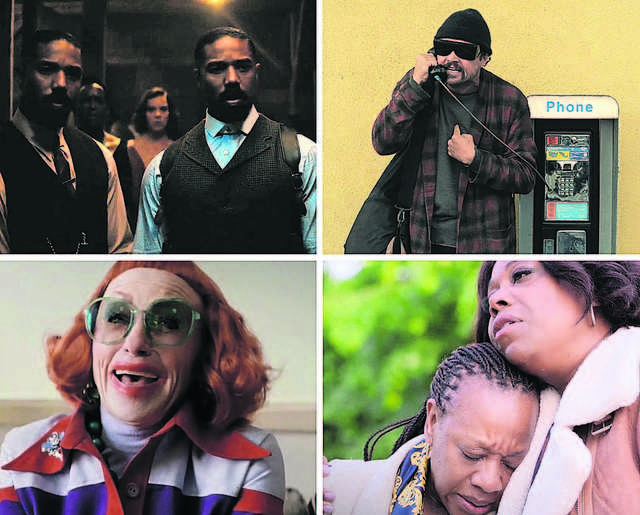
2025 was a year of ups and downs on the global affairs front, and the same could be said of cinema.
2025 saw a clear message from audiences; they will only see an original film if it can be easily sold via TikTok or if it’s an adaptation of something they are already familiar with.
The superhero movie seems to be coming to an end after nearly 20 years of cultural dominance, with live-action remakes of animated movies becoming the big money-makers for Hollywood.
In recent weeks, Netflix brought Warner Bros. and HBO in a blockbuster deal that will re-shape the cinematic landscape as we know it, and the world of cinema said goodbye to titans like Gene Hackman, David Lynch, Val Kilmer, Robert Redford and Rob Reiner.
2025, all told, was a strange year for cinema as a whole.
With that said, finding 10 movies for our year-end 10 was easy this year, and indeed, it was hard to make some last-minute cuts.
Honourable mentions and near-misses include Danny Boyle’s return to form with 28 Years Later, the taut September 5, the bittersweet A Real Pain, the lush Train Dreams, and Black Bag, the exact kind of adult, smart thriller we used to get all the time circa 2000 but now take for granted.
As usual, we are going by Irish release dates, so without further ado, here are our top 10 films of 2025.
10) The Mastermind (Dir. Kelly Reichardt)
Do you like movies about unlikeable people?
The Mastermind sees Josh O’Connor turn in one of his best performances yet as a slimy, unlikable art thief in 1970s America.
Reichardt’s films aren’t what you call propulsive, but they are utterly absorbing.
This character study of a scumbag is the kind of film that Robert Altman would have made with Elliot Gould 50 years ago; a throwback in many respects, but a very 2025 film in terms of tone and execution.
The Mastermind is the kind of shaggy, loose film that was dime a dozen in the 1970s, but is like a film from another dimension in the context of 2025 – a real gem.
9) One Battle After Another (Dir. Paul Thomas Anderson)
How we hummed and hawed over this.
The best films of a given year should reflect what it was like to live through it, or capture the specific cultural moment.
In truth, it was a coin flip between this and A House Of Dynamite to make this list – we had to give the edge to Paul Thomas Anderson’s latest.
Politics and the arts have intersected in 2025, to the horror of media illiterates who aren’t aware that the best art is political in nature, and PTA’s howling depiction of 2020’s America feels like how Bonnie and Clyde captured the wild spirit of LBJ’s America.
While we weren’t quite as high on this film as other publications, there is no denying that this film captures the 2020s zeitgeist with aplomb; this one is best enjoyed with a few small beers.
8) Weapons (Dir. Zach Cregger)
After the success of The Substance last year, it appears that the film-goers and the industry at large are more open-minded about horror.
This masterful horror flick sees director Zach Cregger use his many years of comedy expertise and love of the genre to keep the audience on edge for 2 hours, then releasing the valve to make us laugh our heads off.
The hook of the film – 17 kids vanish in the middle of the night, and everyone suspects the teacher had something to do with it – recalls how horror plays into our most primal fears and also serves as a platform to discuss social issues.
In other words, Wes Craven would have been very proud of how this film turned out.
With fantastic performances from Julia Garner, Josh Brolin and the always-reliable Alden Ehrenreich keeping audiences on the edge of their seat, it’s Amy Madigan’s unforgettable turn as Aunt Gladys that will ensure this film goes down in horror history as a modern classic.
7) Hard Truths (Dir. Mike Leigh)
There’s a reason we use Irish release dates for this list; a film like this is too good to be forgotten.
Released in late January and overlooked in the awards season conversation, Mike Leigh made his return by doing what he does best: poking holes at the human condition, while examining if the pandemic era really did break our brains as a society.
At his best, Leigh’s films have a naturalism and lived-in nature that very few directors can replicate, and Hard Truths is the veteran filmmaker at his very best.
6) Sinners (Dir. Ryan Coogler)
2025 was a banner year for horror, and Sinners represents a true evolution of the genre.
Director Ryan Coogler’s genre-bending mash-up of a 1930s gangster film, Southern Gothic, musical, vampires and yes, Irish trad music, proved to be one of the year’s best films.
Only a director with total confidence in their craft could have pulled off a film like Sinners, and only an actor on the scale of Michael B Jordan could play a twin role with aplomb.
Coogler and Jordan’s past collaborations (Creed and Black Panther) have hinted at the new Martin Scorsese/Robert De Niro dynamic, and based on the strength of Sinners, American cinema has its next great director/actor duo.
A terrific supporting cast of Jack O’Connell, Hailee Steinfeld, newcomer Miles Caton, and the great Delroy Lindo makes Sinners one of the year’s best films.
Notably, Sinners is the only movie in our top 10 to feature vampires doing a jig to the strains of Rocky Road To Dublin – that’s enough to get anyone’s attention.
5) It Was Just An Accident (Dir. Jafar Panahi)
All the way from Iran, this Palme D’Or winner also happens to be one of the year’s best films.
A simple hook – a man captures what he thinks is the man who tortured him in an Iranian prison but isn’t sure he has the right guy – turns into a searing, strangely hilarious but ultimately profound examination of revenge and whether the ends justify the means.
Director Jafar Panahi has been made an example of by the authoritarian Iranian regime for going against the government, which makes this film all the richer in sub-text; cinema could and should be used as a tool to explore the major societal issues of the day, and this film is a shining example of that.
There is a punk rock element to this film; filmed without permits, without permission, and with cobbled together financing, films like this are a reminder that cinema’s future doesn’t lie in corporate mergers – it lies in filmmakers telling their radical truths.
4) I’m Still Here (Dir. Walter Salles)
Brazil went to the Oscars this year – and won.
A nation still dealing with its recent history, much like Ireland, the South American nation is starting to explore the scars and trauma associated with its past.
Just like how Ireland reckoned with its modern past in the 1990s with films like The Crying Game or In The Name Of The Father, Brazil grappled with its authoritarian legacy with the incredible I’m Still Here.
Based on the true story of activist Eunice Paiva, the regal Fernanda Torres is a humane and grounding force in the face of the unthinkable.
When her husband, Rubens, is taken by the Brazilian military with no explanation, it is up to Eunice to keep the family unit up and running while still holding onto hope that her husband might still be alive.
Torres’ performance is towering and dignified all at once; it’s a fantastic performance that elevates a very good film to a great one.
A likely future classroom classic, I’m Still Here is proof, as if you needed it, that the best films are often being made outside of the Hollywood system.
3) Sentimental Value (Dir. Joachim Trier)
Our three favourite films of this year are the ones with the most emotion and weight attached: this gem from Norway is an examination of Nordic stoicism clashing with American earnestness.
2021’s The Worst Person In The World was the breakout for director Joachim Trier and star Renate Reinsve; the pair have reunited to deliver a film that manages to surpass what was already a masterpiece.
An exploration of the relationship we have with art, our families, and the role of legacy, this is a great example of what European cinema does best.
The great Stellan Skarsgard gives the performance of his life as a film director who is trying to reconnect with the daughters he has become estranged from, and the film hinges on what is left unsaid.
Trier lets his actors – Reinsve, Skarsgard, Ibsdotter Lilleaas and Fanning – say everything with just a look on their face or letting a scene sit in silence.
2) Nickel Boys (Dir. RaMell Moss)
When Nickel Boys made it into the Best Picture line-up in January, people, quite rightfully, asked how this film they had never heard of made it in.
Once they saw it, it became incredibly apparent.
Nickel Boys does the impossible; it discusses a topic like systemic, racial abuse, doesn’t hide the ugly truths of it, and yet leaves viewers feeling hopeful.
The novel approach to filmmaking – more than a few people have compared it to Peep Show, of all things – really puts you in the shoes of the characters, and that is the magic trick of the film; you feel everything they feel and see everything they see, good and bad.
Nickel Boys isn’t an easy watch; it is often harrowing and graphic in its depictions of racism and institutional abuse, but it is also beautiful and uplifting in its message and approach.
If this film gets assigned to the Leaving Cert curriculum in a few years, don’t be surprised; this is a film that everyone can learn something from.
1) Sorry, Baby (Dir. Eva Victor)
Our film of the year is a quiet, low-key dramedy about how life moves on around you after something awful happens.
The best film of this year was written, directed and stars someone born in 1994; the kids who grew up on the internet have started to make films that are deeply personal to them.
Based on the strength of this, the industry is in very good hands.
There’s no CGI trickery involved, the closest thing this film gets to a set piece is an emotional conversation in a car park between two characters, and the film’s big laugh-out-loud moment is a joke about Vladimir Nabokov.
It’s the antithesis of a film like A Minecraft Movie, in other words.
Sorry, Baby isn’t a film to boot up on streaming with a bowl of popcorn; it’s a film that invites you to sit in the milieu and comfort your own past.
Despite all that, or in spite of it, Sorry, Baby captures a universal feeling that no one would ever admit to out loud; everyone carries a certain trauma around with them, and the hardest thing in the world is carrying that burden alone.
Eva Victor is the name to remember coming out of this film; they wrote, directed, and starred in a deeply personal film that managed to strike a chord with audiences worldwide, and in the process, made the year’s best film.
Related News