


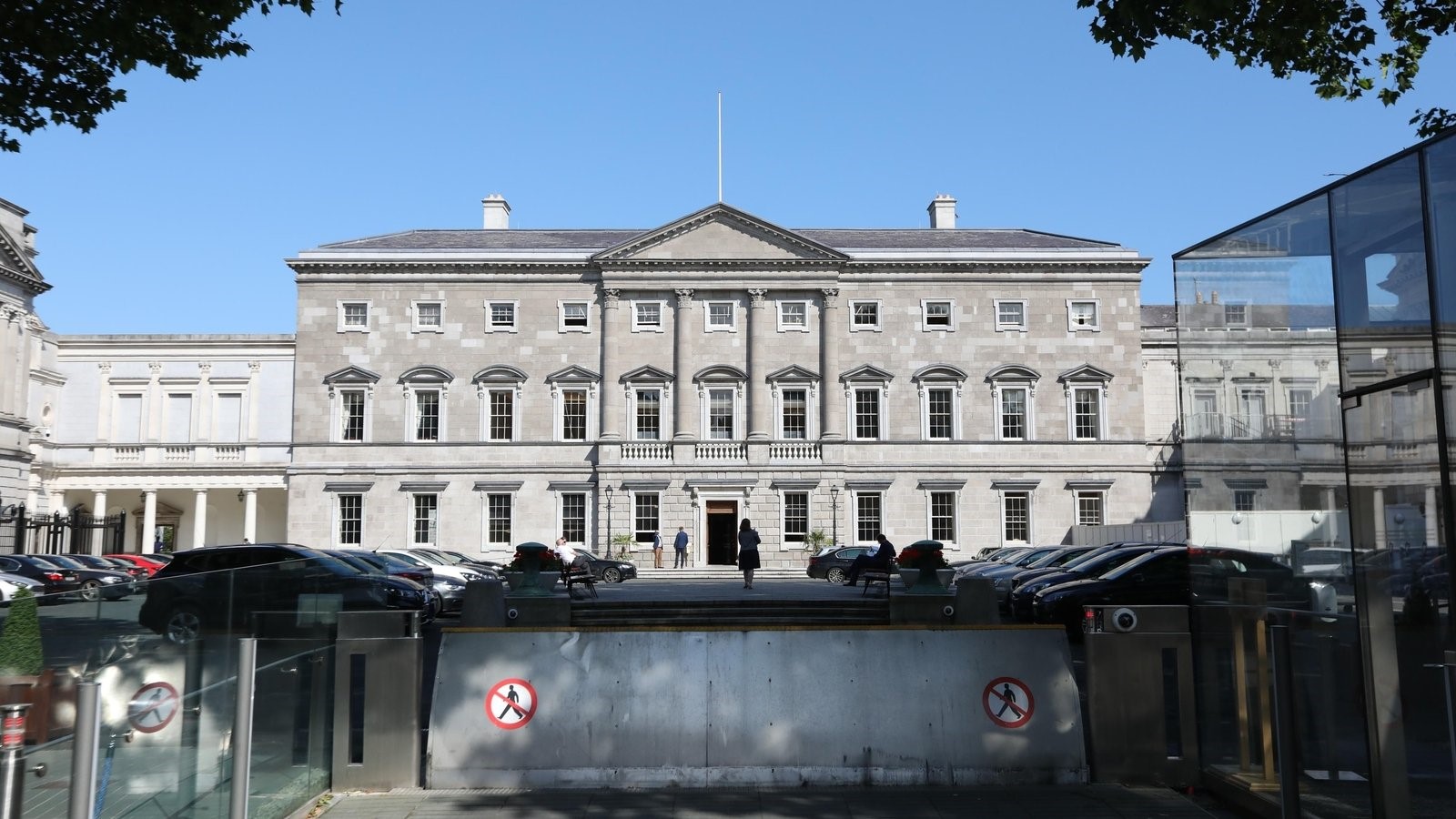
The Government’s controversial Residential Tenancies Bill passed its final stages in the Dáil following a tense and often heated late night debate that saw strong opposition from several Southside TDs who warned it will do little to solve the housing crisis and may instead drive rents even higher.
The legislation was approved late last Wednesday (11th) night by 80 votes to 70 after hours of exchanges between Government and opposition representatives.
The Bill introduces significant changes to the regulation of the private rental sector, with ministers insisting the reforms will boost housing supply and offer greater security to tenants.
However, several local TDs argued the measures will have the opposite effect, raising costs for renters and further strengthening the position of large landlords and investors.


During the debate, Dún Laoghaire People Before Profit TD Richard Boyd Barrett (pictured above) delivered a forceful critique of the Government’s approach, saying the logic behind the Bill was deeply flawed and disconnected from the reality facing renters across Dublin.
“However, for the sake of form, let us rehearse the Government’s argument.
“It is like the argument made by the US military during the Vietnam War that it needed to bomb villages to save them.
“The Government is saying that to reduce rents, it must increase them.
“It is perverse Orwellian logic.
“Rents must be allowed to be reset to even more unaffordable levels because somehow, by magic, that will make. them go down at some point in the future.
“There is no evidence, ever or anywhere, of that happening. This is market dogma of the absolutely worst kind.”
He said the real beneficiaries of the legislation would be large property interests rather than tenants.
“The reason the Government is not bothered that it makes no sense whatsoever is that, in fact, the Bill will do what the Government really wants it to do, which is to further enrich property speculators, investors and corporate landlords.”
Boyd Barrett pointed to developments in his own constituency as examples of how housing policy has prioritised investors over affordability, citing the major residential scheme at Cherrywood.
“The reason we have a housing crisis is because the entire housing sector was handed over by the State to property investors after the crisis of 2008 to 2009. Cherrywood, in my area, as the biggest residential development in the entire country and one of the biggest in Europe, offers a pretty good test case of housing policy.
“At the point when that development was taken over by the National Asset Management Agency, NAMA, and thereby nationalised and brought into public ownership, it could have been developed by the State to deliver social and affordable housing.
“Instead, Governments led by Fine Gael and subsequently Fianna Fáil decided to hand it to property investors.”
He said the resulting house prices and rents were beyond the reach of most people.

Sinn Fein Dublin Mid West TD Eoin Ó Broin (pictured above) also criticised both the content of the Bill and the speed at which it was progressed through the Dáil, arguing that the legislation was being rushed through without adequate scrutiny.
“This is a truly appalling way to make legislation. One can always tell when a government is embarrassed by its own proposals.
“One can always tell when a government is anxious that the public who are affected by its legislation get as little opportunity as possible to hear about those changes until it is too late by government rushing through legislation in impossibly short periods of time.”
He warned that the Bill would have a major impact on thousands of people but had not been given the level of detailed consideration such a significant change required.
“The Bill before us is not simple,” he said.
“It is not straightforward, as we will discuss throughout the evening, and it is going to profoundly impact the lives of tens of thousands of people.
“Yet, we are being given an entirely inadequate Committee Stage opportunity.”


People Before Profit Dublin South West TD Paul Murphy (pictured above) was equally critical, arguing the primary effect of the legislation would be to increase costs for tenants who are already struggling with rising rents.
“This Bill should be called the raise the rent Bill. The purpose of the Bill is to raise people’s rents. That is literally it.”
He said renters had already seen dramatic increases over the past decade.
“People’s rents have already almost doubled in the past ten years but the Government thinks that for the people it represents the big landlords, the so called institutional investors the rents are not rising fast enough so it is going to introduce this Bill to raise the rents even faster to cost the average renter more than €3,000 extra a year.”
Murphy warned that the legislation could widen inequality and increase the risk of eviction.
“What does that look like? It is a massive further transfer of wealth from some of the poorest people in the country to some of the richest people and richest corporations in the country, which are already making plenty of money from their very many rental properties.”


While not rejecting the Bill outright, Dublin Mid West Independent TD Paul Gogarty (pictured above) said the proposals raised serious concerns and could end up primarily benefiting large developers and investment funds.
“I have already said that I support the Bill in principle and the concept behind it but what is being proposed raises so many questions and concerns that, as others have mentioned, it is hugely unlikely to do what it is intended to, unless the intention is purely to increase supply and increase the profits of large developers and real estate investment trusts that are largely from outside the country.”
He acknowledged the logic behind trying to encourage construction but questioned the idea of a market reset without limits.
“There could have been a happy medium in which some form of an increase was provided but it was capped, rather than being entirely a so called market increase, because, as others have said, housing should never be just left to the markets. It is about people’s daily lives.”
Gogarty shared a case from his constituency involving a tenant struggling to pay rent after delays in receiving housing assistance and facing the prospect of eviction. He also highlighted the scale of public spending on rent supports.
“The cost of HAP this year will be, I think, over €570 million. If that €570 million was used to build houses, we would get between 4,000 and 6,000 houses, which is not the number of houses needed.
“If you were trying to develop a system, you would not have brought in HAP in the first place, but we are kind of stuck with it now.
“That is the problem.”


Dublin Bay South Social Democrats TD Eoin Hayes (pictured above) said renters were rarely heard in national debates despite making up a significant part of the population and spoke about the experiences of constituents struggling to maintain secure housing.
“I rise today to speak for renters, who, although they make up 30% of the population, are seldom heard in this House or in our public conversation. I am a renter. I have rented my entire adult life.”
He said many people in his constituency felt there was little real protection despite existing laws.
“There is very little security for renters and the laws meant to protect tenants do not seem to be enforced in reality.
“There is no long term certainty for tenants even though generations of families rent long term.
“If tenants can simply be asked to leave after five or six years, people are left worse off every single time.”
He also relayed the story of a constituent who had been evicted after paying a relatively low rent for years.
“The reason behind my eviction is obvious,” the tenant wrote to Hayes.
“Our current rent is too low, €1,100. I think what makes the whole scenario even more ironic is that the result of my work in the public sector is in fact extremely beneficial for the Government and the country.
“While I am finding companies that are non compliant regarding their tax matters and getting them to pay what they must to the Exchequer, I am being let down by the State and I do not think there is any exaggeration in saying that.”

Defending the legislation, Housing Minister James Browne (pictured above) insisted the reforms were necessary to increase supply and create long term stability in the rental market.
“We are going to drive supply.
“Everything I have done since becoming Minister for housing has been to address the housing crisis in this country, and I have always acknowledged there is a housing crisis in this country.
“Everything I have done is to try to address the housing crisis to get people into the homes they need, whether they are social, affordable or private, for rent or ownership, or for people in towns, villages, rural Ireland or inner cities.”
He said boosting the number of homes available was key to solving the crisis.
“We have to solve that housing crisis, which is what everything I am doing is doing.
“How do we do that? One key to it is actually driving supply, yes, the right supply, but we have to drive the supply of homes. Another rent freeze and eviction ban are not going to drive any supply whatsoever.”
The Minister also said the Bill would introduce permanent rent regulation and offer stronger protections for tenants.
“We are now moving to permanent rent regulation in this country.
“We are giving certainty to tenants, landlords, investors and the State by bringing in a resolution to the rental situation in this country into the future.
“That is really important.”
He said security of tenure was a central part of the reforms.
“These reforms will ensure that, for the first time, tenants will have security of tenure.
“They will have a minimum of six years. With a large landlord, they will have a tenancy for as long as they need it, which is crucial.
“That is not the case right now. They can be confident about not receiving that notice of termination.
“It allows people to put down roots and have that sense of security.
“The number one driver of homelessness is a notice to quit.”