


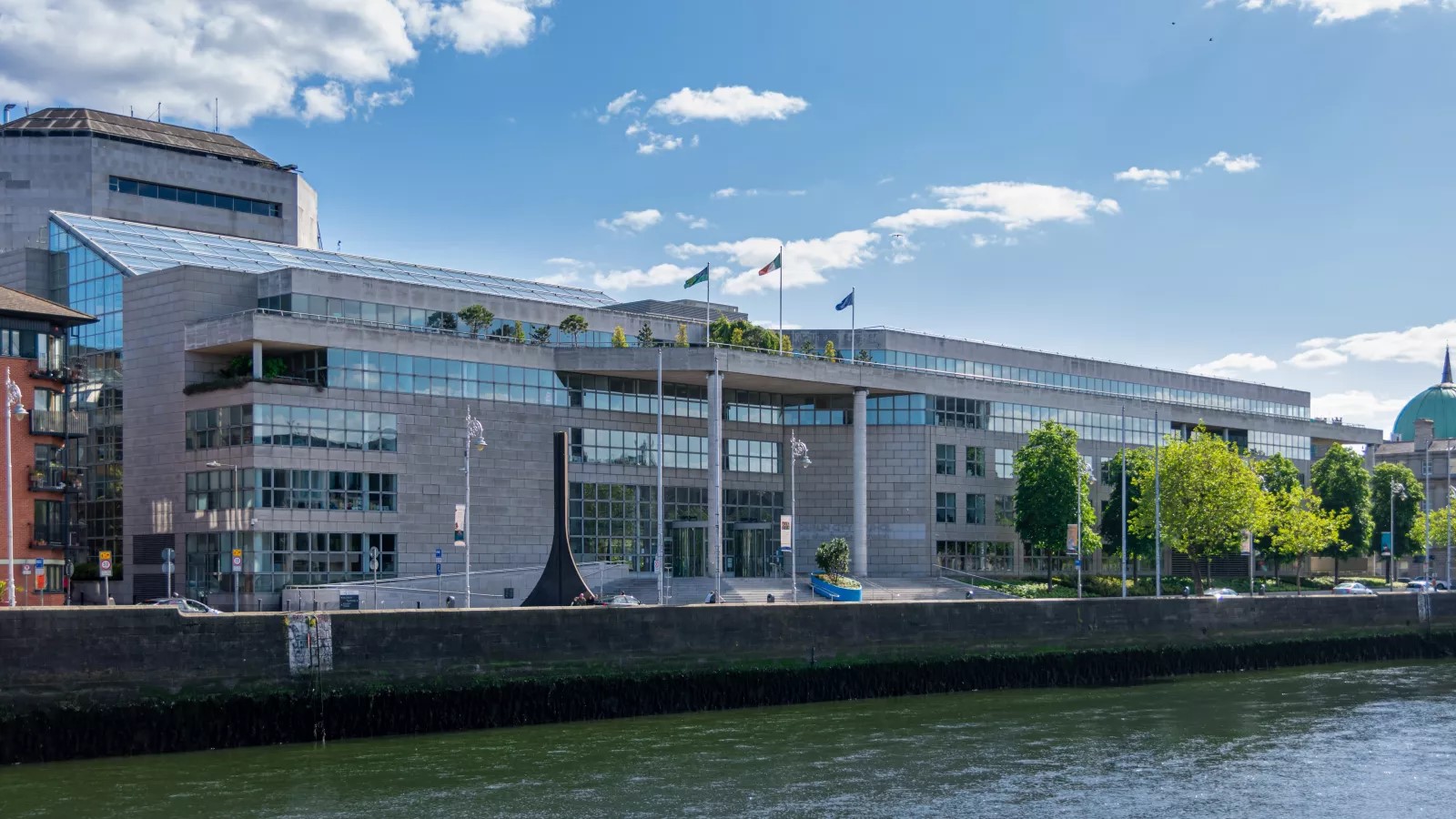
Labour politicians have accused Dublin City Council and government departments of failing to defend the rights of social housing tenants in Donnybrook.


Labour TD and party leader Ivana Bacik and Pembroke councillor Dermot Lacey have alleged that housing tenants who live in private developments are being “treated poorly” by their management company.
The Labour politicians have said that Dublin City Council has not “substantially responded” to reports that the tenants are being excluded from fire drills and access to shared spaces, while the government line is that it is an issue for local authorities.
Lacey said “I have been supporting residents of Eglinton Place in Donnybrook who are fighting for fair treatment by their management company. Those tenants, who are what is known as ‘Part V’ tenants, are council tenants living in a property that is otherwise rented or owned privately.”
“They have told me that they are completely barred from using the building’s communal facilities, such as the resident gym, because they are not private tenants. Those residents have offered to pay a fee to make use of what should be communal facilities but they have been refused,” he said.
Lacey said this situation is emblematic of Ireland’s housing crisis.
“Given the failure to build adequate amounts of social housing by successive Fianna Fáil and Fine Gael Governments, we now see a situation where this form of tenancy is widespread in Dublin,” he stated.
“As such, there is a large number of people being excluded from standard, basic amenities. I have heard cases of social tenants being excluded from fire drills and other necessary safety exercises.”
Dublin City Council’s official policy is that social tenants should not be excluded from communal amenities.
“The Council expects management companies to facilitate pay-to-access arrangements for council tenants so that everyone in the building is treated equally,” Lacey explained.
“Where this is not happening, we need to see more proactive engagement and tougher enforcement from the Council. This form of discrimination is disgusting, and we in Labour will do all we can to fight against it.”
Bacik said she has raised the issue with the Minister for Housing, but said blame was deferred.
“In a parliamentary question reply to me, he (Minister Browne) placed all responsibility back on Dublin City Council and reframed the issue as a cost-benefit analysis for local authorities.”
Bacik said that the Minister “missed the point” in this instance.
“If tenants are being refused access to services, where they are willing to pay privately for them, clearly it is discrimination that is driving individual policies, and not financial considerations. Dublin City Council, as a landlord, must take responsibility for ensuring that its tenants are not being mistreated by a third party.”
The Dublin Bay South TD said she was “hopeful” that a resolution could be found for residents at Eglinton Place, but she said the issue is reflective of the Department of Housing’s current philosophy: treating social tenants as an afterthought.
“We have seen it in the announcement last week that the government would phase out so-called “turnkey acquisitions” for social housing, or the purchasing of privately-built housing units for renting out to those on the housing list,” Baik said.
“While it is welcome that we would see this economically-foolish policy phased out, it is not clear that the Minister’s plans include direct state-led construction to fill the gap.”
Bacik said, “without resourcing Councils or transforming the Land Development Agency into a state construction company to deliver homes for all those on the lengthy-and-lengthening housing list, social housing delivery will drop even further off a cliff. That will mean more people in substandard housing and on our streets.”
In the aftermath of the 2024 general election, when Labour briefly entered into coalition talks with Fianna Fáil and Fine Gael, Labour’s red line demand was the establishment of a state housing company; this was rejected out of hand by the government parties, and talks subsequently collapsed.
Bacik said that the situation at Eglinton Place highlights why a state housing company is needed.
“We are seeing one of the many risks of overreliance on the private market to house the people of Ireland,” she said.
“Ending this expensive dependency on private developers will only work if this government builds the public capacity to replace it. Without that investment now, people waiting for social housing could pay for this policy change through even longer waits.”