


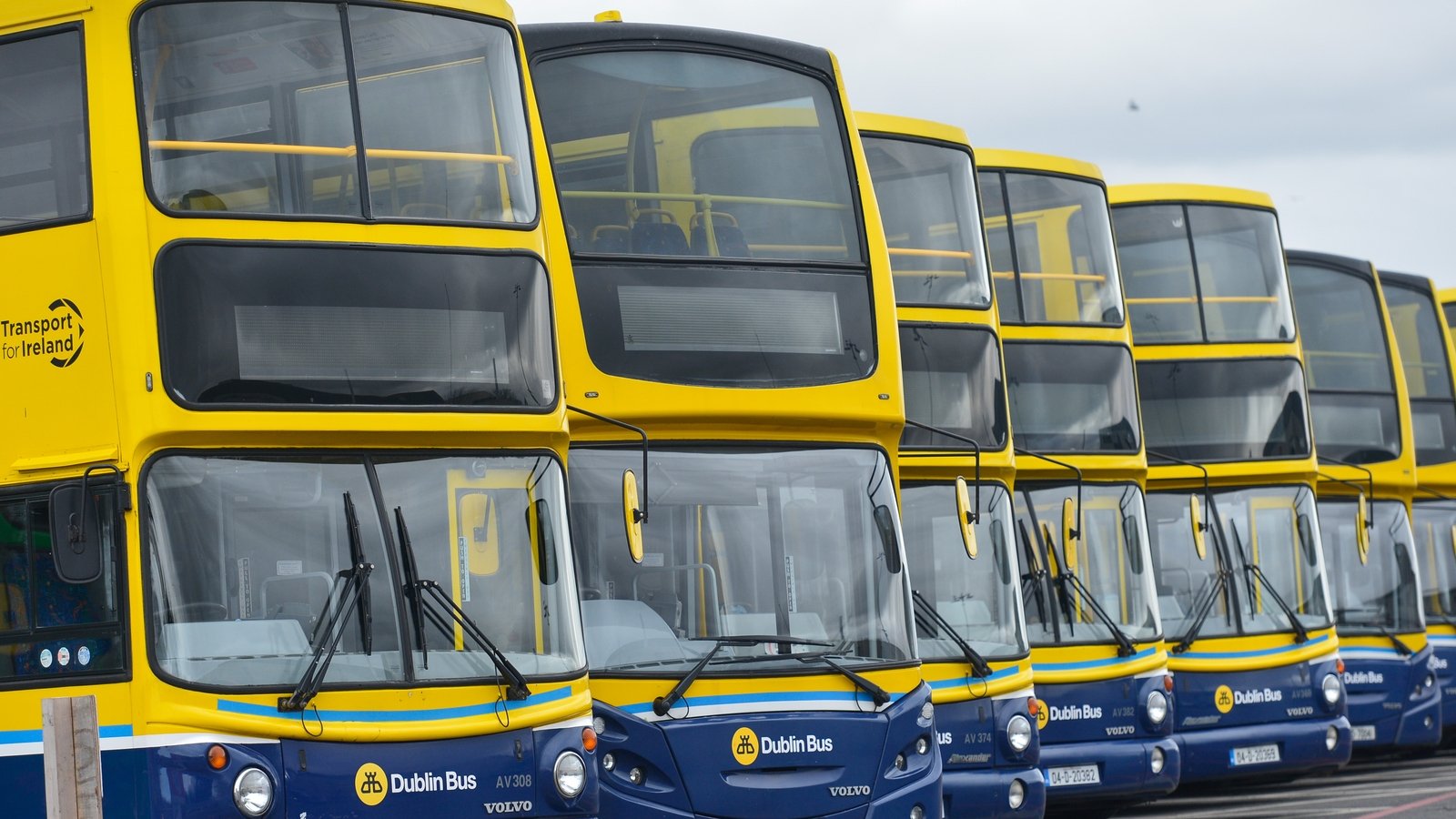
Hundreds of Dublin Rathdown residents say unreliable bus services have forced them to turn to cars, taxis and lifts for journeys they previously made by public transport, according to a new survey.
Reports of “ghost buses”, difficulties reaching hospitals and disruption to children’s school journeys feature in the findings published by Fianna Fáil TD Shay Brennan.
His 75-page report, Left Waiting, draws on responses from 852 people across the constituency and sets out 58 actions for the National Transport Authority, bus operators and Dún Laoghaire-Rathdown County Council.


Deputy Brennan (pictured above) said he had put the concerns directly to the organisations responsible and would publish every response, while pursuing answers where none were forthcoming.
Among those who completed the survey, 447 said problems with the service had led them to use a car, taxi or lift for journeys they previously made by bus.
That represents more than half of respondents, although the survey was open to any resident who wished to participate and is not a statistically representative measure of opinion across Dublin Rathdown.
The findings nevertheless document the experiences of hundreds of people who took part, with reliability, frequency and access to destinations emerging as recurring concerns.
“I am hearing daily from constituents about how the bus services are letting them down,” Deputy Brennan said.
“They are telling me about how destinations such as hospitals are no longer a bus ride away since the network changes, about how they simply can’t rely on getting places on time, about how the thousands of occupants of new developments have not been provided with appropriate levels of bus service.”
Reliability and punctuality were identified as the main issue by 393 respondents, while 298 highlighted frequency and timetabling.
The average satisfaction score was 2.3 out of five. According to the report, the lowest ratings came from areas that have accommodated the most new housing.
For Deputy Brennan, a particularly striking finding concerned buses that passengers expected to arrive but which disappeared from information systems without reaching the stop.
He said 251 respondents had described this experience, distinguishing it from a service that was simply running behind schedule.
“Some 251 respondents gave an account of the same thing, a bus showing on the app and on the display at the stop, counting down, and then it disappears without arriving and without explanation. Nobody tells them why. On an hourly route that isn’t a delay, it’s the end of the journey,” he said.
The accounts raise questions about both the delivery of scheduled services and the information available to passengers deciding whether to continue waiting or find another way to travel.
The release does not establish why the buses described by respondents failed to arrive or disappeared from displays. Brennan’s demand is for the bodies responsible to address the experiences recorded and explain what will change.
“What struck me reading all of the replies was how alike they were. People in different parts of the constituency, on different routes, run by different companies, described the same thing in nearly the same words,” he said.
Access to essential destinations was another prominent concern.
A total of 589 respondents named at least one destination they said they could not reach by bus, with St Vincent’s Hospital mentioned most frequently.
The finding records passengers’ reported difficulties. The release does not specify whether each account concerned the absence of a direct route, an impractical connection or another barrier to making the journey.
However, hospital access was among the issues Brennan specifically identified when calling for changes following the redesign of the network.
School travel also featured, with 145 respondents describing an effect on a child’s journey to school.
A further 123 referred to a route withdrawn during the network redesign, adding to the concerns about whether revised services meet the needs of existing passengers.
The report places those accounts alongside dissatisfaction in areas of substantial housing growth, where Brennan argues that bus provision has not kept pace with the number of people moving in.
“This is not good enough. The NTA and bus operators must make changes to improve services for public transport users.”
The survey followed the delivery of a leaflet to households across Dublin Rathdown inviting residents to complete an online form about local bus services.
Residents answered questions about their experiences, including whether service problems had prompted them to use alternative transport.
Responses to that question were provided in their own words.
Because participation was voluntary, the results cannot establish how common those experiences are among all residents or all bus passengers in the constituency.
Brennan acknowledged that distinction when discussing the 447 respondents who reported moving journeys away from buses.
“Some 447 people took the trouble to tell me they’ve moved journeys off the bus because of the service,” he said.
“I’m not claiming that’s the rate across Dublin Rathdown, and the report doesn’t claim it either. I’m saying 447 of my constituents sat down and told me it happened to them.”
The next stage, he said, would be to track the response to the report’s 58 numbered actions.
The NTA is named in 39 actions, Dublin Bus in 24, Go-Ahead Ireland in 15 and Dún Laoghaire-Rathdown County Council in four.
Those figures overlap because individual actions can involve more than one organisation.
They do not represent separate totals to be added together.
The numbered register is intended to give Brennan a means of following up individual issues and recording whether the organisations involved have provided answers.
Rather than leaving the findings as a collection of complaints, he said he wanted a record against which progress could be checked.
“I’ve numbered every one of them for a reason,” Deputy Brennan said.
“In six months time I want to be able to ask what happened to action 12 for example, and get an answer that’s either constructive or otherwise.
“I’ll publish every response I get, and I’ll record and pursue where I don’t get one.”