


Seven men from Inchicore who travelled to Spain to fight against Franco’s forces have been honoured with a memorial at Richmond Barracks, bringing their families together to remember a chapter of local history that reached far beyond Dublin.
The memorial, unveiled by Lord Mayor of Dublin Daryl Barron on Saturday, September 26, commemorates Tony Fox, Joe Haines, Mick May, Paddy McElroy, Liam McGregor, Joe Monks and Bill Scott. Three died during the Spanish Civil War; four survived.
The men joined the 15th International Brigade in support of the Spanish Republic during the conflict of 1936–1939.
They came from a community shaped by the railway works and a strong trade union tradition, where solidarity among workers was an important part of everyday life.
Their decision to go to Spain took them from that familiar world into a conflict whose consequences reverberated across Europe, and which became a precursor to the Second World War.
Families of the seven attended the unveiling alongside representatives of Dublin City Council, Friends of the International Brigades in Ireland, historians and invited guests.
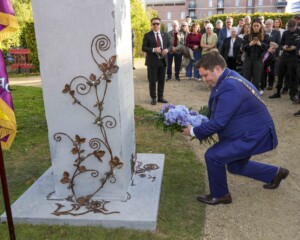

Mr Barron said the memorial would provide a permanent place for the community to remember the men and share their stories with future generations.
“Their experiences connect Inchicore to a defining international conflict of the 1930s and to a complex chapter in Irish political and social history,” he said.
“It is especially fitting that their families and the wider community can come together at Richmond Barracks to remember them.”
The conflict sharply divided political opinion in Ireland. Support for Franco was widespread, including among the Catholic hierarchy and much of the press, while those who volunteered to defend the Spanish Republic found support within trade union and left-wing circles.
For many years, the memory of the Irish International Brigade volunteers was sustained through those networks, local communities, literature and music, rather than broad public recognition.
According to figures supplied by Dublin City Council, approximately 35,000 men and women from around 80 countries served with the International Brigades.
At least 240 Irishmen took part, about 70 of whom did not return home.
For the four surviving Inchicore volunteers, returning meant living with the experience of war. Some carried the effects of wounds sustained in Spain for the rest of their lives.
The conflict’s cultural legacy has endured through the poetry of Irish volunteer Charles Donnelly, the writing of Ernest Hemingway and songs performed by Christy Moore.
Those works have helped introduce successive generations to the idealism of the volunteers and the human cost of their involvement.
The Richmond Barracks ceremony included wreath-laying by family representatives and music from the Dublin Brass Band.
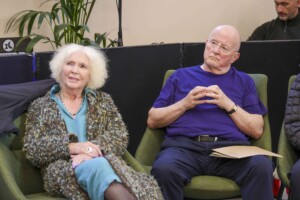

Actress Fionnuala Flanagan contributed to the programme, followed by music from Christy Moore (both pictured above).
A commemorative display brought together flags, memorabilia, historic newspapers, books and other material relating to the war and the International Brigades.
The council said the memorial was intended to honour each of the seven men while offering a place to reflect on the democratic convictions and sense of justice that informed their decision to leave Inchicore for Spain.