


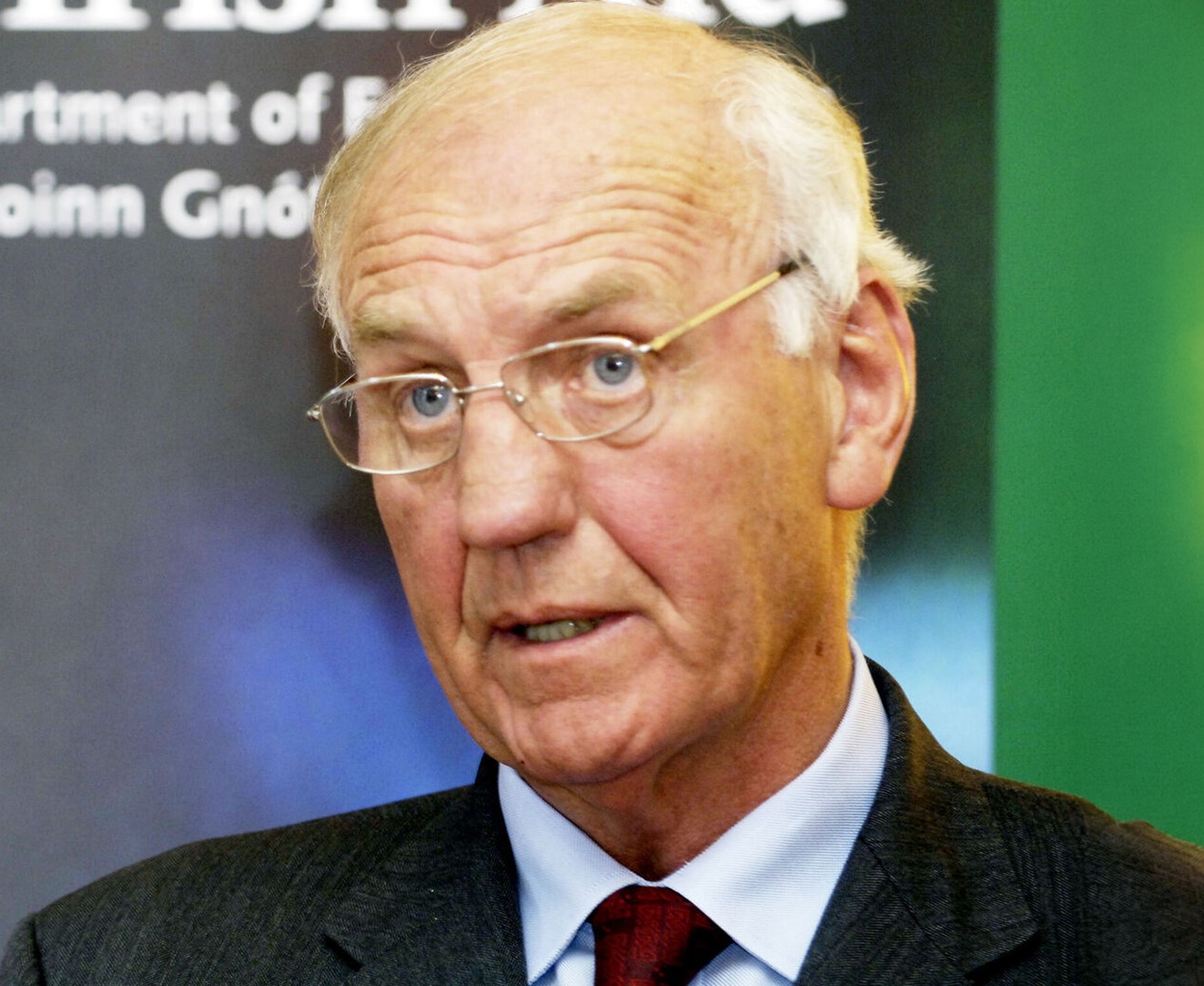
History will remember David Andrews as one of the Irish politicians who helped bring peace to this island.
Those who knew him are just as likely to remember a man whose politics were rooted in integrity, decency and an enduring commitment to human rights.
Andrews, who died on Tuesday, June 30, at the age of 91, leaves behind a public life that spanned almost four decades in Dáil Éireann and encompassed some of the most significant moments in the history of the State.
Although he held some of the highest offices of State, Andrews’ place in Irish political history rests less on the titles he carried than on the causes he championed.
Whether campaigning for the wrongly convicted Birmingham Six and Guildford Four, speaking out on humanitarian crises abroad or helping to steer the negotiations that culminated in the Good Friday Agreement, he earned a reputation as a politician guided as much by principle as by party.

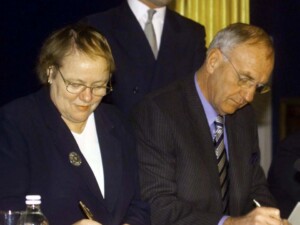
Mo Mowlam and David Andrews pictured in March 1999 in Dublin Castle signing the four treaties to establish a North/South Ministerial Council.
That reputation was reflected in the tributes paid from across Ireland’s political divide following news of his death.
President Catherine Connolly described Andrews as “a politician of great integrity” who devoted much of his public life to advancing human rights.

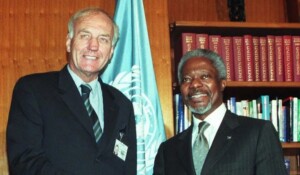
Pictured in Dublin in January 1999, then Foreign Affairs Minister, David Andrews and then UN Secretary General Kofi Annan
She said his contribution as Minister for Foreign Affairs during the negotiations leading to the Good Friday Agreement had helped bring an end to decades of violence on the island, while also recalling his support for victims of injustice, from the Birmingham Six and Guildford Four to civilians caught up in conflicts in Rwanda, Somalia and Palestine.
Following his retirement from politics, she said, Andrews continued that commitment as chairman of the Irish Red Cross, making “a great contribution to the cause of human rights”.
She expressed her deepest condolences to his wife Annette, his children, extended family, friends and former colleagues.
Taoiseach Micheál Martin remembered Andrews as “a man of principle, fearless in his views”, saying his role in the peace process would be recorded by history as one of the defining achievements of his political career.
Martin described his life as “an extraordinary life of public service” and said Andrews belonged to “a generation of Irish public representatives who were big personalities with a big vision for the development of their country and who left an enormous footprint”.
The Taoiseach, who served alongside Andrews in government, said he had witnessed first-hand his intelligence, work rate and commitment to peace, along with his decisiveness, wit and good humour.
He described Andrews as “warm, engaging and great company” whose wisdom and advice he greatly valued.
Former President Michael D Higgins described Andrews as “my friend and former colleague”, praising his “huge contribution to Irish politics” over more than four decades as a TD, Government Chief Whip and cabinet minister with responsibility for foreign affairs and defence.
Tánaiste Simon Harris said Andrews’ role in securing the Good Friday Agreement remained an achievement “for which we are all very grateful”.
He said Andrews’ later work as chairman of the Irish Red Cross reflected “a commitment to humanitarian causes and to those most in need”, and extended his sympathies to his wife Annette, their five children and his many friends and former colleagues.
Born into one of the State’s most influential republican families, public service was woven into Andrews’ life from the beginning.
His father, Todd Andrews, fought during the War of Independence and Civil War before helping shape many of Ireland’s major public institutions, while his mother, Mary Coyle, was an active member of Cumann na mBan who was imprisoned in Kilmainham Gaol.
When David Andrews entered the Dáil in 1965, few could have predicted that he would remain there for the next 37 years, representing first Dún Laoghaire and Rathdown and later Dún Laoghaire with quiet determination rather than theatrical flourish.

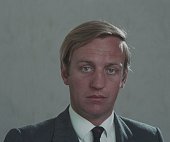
David Andrews, pictured in 1971
He quickly rose through Fianna Fáil’s ranks, serving as Government Chief Whip during one of the party’s most turbulent periods before taking on junior responsibilities in foreign affairs as Ireland prepared for an increasingly prominent role within Europe.
Yet Andrews’ career was never one of uninterrupted advancement. His support for George Colley in the Fianna Fáil leadership contest of 1979 left him politically isolated after Charles Haughey’s victory. For much of the following decade he remained on the backbenches, one of Haughey’s most persistent internal critics.
Those years, however, revealed another side of Andrews’ character. Returning to his work as a barrister, he became closely associated with campaigns for justice on behalf of the Guildford Four and Birmingham Six, while also speaking out for Irish hostage Brian Keenan during his captivity in Lebanon.
Human rights, both at home and abroad, became a defining thread running through the rest of his public life.
His return to cabinet under Albert Reynolds in 1992 eventually led to the period for which he will be most widely remembered.
Reappointed Minister for Foreign Affairs by Bertie Ahern in 1997, Andrews became one of Ireland’s central figures during the negotiations that produced the Good Friday Agreement the following year.
The agreement fundamentally altered the political landscape of these islands.
While countless individuals contributed to its success, Andrews was widely recognised as one of the Irish Government’s key negotiators during the painstaking diplomacy that ultimately secured peace after three decades of violence.
His work extended beyond Northern Ireland. As minister he championed Ireland’s engagement with Europe through the Maastricht and Amsterdam Treaties, helped secure the country’s election to the United Nations Security Council and oversaw Ireland’s entry into NATO’s Partnership for Peace programme.
Retirement from politics in 2002 did not mark the end of his public service.
As chairman of the Irish Red Cross Society for almost a decade, Andrews continued to advocate for victims of humanitarian crises in Somalia, Darfur and East Timor, demonstrating that the concern for human rights which had characterised his political career remained undiminished.
He was recognised internationally in 2006 when France awarded him the Chevalier de la Légion d’Honneur, one of the country’s highest civilian honours.
Married to his wife Annette since 1963, Andrews was father to five children, including Fianna Fáil MEP Barry Andrews and comedian David McSavage.
His family has remained deeply woven into Irish public life, reflecting a political tradition stretching across three generations.
David Andrews belonged to a generation of politicians shaped by the shadow of Ireland’s revolutionary past but determined to build a more peaceful future.
He combined political conviction with a concern for those whose voices were seldom heard, whether victims of miscarriages of justice, civilians caught in distant conflicts or communities seeking peace closer to home.
In an era often marked by political division, his legacy is likely to be remembered not for partisan victories but for the quiet persistence, humanity and integrity with which he pursued public life.
Friends and family gathered at the St John the Baptist Church in Blackrock, last Saturday (4th) for David Andrews’ funeral mass before he was buried at the nearby Dean’s Grange cemetery.